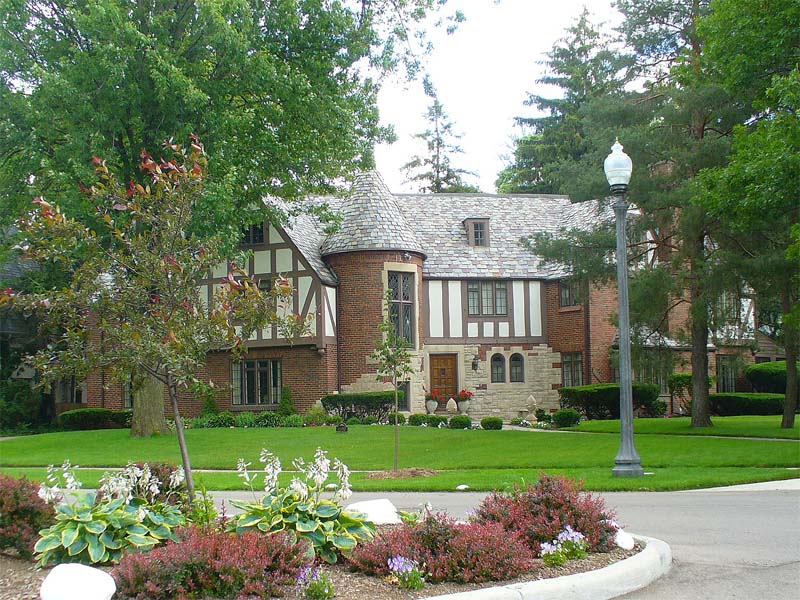
The decay is there. The collapse is real. That is the story. But it’s not the whole story. Amid the truly legitimate and titanic struggles of Detroit there’s another side, one that’s too seldom told. In the interest of completeness, I’ll share some of it today.
Most of this material is not original to me. It was created by two people I know only by their handles of “hudkina” and “LMichigan”. I don’t know who they are, though I get the vague impression they work for the state of Michigan. They seems to spend most of their time engaged in quixotic message board debates about Detroit. I’d suggest they start blogging instead. At any rate, credit to them for the ideas and picture links, though the data is mine.
Strange But True
Detroit is Big. When you hear about Detroit, a mention of its population collapse can’t be far behind. Detroit’s population fell by 50% from its peak and it was the first city to fall below one million in population after first exceeding it. The region has fallen out of the top ten metro areas in size nationally. But the other side is that Detroit is still big (perhaps too big, but that’s for another day). The city of Detroit has 912,062 people, making even the city still the 11th largest in the United States. Detroit has 100,000 more people than San Francisco and is 50% bigger than Boston.
Detroit’s metro area has 4.4 million people, making it the 11th largest in the United States. That’s about the same size as Boston or Phoenix. But wait, there’s more. Nearby Ann Arbor is technically not part of the Detroit MSA, but probably soon will be. That’s another 350,000 people. And Detroit doesn’t include anything on the Canadian side of the river because it is in another country. The Windsor, Ontario area adds another 300,000+ people.
Detroit is Dense. You’ve seen the pictures. I’ve even posted some. The miles of empty streets and “urban prairie”. A recent comprehensive survey recently discovered that fully one third of Detroit’s lots are vacant. But despite this, the overall density of the city is far higher than you might expect.
The city of Detroit has 6,571 people per square mile. That’s almost 60% more dense than Portland, Oregon (4,152)! Detroit’s density is roughly comparable to Seattle (7,136) and Minneapolis (6,969). It’s more dense (sometimes much more dense) than Denver, Cincinnati, Cleveland, Milwaukee, or St. Paul.
And if one third of Detroit is vacant, then localized densities must be much higher.
Detroit Has Money. Detroit may be a very poor city, but with so many people in it, there are still a significant number of folks with money living inside the city limits. There are 18,140 households in Detroit with income over $100,000 per year. Milwaukee, hardly a basket case, has 19,297. Upscale Minneapolis only has 29,460, a mere 10,000 household gap vs. Detroit in high earning households. Now both of these cities are smaller (Minneapolis much smaller) and so are proportionately much richer. But the point is that in total, there actually are a material number of households in the city of Detroit with significant incomes.
The Detroit metro area also has numerous upscale suburbs that hold their own with any around the country.
Detroit Has Immigrants. Another thing that distinguishes Detroit versus other struggling cities is that it has been able to retain a significant foreign born population. Detroit metro is 8.5% foreign born, which does trail the US average of 12.8%, but it is well above places like Cleveland (5.8%) or Cincinnati (3.6%).
Detroit has also established itself as the hub of Arabs in America. Muslims frequently get a bad rap, but unlike Muslim populations in Europe, which are often stuck in marginalized ghettos, the American Muslim population is more educated and makes more money than the population as a whole, according to some reports. They range from Arab party store owners to Pakistani Ph.D.’s. Detroit’s Arab population is, like many immigrant groups, highly entrepreneurial.
While over 350,000 domestic migrants left the region, Detroit metro saw nearly 100,000 new international migrants move in during the 2000’s. For these people at least, Detroit is still a land of opportunity.
Detroit Has Real Assets
Detroit also has some legitimate and impressive assets. First is “Brand Detroit.” In one of the famous Cleveland tourism videos, the song ends with “at least we’re not Detroit.” Actually, Cleveland might actually be better off if it were. As with winning the NBA draft lottery, it’s better to be worst than second worst. Detroit has a powerful brand that literally resonates around the world. I think it’s fair to say that for people overseas with any familiarity with America, Detroit is one of the cities they know. Most other places are ciphers.
Detroit is the main gateway to trade with Canada. It also has a world-class airport that was just ranked as the most passenger friendly large airport in the United States by JD Power. Originally a Northwest hub, it is actually benefiting from that carrier’s merger with Delta. Detroit is the second largest Delta hub and its primary gateway to Asia. In an era where global connections are more important than ever, Detroit has or soon will have flights to London Heathrow, Tokyo, Seoul, and Hong Kong among other destinations.
Detroit also has a globally important legacy of innovation in popular music, ranging from Motown to electronica to hip-hop. Artists like Eminem, Kid Rock, and the White Stripes still call Detroit home. Also, it is home to the well-regarded Cranbrook school of art, as well as the College for Creative Studies. If creativity really is key to the future economy, Detroit has it.
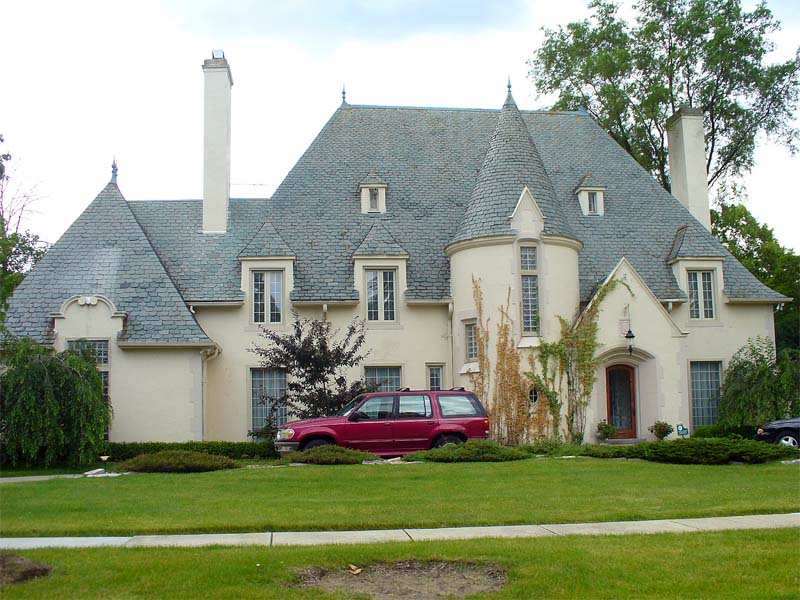
Pictures of the Other Detroit
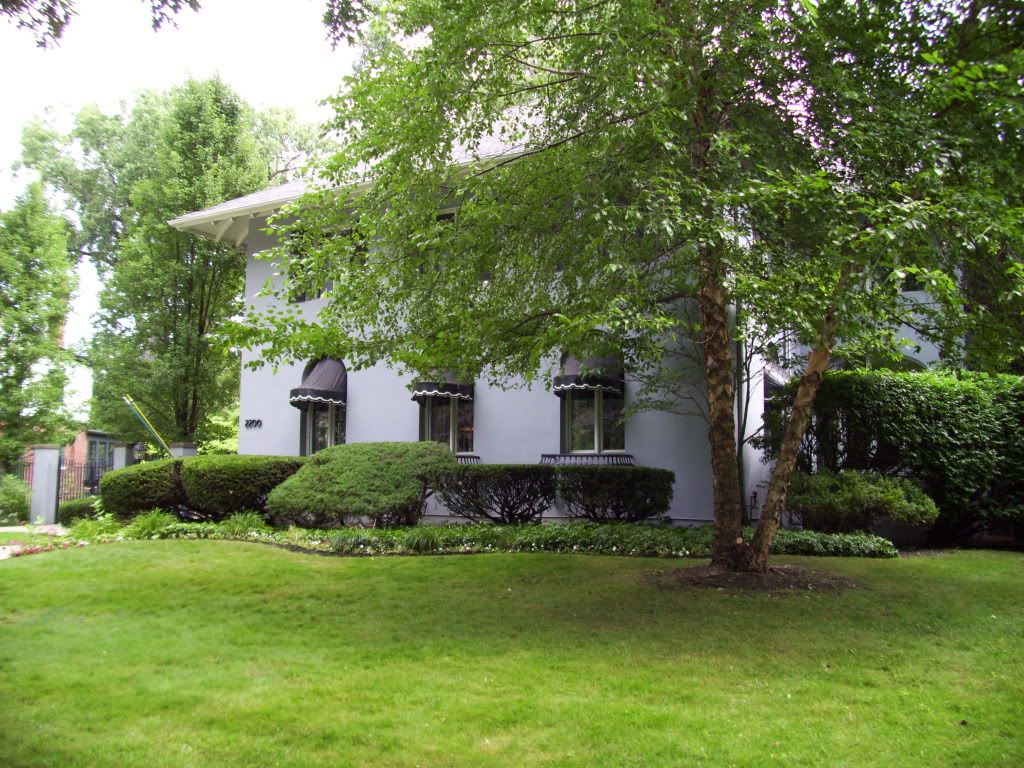
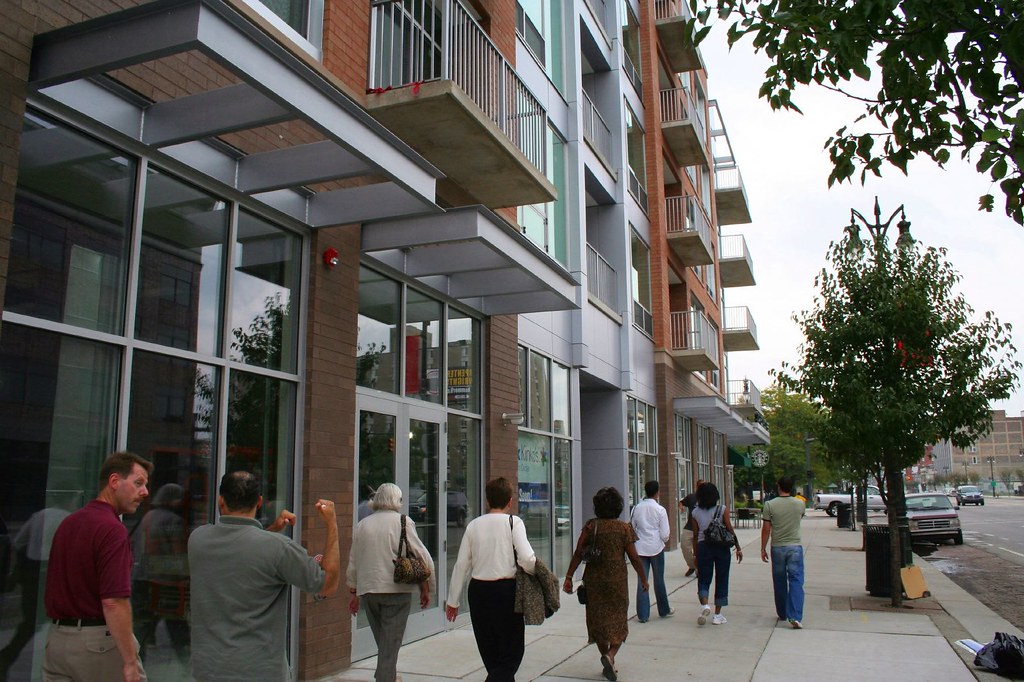
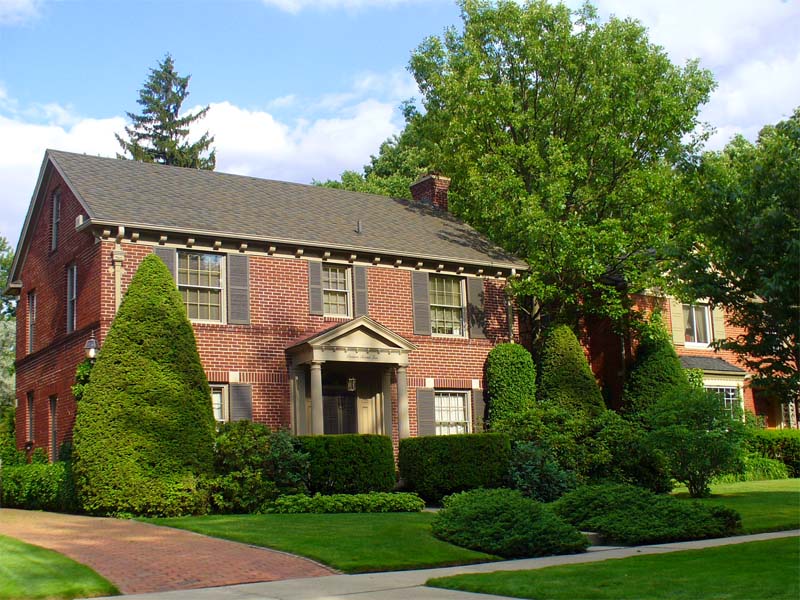
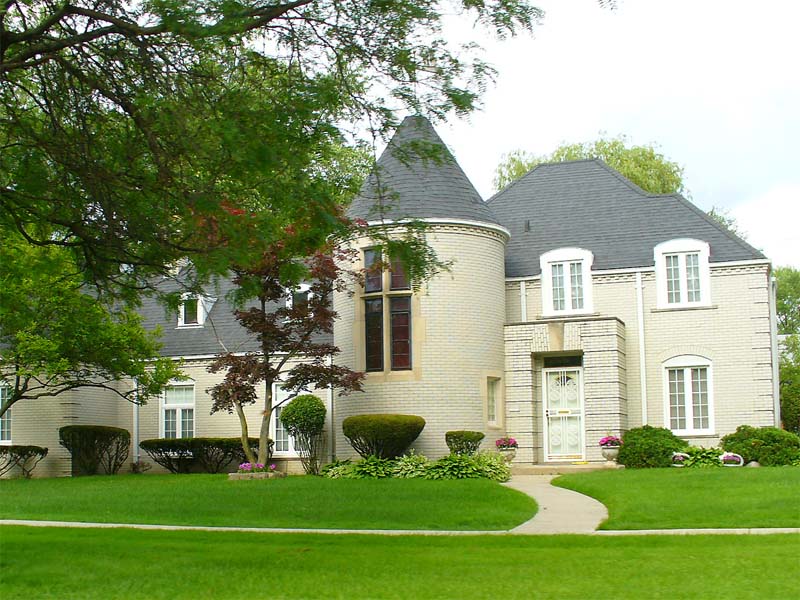
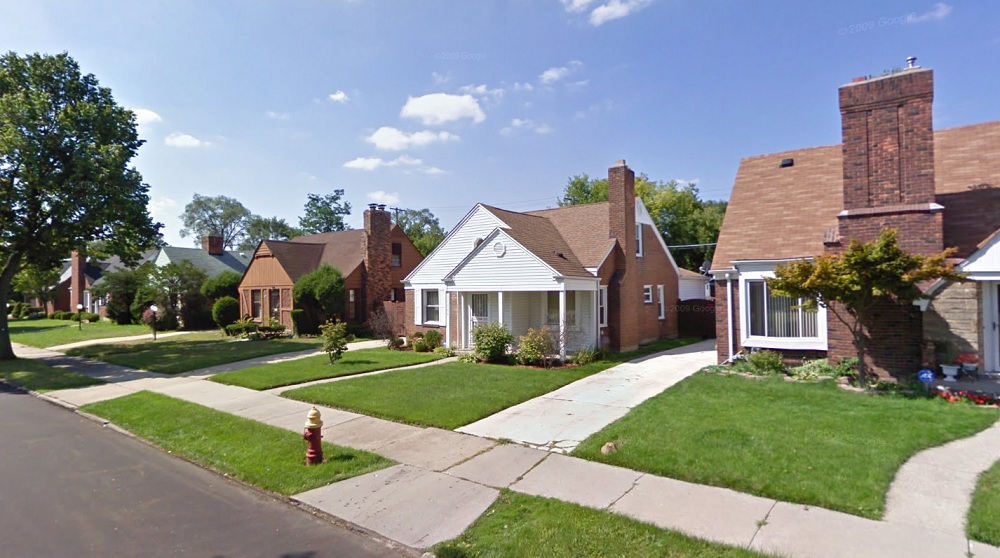
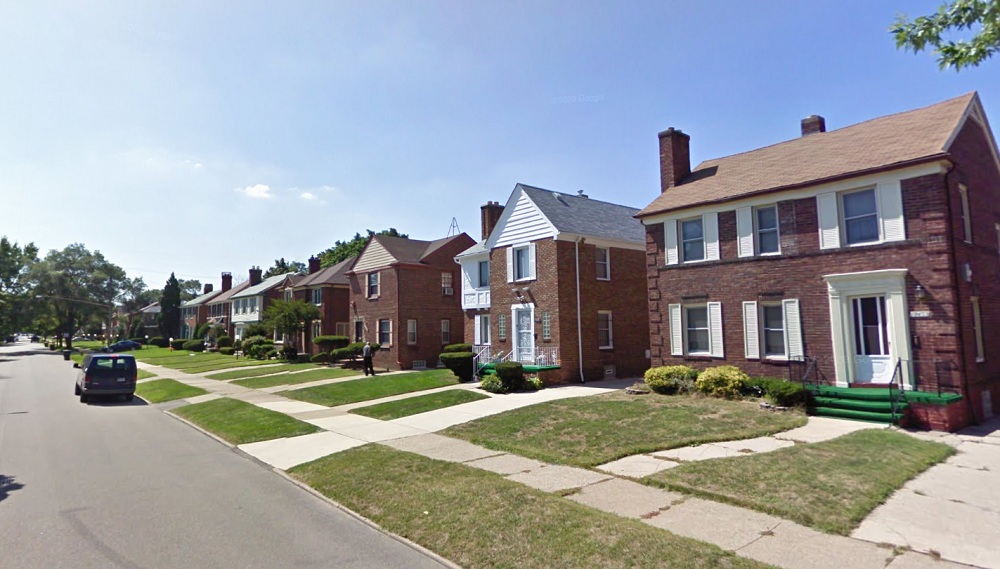
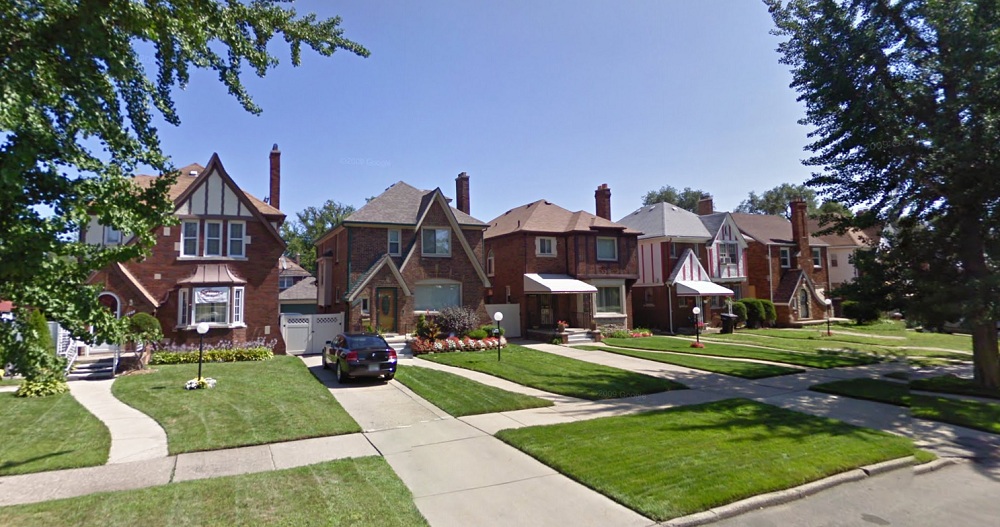
Here are a selection of Detroit photos you aren’t likely to see in the latest “ruins of Detroit” survey.
A farmers market at Eastern Market:







Previous Urbanophile Articles on Detroit
Detroit: Urban Laboratory and New American Frontier
Embracing the Ruins
A Plan for Detroit
Outmigration Devastates Michigan – and the Midwest
Detroit: Do the Collapse
Detroit: Not the Future of the American City
Great, important post Aaron. Here’s an essay I wrote for Wunderkammer Magazine, along the same lines but specifically focused on North Rosedale Park in Detroit: The Other Detroit
Jeremy, thanks for the link. That’s a fantastic essay.
Jeremy, this and your other blog posts are all really good.
When I first moved to Michigan (Lansing) I was surprised when I visited suburbs like Novi, Royal Oak, and Grosse Pointe. There indeed are areas that are doing very well. Michigan has so many great things going for it, I’m sad that I’m going to have to move in a couple years (such is the life of a spouse of an academic). I’ve encountered more entrepreneurial people and creative folks here in Michigan than my time in the DC area. I would not trade my time in Lansing (sort of a mini Detroit) for the standard (albeit more stable) government consultng job in suburban Virginia. You can live comfortably in a DC suburb, but you can be part of a great creative community in Michigan.
Looking at census graphs from the 70s until today, the Detroit MSA’s population seems to have remained relatively static. I keep wondering how different the city’s image would be if those beautiful Prewar neighborhoods had not been abandoned and left to rot.
Great post, Aaron. I highly recommend checking out Detroit by bicycle. So many of the freeways and major thoroughfares avoid these gorgeous and interesting areas of the city. Also, with an infrastructure that was meant for twice as many people, cyclists often have plenty of room without the need for official lanes.
Tour de Hood blog:
http://tourdehood.wordpress.com/
Wheelhouse Detroit
http://www.wheelhousedetroit.com/tours/
Bike shop that also offers rentals and tours
Great post! Two caveats:
1) City population figures are hard to be sure of, but I suspect the population figure you cite is higher than the reality.
2) The vulnerability of these well-preserved and, in many cases, rescued and restored homes and neighborhoods is evident if you do a realty search in the neighborhoods you point out. Very expensive homes stand within blocks of homes on offer for a fraction of their price, and deflation is astoundingly stark in the price history of just about every house in the city that has changed hands in recent decades.
In defense of Cleveland- Cleveland has all the good things Detroit has (though admittedly it is much smaller) and somewhat fewer, I think, of the bad.
It’s nice to see something besides ruin porn…yes, the bad stuff is true, but there is so much more to see that is beautiful and even just plain normal. Thanks for adding a little balance.
Interesting post, but I have a quick comment/concern. It seems that you conflate Arabs with Muslims with Pakistanis. This may have been accidental, a case of unclear writing, but I would just point out that not all Arabs are Muslims and Pakistanis are certainly not Arabs.
I love your blog.
There’s a lot of people in the Detroit area who aren’t aware of these assets within the city proper. Many suburbanites seem to wear there avoidance of the city as a badge of honor.
aim, you’re absolutely right: after graduation from grad school here in Ann Arbor, I’m moving to Detroit (yes, DETROIT Detroit). Most people look at me with a furrowed brow and implore me to move to Royal Oak.
When ypou’ve lived there for 30+ years and see the negative change and being a victim myself of numerous felony crimes. I must say there are a few gems left but overall the people of the city of Detroit created their disaster and they can have the city or continue to destroy it. I left 5 years ago and really don’t care if the whole place burns to the ground. Now that the city is dying they (Detroitors) want to infest the inner ring of suburbs with their mentality. This whole mess was created by the welfare mentality that has gone on for generations. Coupled with the FACT that the majority of Detroit resident don’t care enough about their families/children to demand decent behavior from each other. Ignorance is truly bliss and this city is a perfect example to America what happens when people who don’t care infest a whole city that was once proud and vibrant. Great men like DAVE BING and DENNIS ARCHER tried their best and failed because of the not my problem attitude of the constituants. They tried hard to get the residents to LOOK IN THE MIRROR so to speak and they were run out. Bing is doing his best and probably sees his successful dream for Detroit cannot become a reality without buy-in by the masses of the city. That would mean taking responsibility which hasn’t happened since Detroits decline started in the 1970’s.
Amen Mark. Enough is enough. Take a good hard look at Detroit and see what attitudes of entitlement get you. I can’t believe the number of people drinking this Kool-Aid about Detroit being salvageable — or even being worthy of it. Wake up and smell the blight folks.
@ Mark- although you say you lived in Detroit for more than 30 years, how much do you actually know about the history of the city and why it is in the condition it’s in? I won’t get into a debate with you but most of what you’ve pointed out is so far from reality. Reading what you wrote made me sick to my stomach because I know so many people who think just like you do. I suggest you attend an Undoing Racism workshop which may open your mind and eyes to the actual world we live in. The situation in Detroit was not created by the residents nor any person in political office even though that’s the impression that’s put into most of our heads.
If you really don’t care about whether Detroit burns to the ground, don’t talk about it at all. Keep your negative energy to yourself. I am sorry that you’ve experienced numerous crimes and I hope that one day you heal from those experiences.
@A,way to try to turn this into a race issue.
It’s people like you who make me fairly certain Detroit will never recover. Just keep sticking your head in the sand and hope for the best. Good luck with that approach.
If you think politicians had nothing to do with the mess Detroit is in, you’re off the deep end. Here are some recent quick names for you. Kwame Kilpatrick (and his cronies), Monica Conyers, Stephen Hill.
Here is yet another newly breaking story about the continued corruption.
http://www.clickondetroit.com/news/23121098/detail.html
Cool photos!
Aaron,
Thanks for the thoughtful and thought-provoking post. Everything in Detroit isn’t sweetness and light (ref: some of the vitriolic posters who need to get back on their blood pressure meds) but it isn’t ruin porn all the time, either. I lived in Palmer Woods/ University District for many years, had the absolute best neighbors and beautiful surroundings. I live in Midtown now and have to say the same: wonderful people, lively and walkable neighborhood, beautiful gardens, fascinating architecture. One can’t ignore the desolate areas, the poverty, joblessness, but it’s also wrong to ignore Saturday mornings at a huge, safe, fun farmer’s market, Friday nights with families at the incredible collections of the Detroit Institute of Arts, skating at Campus Martius, and doing the normal neighborhood things that make a city a good place to live.
Tom, the thread became racial as soon as Mark brought up “welfare mentality.” It takes a really delusional person to think that anyone would actively seek to be on any welfare, much less the humiliating processes that are TANF, Section 8, and food stamps.
@Mark, @Tim, @Tom, I think you are missing the point of the article, and though it’s not mine, I would venture Aaron’s entire blog. This article in particular is showing the city’s strengths. Yes, Detroit and other midwestern cities have some serious problems; the obvious does not need restatement. The point is to resolve those problems, move past cultural prejudices and turn these cities around. Those negative comments provide nothing constructive and only bring to mind old adages (“…nothing nice to say…” et al.).
Aaron, I wonder if some of the problems facing midwestern cities have less to do with corruption or decay and more to do with an attitude that is focused on pointing out the bad instead of creating good; a variant of your “Getting to Yes” post. I suspect this attitude applies to many midwestern cities, but it seems particularly virulent in Detroit. I’m ashamed to see fellow Detroiters perpetuating tired old ideas about our city, especially on such a great article. Yes, at some point, some of those ideas had a grain of truth, but dwelling on our past doesn’t make our future any better.
Those pictures in Detroit are truly fantastic. I live just outside of the city in Oakland County. Thanks for the rare positive look at the D. Also, how about a few positive looks at Cleveland another city people love to rip on. I was there recently and was more than pleasantly surprised at the vibrant and fun downtown and numerous neighborhoods like Little Italy, Tremont, Ohio City. Playhouse Square and University circle are simply fantastic.
Regards
Ron Edwards
Amen!!!
It’s interesting to note that most of the buildings shown were probably built between 1910-1930 or so. It was a golden age of American residential neighborhood design, perhaps even the peak. Most Midwestern towns of any size have a neighborhood constructed around this time.
If you ever find yourself bored in a Midwest town – and if you like design – go find the neighborhood built in the 1920s and take a walk through it.
I’m the guy quoted in the Vice Magazine article using the phrase “ruin porn,” a term I’ve been accused of inventing but really just used as an extension of the whole “food porn” and “interior design porn” ideas. I really think the term is getting overused and I think it’s not necessarily used appropriately in this blog post.
Photographers who come to Detroit from Brooklyn or Seattle or San Francisco or other cities that aren’t falling apart are not going to gravitate to nice neighborhoods like the ones featured here. These are nice neighborhoods and they have nice houses, but these photographers have no interest in pointing their $25,000 Hasselblads at ordinary houses like these (unless they’re here at the behest of a home & gardens type magazine). They are going to look for what is EXTRAordinary. Photographers learn pretty quickly to look for what is unusual (although in Detroit’s case, I would argue that the nice neighborhoods featured in this article are the EXCEPTION, not the rule. And I live in one of them, Detroit boosters.) The ruins trigger some typical art school impetus to photograph what is (at least on a national scale) unique.
What I talked to Vice about wasn’t just the photographers, but also the magazine editors who don’t publish the photos they take of nice areas or even human beings, and further “ruin porn” is as much about all the consumers out there who prefer to look at images of carnage and devastation and decay rather than humdrum neighborhoods with well-tended lawns.
I have taken (and published) my share of photos that have been called “ruin porn” but I find myself a bit bewildered at my association with the guys who parachute in from New York or the west coast; when I photograph the waste inside a public school it is because these are the schools my kids are supposed to go to and I want to call attention to and write about the problem and shame the district. When I take pictures of abandoned neighborhoods or buildings overrun with ivy, it’s because I want the suburbanites who abandoned this city to see what’s become of the neighborhoods they abandoned. I want to explore the issue of why they find the ruins “sad.” Nationally Detroit has a certain perception, but on the ground here we are dealing with a relationship with our suburbs that is far more complicated than the national media bothers looking into, and often I find myself having a dialogue with people nationally about these images, while simultaneously engaging suburbanites whose relationship to the subjects is far more complex than just “that abandoned shit is cool.”
There is a time and place to share photos of Detroit’s less mundane side without it all getting dumped on as “ruin porn.” I have turned down opportunities to have my photos published in several well-respected national newspapers and magazines simply because I was disgusted with the reason they wanted to use the image. Of course, they always find some other guy with a photo of something depressing. I once took an assignment with Time once just because they were asking me to photograph Indian Village, one of the nice neighborhoods identified in this post. I try to have integrity with this and yet constantly see elitist know-it-alls lumping every picture of Detroit’s many ills into the same category, and I don’t think it’s fair.
in my rant now I came off as though I’m angry at Aaron, and that’s not at all the case. I guess I see efforts like this ALL THE TIME from other Detroiters (“SEE, we DO have nice neighborhoods! We have other nice stuff too!”) and it becomes this rose-colored “Detroit Rises!” Boosterism Porn that is equally as dishonest as the stuff being produced by ruin-loving photographers. Of course the reality here is that (as Aaron suggests) we’re on the bottom, but there can still be a lot of nice stuff at the bottom.
I love this post. Seriously.
They seriously need to make detroit more gay friendly. That will bring in a lot of open minded people to the city and bring in a lot more businesses, traffic and people that are willing to visit and live there and take care of the city.
Thanks for the comments, everyone.
Everett, I do wonder about the negativist attitude that seems to pervade the Midwest. People think things ought to be like they used to be, and they pooh-pooh any new ideas. I’m not going to say that accounts for the state of Detroit or anywhere else, but it is clearly a factor holding the whole region back. I think it is at least partially an artifact of the “stuckness” of so much of the population. Other places have many more newcomers and a more fluid population base.
James is right that Detroit’s boosters tend to go overboard in their effort to counteract all the bad press. On one hand, I can’t blame them. When you have city residents of the past advocating that the whole city be burned down, the natural reaction is to throw up pictures like these as a counter that Detroit’s not a lost cause. On the other hand, some of the boosterism is a bit delusional. I always cringed at Dennis Archer’s claim that Detroit was a “world-class city”. I’m all for setting yourself lofty goals but it rang hollow coming from a guy who had traveled enough to know that Detroit is nowhere near a “world-class city”, even if it’s known around the world.
As was stated above, the reality is much more complex than what you get from the boosters or the purveyors of “ruin porn”. While Detroit has some wonderful assets and great neighborhoods, the dysfunction and disintegration is what sets Detroit apart from other struggling cities. The extreme racial segregation, the endemic corruption in city government and the schools, the atrocious state of transit, the over dependence on the auto industry and gimmicks like casinos and the fractured and fractious state of relations with the suburbs have created a situation where there’s no foundation from which to rebuild the city. None of these conditions are unique to Detroit but in every case, it’s worse in Detroit than any in any other major city. I’m starting to believe that all of the practices that have helped revive other urban areas won’t be enough to lift Detroit up.
james, there’s definitely a tendency to fetishize decay. There’s a famous picture (I think from Sao Paulo or maybe Rio) of a high rise in a third world city that has private pools on huge balconies of each individual floors, separated by a wall from a favela. That photo is in half the presentations on urbanism I’ve attended.
I think as much as looking for the extraordinary, however, is the matter of just collecting evidence that reinforces a pre-existing narrative. The photo I was originally going to lead with was an aerial shot of an urban prairie – on the south side of Chicago. You never see photos of those in pieces like the on the New Yorker just did on the city. Nor photos of the decayed interior of the shuttered Uptown Theater or the empty hulk of the Cook County Hospital. You could have “ruin porn” in Chicago – if you wanted to. But that’s not what people want here. But in Detroit, that’s what they came to see.
At the risk of sounding philosophical, there’s no such thing as Truth when it comes to cities, only truths. As they say, there’s a million stories in the big city. You tell some of them, Detroitblogger John tells some of them, the haters tell some, the hudkinas and LMichigan’s of this world tell others. Insiders have stories. Outsiders like me have stories. A place like Detroit is too big and too complex to ever be held captive to just one storyline. Hopefully one day the public will learn to appreciate that complexity.
@Tom- Everything about the world we live in is about race. Again, learn the history before you insult me or anyone else. If anyone else has something idiotic or negative to say, I won’t take the time to leave another post as it is a dead issue with people like you and a waste of my time and energy to debate.
Thank you for the positive article on this great city.
Great “real estate” pixs? But,(with the exception of the initial two street scenes), where are the people that make a community? I suggest the inclusion of a few views of the ‘immigrants’ that are the essential warp of the fabric of any city would surely enhance this otherwise wonderful article.
Aaron, as to your point about chicago, camilo vergara has been documenting south side decay for more than a generation. I would hesitate to call what he does “ruin porn” although the way that term has been casually bandied about lately, it most certainly is by most peoples’ definintion. another friend of mine (david schalliol) has also been documenting the south side for years (http://www.davidschalliol.com/photography).
the difference, as you note, is that such images are not the outsider’s idea of Chicago (they are, however, closer to how I remember Chicago growing up in western Michigan and always passing through Gary, Hammond, and the south side to get to “the nice parts.”). in Detroit, the use of ruins as the city’s essential image in the national media has less, I think, to do with “ruin porn” as much as the laziness of the national media in understanding why Detroit is so downtrodden. Pictures of the abandoned Packard Plant in Time Magazine as the auto execs begged Congress for billions told the story the media wanted to tell: The Fall of the Auto Industry Caused ALL THIS. Somebody reading Time Magazine in a Topeka dentist’s office doesn’t know that Detroit has suburbs full of people who’ve grown incredibly wealthy from the auto industry (suburbs that look like suburbs anywhere). . .or that it’s been decades since most actual Detroiters worked in auto factories. The image of a city in ruins fits a convenient narrative in the (inter)national media that ignores the ring of relative wealth that surrounds Detroit.
The only story I try to tell is my own. I do not speak for Detroit or Detroiters and would never dare suggest that.
As always Aaron…great post. I did quite a bit of D-Town research with Dean Michael Speaks during my time in Ann Arbor. Your comments are right on. It is not hard to find wonderful energies in Detroit. Plus my girl Demetria loved your post and she is great.
Thank you for this blog. I grew up in Cleveland and work in Detroit — both cities have wonderful art (and other) museums, symphony orchestras, and theaters; excellent universities such as Wayne State and University of Detroit Mercy; and nationally-ranked hospitals and health care systems such as the Cleveland Clinic, University Hospitals (Cleveland), Detroit Medical Center, and Henry Ford Medical Center. How about these things for strengths?
Whoops — I forgot to mention Case Western Reserve University and Cleveland State in Cleveland.
Love this post. As a life-long MI resident, I can say truthfully, that I also love Detroit. I love it so much that I just recently held my wedding and all of the events downtown so that others could see the good things about the city. Before anyone arrived, I got a lot of “why would you have your wedding in Detroit?” But upon their departure from the city, quite a few of them mentioned that they actually are planning a return visit. People just need to see and experience the things that make us love it.
Another great post on Detroit Aaron. Thanks.
With all this empty space in Detroit, and people calling it an “urban prairie,” I wonder whether we could do for it what was done for the real prairie a century ago–that is, homesteading. If you want to move there, here’s a house and some land for free. Make it available to immigrants as well as citizens (it could be part of a comprehensive immigration reform package). It might a fantastically chaotic experiment, but in a generation Detroit might be truly revitalized.
As a resident for a few years while the downtown was getting ready for the super bowl, I saw a lot of positive change and growth. There are many many creative and energetic people in and around Detroit and I really think it’s only a matter of time before they turn things around. One more positive note:
http://www.mlive.com/news/detroit/index.ssf/2010/03/greener_than_youd_think_detroi.html
Always a good sign. If the politics could be solved – or at least moved forward – it would key the transition even further.
@ james griffioen – “we’re on the bottom”
Yes James, Detroit hit the bottom. The good thing about it is that it can only get better from now on.
“With all this empty space in Detroit, and people calling it an “urban prairie,” I wonder whether we could do for it what was done for the real prairie a century ago—that is, homesteading.”
That idea has been kicked around in Detroit. The main problem is that there when homesteading was done a century ago, the federal government owned the land and was able to transfer ownership to private individuals. While the City of Detroit, the County and the State own some of this vacant and abandoned properties through tax-reversion, much of it is in private ownership. Due to changes in the state’s condemnation laws post-Kelo, there’s little likelihood that the city/county/state could condemn those properties to re-create such a situation. The other problem is that it doesn’t address the downsizing that many people believe needs to happen. The city can’t afford to provide services to the neighborhoods that haven’t been abandoned. Encouraging speculative homesteading works against the effort to create manageable blocks of the city where services can be limited or discontinued to reduce costs.
I love Detroit, from the most beautiful neighborhoods to the areas that are nothing but decay. “Ruin porn” is such a ridiculous way to look at photographs of the decay, though. Calling attention to the American way of being completely wasteful with things is important and many places in Detroit, including the beloved train station, highlight this tendency in a way that is often difficult to photograph otherwise. When I photograph the train station, for example, I’m photographing what was, and still is, the most beautiful building in America in an effort to call attention to the complete and utter decay of the “American dream.” As a civilization we are way too prone to just bulldoze things or leave them behind to rot. We could learn so much from other countries…
“Artists like Eminem, Kid Rock, and the White Stripes still call Detroit home. Also, it is home to the well-regarded Cranbrook school of art, as well as the College for Creative Studies.”
It’s worth noting that none of these people or things are in the city of Detroit proper, and Jack White lives in Nashville.
CCS is in the city, and Meg White does still live in Indian Village.
Wow, write a positive post about Detroit and get one of your most-commented upon offerings. Aaron Renn’s session at the next Blogger Conference: “How to Drive Traffic to your Blog by Saying Nice Things About Detroit”.
Detroit has been held up as an outstanding example of urban dystopia for decades now. Remember the “Devil’s Night” fires in the ’80s? Those made national news and had everyone shaking their heads and saying what a horrible place it was. That was 25 years ago.
But there is a difference now (in my reading anyway) which is that there are far more positive statements being made in this latest round of “ghost town” hand-wringing than there was in the past, and the ideas are generally more sensible than what we saw before (“Renaissance Center will bring downtown back”, “the auto companies just have to start hiring again”, and the like). In the past most of the reporting was “it’s horrible – stay away”. I’m now hearing much more along the lines of “It’s a mess, but this is a great opportunity”. That’s a big improvement.
I live in the Grandmont-Rosedale area of the city, and I have to say, that when my family was looking for a home, DETROIT was the only area in Michigan that we considered.
I grew up in Detroit. I am a product of Detroit…an educated, successful, and proud young Black woman. Detroit is not a suburb, it is an urban city that has seen its share of crime, blight, and ruin…but is also rich in history, a history that is diverse and dynamic!
To downplay the city in this way:
“I left 5 years ago and really don’t care if the whole place burns to the ground. Now that the city is dying they (Detroitors) want to infest the inner ring of suburbs with their mentality.”
Is to be completely ignorant about the struggle and progress of the city of Detroit residents…and the city proper.
It amazes me that I see thousands of suburbanites trek into downtown Detroit and the New Center area daily to work and play, yet, they blast the city as an infested and dying.
Who is really drinking the Kool-Aid…the people with the superior and self-righteous attitudes of privilege…who have led themselves to believe that they would be better off if the city disappeared off the map. Where would you work? What museums would you take your children to? Where would you go to watch your beloved Red Wings? Where would you have to escape from your pristine, picket fence dream and see what is really happening in the world? How would you ever know you were privileged, and for what reason would you ever have to perch upon your soapbox?
It is a race issue because over 90% of the city is Black…and you have made comments about how these residents (the majority of them) dont care for their families, are criminals (and I wonder, what and where were you when you were the victim of these felony crimes, as I have lived here over 30 years and never been the victim of any such crime!), are ignorant…so forth and so on.
Furthermore, to suggest that immigrants are the SOLE fabric of the success of the city is a ridiculous and ignornat comment…seeing that most of the people in my own neighborhood and many of the others in this post LOOK JUST LIKE ME!!!!!
Detroit is a city going through a serious economic and political downturn at the moment, but like the survivors we are…we will rise again…from the fire and the ruin!
@Karyn-
Well said! It’s people like you who make me fairly certain Detroit will recover(@Tom- I just couldn’t help myself).
@ james griffioen–this rose-colored “Detroit Rises!” Boosterism Porn that is equally as dishonest as the stuff being produced by ruin-loving photographers.
For some of us who grew up in or near the city, Detroit is a part of who we are. It’s how we identify ourselves, and it defines us vis-a-vis those who continue to devalue the importance of a strong central city. And, as we see in these comments, opinions on the city have also become a barometer on issues of race and class. I am the first to recognize the horrible struggles we face, and the desperate poverty and abandonment endemic in our city. But I can’t become a cynic. My love for home is too strong. And frankly nothing will ever change, for either the countless poor or the entitled urban hipster, if we don’t hold fast to a commitment to make things better. One thing I realized after working in Silicon Valley is that perception can become realty. We need to convince those who have abandoned us that we are not dead yet. Of course we need still documentarians, like you. But we also need boosters. If we aren’t advocates for ourselves, no one else will be either.
Loved this post. Loved the pictures even more. I’ve considered moving from suburbs to the D but I’m concerned about crazy high costs of car insurance I hear about. Anyone want to tell me that’s way off and my car insurance won’t sky rocket??
If you are doggin the city and not living in it, you are an Urban Chic wannabe who will be running back to drink Detroit’s dirty bath water when she is up and running again. Get your cup’s ready.
setting aside the (mis)appropriation of “ruin porn” and its motivation–which is a worthwhile debate–i’d like to circle back to to mark’s “point of view”, at least through the snapshot lens of this comment board.
for anyone who buys into postwar litany of detroit’s rote history that seems so firmly rooted in the public imagination, i HIGHLY recommend ORIGINS OF THE URBAN CRISIS, by TOM SUGRUE. http://www.amazon.com/Origins-Urban-Crisis-Inequality-Princeton/dp/0691058881 please read it before going down that road.
having said that, i would agree that there are some strains of truth in terms of what is frustrating about living in detroit. living in detroit in the 21st century is schizophrenic…it is the best of times and the worst of times.
but to point the finger of blame at the “detroiters” left within the city meets and bounds solely is no solution whatsoever. the city’s responsibility (and possibility) lies in the hearts and minds of the region’s citizenry as a whole.
one huge step in a progressive direction will be opening up the state constitution this year and take a good, hard look at our state’s home rule law. we’ll either cobble together regional compromise through ad hoc water department and cobo hall decisions, or we can look to the future together as a regional people who understand the inherent value of having a healthy vibrant great american city at our core.
Thank you MR Renn for showing a side of Detroit that the media seems to ignore. I dont think that anyone can justifiably accuse you of sugar coating Detroit’s problems .You are simply adding balance and perspective with these photos as far as im concerned.
A few months back a blog i sometimes comment at did a story on how hopeless Baltimore was and how most of it should be torn down.They had the obligatory photo of a boarded up house.
Interestingly enough though it was obvious to me [ i work in construction] that the house had a brand spnking new brickfront.And there was a ” doghouse” on the roof which usually indicates a rooftop deck has or is being built.Basiclly the house was being remodeled and was going to be sold to a upper middle class proffessional [ rooftop decks in Baltimore means gentrified “yuppie” neighborhoods].
It was interesting how a photo of a neighborhood being gentrified was instead used to show it being run down.
Baltimore does have its problems.So does Detroit .And Cleveland and many more American cities.We shouldnt pretend otherwise. But it is good to keep some perspective.
Thank you again for the photos MR Renn
LOL @ Salt…let thy cup runneth over with Detroit’s dirty bath water!!!
Personally I am glad that someone took the time to write and show positive articles about Detroit. There is no question that the city has it’s negative issues to deal with, and the residents can’t take the approach of standing pat. However, it is also true that all the negative realities of the city are not all the fault of the residents.
I live in Chicago now and let me tell you Chicago’s issue mirror Detroit’s. Chicago has the same crime, political corruption, run down areas, and unemployment. What I find to be the difference is that the media is more in tune with keeping a positive image of Chicago so they report positive news. The suburbanites understand that a viable Chicago is good for them. The residents of the city understand that in order to thrive there has to be cooperation with the surrounding communities. Unfortunately that isn’t the case in the Detroit area.
The truth is that there is hope for Detroit. Sure we will have to make some tough decisions and yes we will probably have to downsize before we can grow but if we can make these tough choices, Detroit will thrive again. I grew up in one of the worse areas in the city and in adulthood lived in one of the best neighborhoods in the city so I have seen it from both sides. There is a lot about the city to be cherished. It’s good to see someone focusing on that rather than the negatives.
thank-you!
i live in detroit…for 16 years. i love it. i moved here for a job, and thought i would love the job and hate the city, but the opposite was true.
i have chickens, rabbits, and garden, and help my friend with alot of his urban farming.(not the new trendy urban farming, but farming to feed his animals, and the folks on our block)
for me it is like pioneering.
there are many great things about detroit, and i am glad you got some of the positive news out. i get sooo tired of all the talk of decay, and ruins…this is my home, and others homes, it is not a sensational story, that with the next sensational story will be forgotten.
i believe if you want to help detroit, move here…get in make a mark, a statement , a garden, but mostly pay your taxes…money is a good start towards healing. discover the amazing, resilient, and creative residents of our giant city!
Great post and perspective… The point about in-migration is, I think, critical, and the growth of the Lebanese and other Arab population around Detroit is a real asset, although not enough if you look at cities that have really thrived through immigration. One addition, having spent time in/around Detroit and living in Cleveland now, is that I think Detroit and environs actually have a more entrepreneurial culture, especially in the technology and Internet space. (Pure speculation, but I wonder if both the proximity to Ann Arbor and the legacy of the R&D/engineering culture that once orbitted the auto industry don’t play a role…)
Also agree in some ways about the “better to be worst” angle… although I think the NBA draft is the wrong metaphor b/c it misrepresents the mechanism of how that phenomenon works. Detroit, and southeastern Michigan generally, actually get a sort of brand equity out of the “tough town” image, whereas Cleveland, being less known, just ends up seeming sort of pathetic. And small, un-famous, industrial cities from the likes of a Toledo to places like Jackson or Battle Creek in Michigan, just wither away in anonymity.
Aaron– great post.
As someone who lived in Metro Detroit for 4 years, and loved it, I make many of the same arguments to everyone who looks at me like I sprouted a third arm when I tell them how much I enjoyed my time there.
Everyone likes to show the ruins of Detroit, when they forget about Palmer Woods, Rosedale Park, Indian Village, etc. Those are great neighborhoods, with terrific homes. You are right about the suburbs. I think some of them are the best in the country. Royal Oak, Birmingham, the Grosse Pointes, St. Clair Shores, Berkley, Ferndale; all are great.
I’m glad you touched on the Arab population. People do not understand what an asset they are to the area. An example: your normal neighborhood restaurant in metro Detroit, in many cases, serves up Lebanese or other Middle Eastern fare, alongside burgers, coneys and fries. I haven’t seen anything like it anywhere else. Not to mention the other businesses, and medical expertise they provide. They are very well educated, and many of them had to go through hell just to get here and live their lives. As a result, you don’t see many instances of extremism, or tension between the Arab population and other cultures that you might get elsewhere. (The divide between White and Black is a whole different matter.)
Yes, the music scene is an asset. While Detroit claims the White Stripes– Jack White moved to Nashville a few years ago.
I was quite happy to see this site. As a person who grew up in Detroit (St. Aubin & Edsel Ford, by the giant incinerator), lived in Royal Oak, and for the last 30+ years in Ann Arbor –
I am still a big Detroit booster! Just went to a wonderful exhibit at the detroit Science Ctr and ate in Mexican Town this last weekend. But please, please… be sure to note Detroit ‘proper’ vs Detroit ‘metro area’. Cranbrook is not IN Detroit! I worked in Bloomfield Twp for years – and many people, esp the children and teens, had never even crossed 10 mile. And when you say “Villages” are you speaking of the Grosse Pointes? Or a place in Detroit proper?
I grew up in the 6-7 mile Woodward/Livernois area, went to Gesu Elementary, UD High, U of M and left for California in 1976. The last night I left was at Tiger Stadium watching “the Bird” lose a rare pitching duel. I still have 3 sisters and their families and father in the Detroit area. I have many memories (good and bad) of Detroit. The good- Red Wings (Howe), Pistons (Bing), Tigers (Kaline), world champs (not necessarily the same era as my sport heroes) in these three sports and the bad, riots, Denny McLain, Jimmy Hoffa…of course the Lions. Lem Barney, Alex Karras, Barry Sanders excepted (my sister, kathy will probably take issue with those I left off, both good and bad.
I go back occasionally to visit for family events and feel very disconnected with the urban and economic decay. This past Thanksgiving I went back for my dad’s 90th b-day and enjoyed seeing family and friends. My sister took my nephew, his wife and me for a trip down memory lane. Eastern Market, Greek Town, Motown, Museum, Belle Isle, Tiger Stadium…wow what a great time. Also got to see my nephew, Alex play hockey (UD High). Go Cubs!! The state of Michigan is amazing with the great lakes, upper lower peninsula, UP….definitely the city and state gets a bad rap.
Thank you for the story.
Tom Hart
Aaron:
You speak of people abroad having an understanding of Brand Detroit because it is so strong.
Would you comment on what that brand is from your perspective?
Well, pretty much everyone has heard of Detroit and knows the story there. There’s an old saying, “there’s no such thing as bad press.” Detroit has a way of capturing the world’s attention. When I write a story on Detroit, it almost always goes nuclear in terms of traffic. (If I really wanted to maximize traffic for my blog, I’d write almost entirely about Detroit). That says something right there.
Thanks for the post. Really good.
It is gratifing to see posts like this. I too grew up in Detroit and moved away to Seattle for a job in 74. Just today I was talking about growing up there and feeling nostolgic about it. Hard to describe it but it was a very positive memory. I still have family and friends there and visit every year, who knows when I retire might even move back because it is still “home” to me. I live in a great place, near mountains, the city of Seattle is fantastic but even with that there is something about where you are born and raised that pulls at you. Maybe I still have something to contribute. It is encouraging to see new leadership there that is working hard to recreate something fantastic. The city has a lot of history to be proud of and is serving as a great foundation to reinvent itself. I can’t think of another place in the country where you have so much space that you can let your imagination run wild and create something truely amazing. The infrastructure is there. This is an urban planners dream! Imagine what you could create thinking 20, 50 or 100 years down the road. When was the last time you saw people thinking in those terms about Detroit, the 1930′ 40’s? At any rate thanks for reminding us all about this other side you did my heart good.
“You’ve seen the pictures. I’ve even posted some. The miles of empty streets and “urban prairie”. A recent comprehensive survey recently discovered that fully one third of Detroit’s lots are vacant. But despite this, the overall density of the city is far higher than you might expect.
The city of Detroit has 6,571 people per square mile. That’s almost 60% more dense than Portland, Oregon (4,152)! Detroit’s density is roughly comparable to Seattle (7,136) and Minneapolis (6,969). It’s more dense (sometimes much more dense) than Denver, Cincinnati, Cleveland, Milwaukee, or St. Paul.”
A very interesting issue. My guess is that this is a classic thing Jane Jacobs talked about in that poor areas have many abandoned homes while the remaining ones may sometimes be overcrowded. Likely not a sign of health in that one has both overcrowding and all the issues that come with sprawl.
However, the immigrant population may be a big factor there.
I want to say thank you for showing the other side of Detroit. I live in Detroit and wish that it was given a fair shake in the press – not for our “image” – but for the folks who live here and struggle through every day to feel a little better about living here. People who visit here to spend time with friends in a Detroit neighborhood often find mostly kind neighbors, people who like to garden, take care of their families, and know what its like to struggle. It is not easy to live here, but for those of us for whom it is home, the press should show some balanced judgement and a little mercy like you have.
I have lived in Detroit since 1979, first in Grandmont, then in a loft Downtown, now in North Rosedale park where some of the house pictures were taken. This is a wonderful place w/stong people making commitments to their nighbors by actions not talk. Detroit has be written off many times since I’ve lived here and we keep on coming back! We’ve been down, we know how to survive it and prosper and we will do it again and again as long as we have to!
As a native Detroiter, this was so refreshing. As a retired GM employee, I have had the opportunity to live in several places in the Midwest. In fact when I retired in 2008, I was in Indiana, which is where I still live. So many times “well-meaning” people couldn’t wait to share with me negative “news” about the Motor City. In fact my beautician seemed to have all in inside scoop on Kwame. More recently I heard about the plight of the Detroit Public Schools. It’s sad but true that Detroit was so very dependent on the automobile industry with no preparation for what to when it became obvious that the “Big 3” were slowly shrinking. As a GM retiree, I can remember when times were so good. It is still unbelievable to realize the demise of companies like GM and Chrysler. I am still trying to decide if I am coming back to Detroit. There are so many positives for staying where I am. For instance, the cost of automobile insurance. I pray that my city will rally back.
I was born in 1948, at Jennings Memorial Hospital,near Belle Isle, of Maltese-American parents. We lived on Leverette Street, then moved to Warwick Street near Curtis, between Six and Seven Mile roads on Detroit’s West side. When I married, I moved to North Rosedale Park {Detroit} and am still here. I have taught Art in the Detroit Public School System for 36 years, on the East Side, West Side and in between. I am very proud to have stayed. Teaching Art here has been hard work but very rewarding with regard to the students and faculty and staff members that I have worked along side. I consider my life very special and feel that I have made good decisions by deciding to live and work here. Detroit has a very special blend of hard woking people that I am very proud to be a part of.
Thank you so much for writing this article. I live in Detroit and it is amazing to me that the perspective about Detroit is so skewed. I show people the pictures of the neighborhood I used to live in and other landmarks and they are stunned. If you think the exterior of the buildings are beautiful, people would be amazed at the stunning details inside of them. I have a few examples on my site.
Thank you for posting this!
Thank you for an amazing look at what makes my hometown a true diamond.
Thank you for showing this. Cleveland could show similar photographs.
There is a side of this which is often ignored. Detroit and Cleveland were not only pro-union – they were the center of the labor movement. From the standpoint of big business (including the media), this was a crime. From this standpoint Detroit and Cleveland simply had to fail as cities. Every day they continue to exist is a thorn in the side.
Thanks to whomever posted this excellent article. Obviously Detroit has terrible problems, but there is so much here to enjoy. We have awesome old churches for those that enjoy architecture. We have the beautiful old high-income neighborhoods, great live theater, a beautiful river, Eastern Market, historic Fort Wayne, the Piquette Plant, the Fisher Bldg, the Guardian, bldg. On and on. And we have yards and trees! Flowers and porches!
And it’s very affordable to live here. In how many big cities can a single person with only average income (myself) afford a nice home with a nice yard for gardening, a fireplace, a large garage, shade trees, etc?
Detroit will always be home. After marriage, then divorce, I moved away. I currently live in Oklanoma. When asked, where am I from, I proudly say Detroit. Then the negative comments begin. I then inform everyone that will listen, that it’s an image created by the media. I grew up on the North West side of Detroit, on Stansbury. I walked to my elementary school, Vernor, on Penbroke. Then I went to my local junior highschool, Beaubien. Walked to that school as well with the kids in my neighborhood. Then I graduated and went to Cass Tech. That school changed my life. I met, and developed life long friends from around the city. I rode the city bus, the Imperial Express to the school that was “Downtown”. Detroit will forever be a part of me.
Being in Oklahoma, I miss the seasons! All four of them!
Don’t get me started on the trees!!! They are beautiful!
I love going home to visit my parents and sitting in the backyard and looking at the trees.
I love Detroit!!
I have been in Detroit for 75 years. I’ve seen the riots of 1943 and 1967. I have seen so much pride in our city, as well as the diminishing of family pride and morality. I have seen so much love and so much hatred. Balance is the key in any expose’. Sensationalism overtakes good truthful and quality reporting, for the sake of ratings. There is still a tremendous amount of GOOD in the city of my birth.
It is incumbent upon us all to bring this GOODNESS to the forefront. Let us put the accent on the positive and strive to lessen or even eliminate the negative.
“Get me some shots of poverty and the economic depression, kid —just pull up google images of Detroit ruins and cut and paste the rest.”
This relates very closely to the way, all communities were sorted by experts in the 50’s and sixties, labeled “good” or “bad” and often gutted and remodeled accordingly.
We know for instance that The Lower Hill in Pittsburgh held many poor and overcrowded structures. But just look at a few Teeny Harris photos and you know it held a lot more.”
I think the two biggest factors here are laziness, on the part of reporters, who have very little time, and apparent interest in doing a serious job. Obviously, traditional journalism is under a lot of economic stress, but honestly, this may be because they haven’t done a good job in years.
In the case of Detroit, whats needed is serious study and interest by people who spend lots of time there.
Ultimately, it’s the people in the region who are best posed to do that and need to do everything they can to give an accurate picture of what’s going on in their town. To put it bluntly, I think, perhaps very correctly reporters think that roaming around the city and talking to people in detail, would be too dangerous.
The safe lazy thing is to operate like you would in a hot war zone. Stay in the green zone, interview the “comander” on the ground and a few self apointed experts and perhaps rush in to an area to take a few photos.
Ooops, that’s what I meant to say.
No doubt about it, the MSM based outside the region just phones in these stories often just for effect. If it bleeds it leads. Few want to find out the more complex realities.
“Get me some shots of poverty and the economic depression, kid —just pull up google images of Detroit ruins and cut and paste the rest.”
This relates very closely to the way, all communities were sorted by experts in the 50’s and sixties, labeled “good” or “bad” and often gutted and remodeled accordingly.
We know for instance that The Lower Hill in Pittsburgh held many poor and overcrowded structures. But just look at a few Teeny Harris photos and you know it held a lot more.”
I think the two biggest factors here are laziness, on the part of reporters, who have very little time, and apparent interest in doing a serious job. Obviously, traditional journalism is under a lot of economic stress, but honestly, this may be because they haven’t done a good job in years.
In the case of Detroit, whats needed is serious study and interest by people who spend lots of time there.
Ultimately, it’s the people in the region who are best posed to do that and need to do everything they can to give an accurate picture of what’s going on in their town. To put it bluntly, I think, perhaps very correctly reporters think that roaming around the city and talking to people in detail, would be too dangerous.
The safe lazy thing is to operate like you would in a hot war zone. Stay in the green zone, interview the “comander” on the ground (mayor) and a few self apointed experts and perhaps rush in to an area to take a few photos.
This clearly seems to favor Westside neighborhoods… with very few exceptions the Eastside is hardly mentioned. What about Indian Village, East English Village, Morningside and St. John’s… these are all very strong and secure communities that represent the Eastside very well!
Just FYI, that last house in your photos is in Indian Village (as are a few other photos)and is available for sale or rent!
This is the Detroit I knew growing up and why I fell in love with the city. My daughter was born there in 1972, She is now a police officer of 5 years in Detroit but she only knows the bad stuff. I remind her that she is one of the good things to come from this city. It’s not just about buildings, businesses or neighborhoods. It’s about the people. I grew up in Flint and you could easily change the names of the cities and have the same conversations. I have hope for both. I have love for both. I plan on having my ashes spread over the city of Detroit upon my demise. Because my heart is there.
Well, I guess this is a slim excuse to hype my blog which is supposed to give a street eye view of life and culture from Pittsburgh to Cleveland. I need some folks in Cleveland, Youngstown, Akron, Canton and Pittsburgh to post about their cities.
My advice to the people of Detroit is to do everything you can to visualy doccument and support the positive grass roots things that may be happening and build as much alternative media as you can.
D.Jackson put it best. It takes the surrounding area to make a vibrant city. Something the suburbs of Detroit can’t seem to do. My husband is from Detroit, I am from the S.F. Bay Area, we live in Denver. The first time he took me to Detroit I saw many of these beautiful homes, and and I also saw the bad. I wanted to get on my soapbox and yell at the people “do you not see what you have, how can you squander it?” Denver is a great expample of what working together as a Metro Area can do for a city. I hope the time comes when Detroit has that too, but unless communities start working together, and predjudice put aside, it will always flounder. I love going to Michigan, I love my family there, I wish I could say I love Detroit. I do love it’s suburbs Roseville, Fraser, Harper Woods, and of course Gross Pointe. First thing to save in Detroit – Belle Islle.
Please join the FaceBook group “Detroit can be great again”
We moved to Las Vegas Nevada in 2003 from Southfield, Michigan, I hope one day soon to move back to Michigan. I am homesick and do not care for nevada at all.
You folks are ALL nuts. Detroit was bad 50 years ago and will still be terrible in another 50 years and another 500 after that. Give it up folks. Just bomb the S.O.B. and the Lions too! We look more like Beirut than any other American city. No hope at all for the future until all is destroyed and start over from the ground up!
There is something to be said for “the truth and whole truth” isn’t there? Otherwise those trying to paint the picture become suspect.
Leroy,
Go F yourself
I live in and love Detroit. There are problems in every city. I work in Warren in a hospital and see a lot of problems in that city also but, I refuse to put it down because of some of the crazy drugged out people in it. (Warren) I know there are great people in every city no matter how bad things are. I am so glad we now have a mayor that is trying to solve the problems in Detroit. I have wonderful and caring neighbors and will never leave the city of Detroit.
I love Detroit, lived there for 37 years. Detroit was famous all over the world for the Motown Sound and also the
Big 3, Ford, GM and Chrysler. It has good people and still some good neighborhoods. I am praying that Detroit can and will one day make a comeback!
I am blessed to live in one of the nicer neighborhoods in the fair city of Detroit, and I have lived in Detroi all of my life. Unfortunately, stories about our neighborhoods would not have attracted the attention the media needed for their ratings. “Balance” is the issue here, but who cares about that when we are dealing with the issue of “ratings.” As usual, equity takes a back seat. Who is surprised?
Don’t forget the concerts. My buddy that moved to Dallas says what he misses most is that everyone performs here. EVERYONE.
Detroit can be the city that it once was, a leader, a trend setter. The biggest problem Detroit has is the media, they are the biggest enemies of Detroit. Not the robbers and muggers, but the radio, television, and newspaper media, are the ones taking Detroit down the drain. Every city has the very same problems we have. As Malik El Shabbaz, would say now if he were here,”you’ve been hood-winked, bamboozled, you’ve been had.”
As a result of the auto industry, that put the world on wheels, nunerous beautifully structured homes were built. No other major city produced such a large middle class. Additionally, I read many years ago that no other major city has the vast population of brick homes of various sizes with unsurpassed features. Thank you for reporting the truth ~ there are many fine neighborhoods in Detroit populated by families with high standards and strong values. Come and vist August 1st for a tour of the University District’s exquisite home and gardens.
Never mentioned is Cass Technical High School. It is over a 100yrs. old and still continues to produce some of Detroit’s exceptional students. An institution with a curriculum designed to benefit especially gifted children. Currently, Mr. Robert Bobb sent out layoff notices to all fine art, music, dance, drafting, business, and other vital programs in DPS. What parent would want to send their child to a school like Cass Tech when these programs are eliminated? The children need these programs to educate the whole child. Mr. Bobb needs to go!
Goody Goody , to the man who did the report on detroit who said he had been many places but “this time I must have pulled the shorest straw”….as he filmed abandoned properties and schools etc etc…the joke is on him, maybe check to see if your GPS is working – shoulda took a right turn maybe? LOL
Excellent story of Detroit. I have a friend, niece and nephew there and I am happy to hear it is not all bad. I will have to visit there sometime. San Diego California
We recently took our grandsons to the Science Center in Detroit and when we got back home their dad greeted them with “Can you believe grandma and grandpa once lived in Detroit?” It was as if someone had attacked my family! I love Detroit! At that I gave a speech about what a great city Detroit was and heard myself say “many wonderful people live in Detoit” and “Detroit is trying and will be better with the new mayor and new head of the schools! I love Detroit. I want it to succeed.”
It was the home of my grandparents and my home until 1972!
Make it safe again. Fix the roads…get rid of the graffiti on buildings…tear down the abandoned houses and buildings and clean up the vacant lots…Detroit IS great and can be still greater…and maybe we ALL need to help Detroit do that? I love the idea of gardens on empty lots! God bless those who have worked or presently work to make the city a great city once again. I love Detroit. I loved seeing the beautiful homes, etc, too. It can happen again. I know many good people who want Detroit to shine!
“Most of this material is not original to me. It was created by two people I know only by their handles of “hudkina” and “LMichigan”. I don’t know who they are, though I get the vague impression they work for the state of Michigan. They seems to spend most of their time engaged in quixotic message board debates about Detroit.”…….
Uh…definitely not working for the state of Michigan.