Cincinnati can be incredibly surprising to people who don’t know much about it. Cincinnati was the Queen City of the Midwest when Chicago was a small village. And it has an incredible legacy from that day. Cincinnati simply has the greatest collection of assets of any city its size in America. It’s an embarrassment of riches. Yet Cincinnati has not been a strong economic performer in some time. It’s not doing poorly, but it isn’t great either. I examined Cincinnati in one of my signature overview posts a couple years ago called “A Midwest Conundrum” that goes into detail on Cincy’s assets and challenges. I highly recommend it if you haven’t already read it.
This is a follow-up of sorts. My last article didn’t give nearly enough photos to do justice to Cincinnati’s neighborhoods. I was there for a presentation recently, and was fortunate enough to have UrbanCincy’s Randy Simes give me a tour. The result is this photo-centric post. You can view all of the photos in this post as a Flickr set. I also have another Flick set with even more Cincinnati photos that didn’t make the post. With that, let’s kick off our neighborhood tour.
Over the Rhine
Wendell Cox said Over the Rhine “may be the nation’s most important historical district” awaiting redevelopment.

Here’s a shot looking down Vine St., which, along with Main St., is one of the two principal north-south corridors through the area.
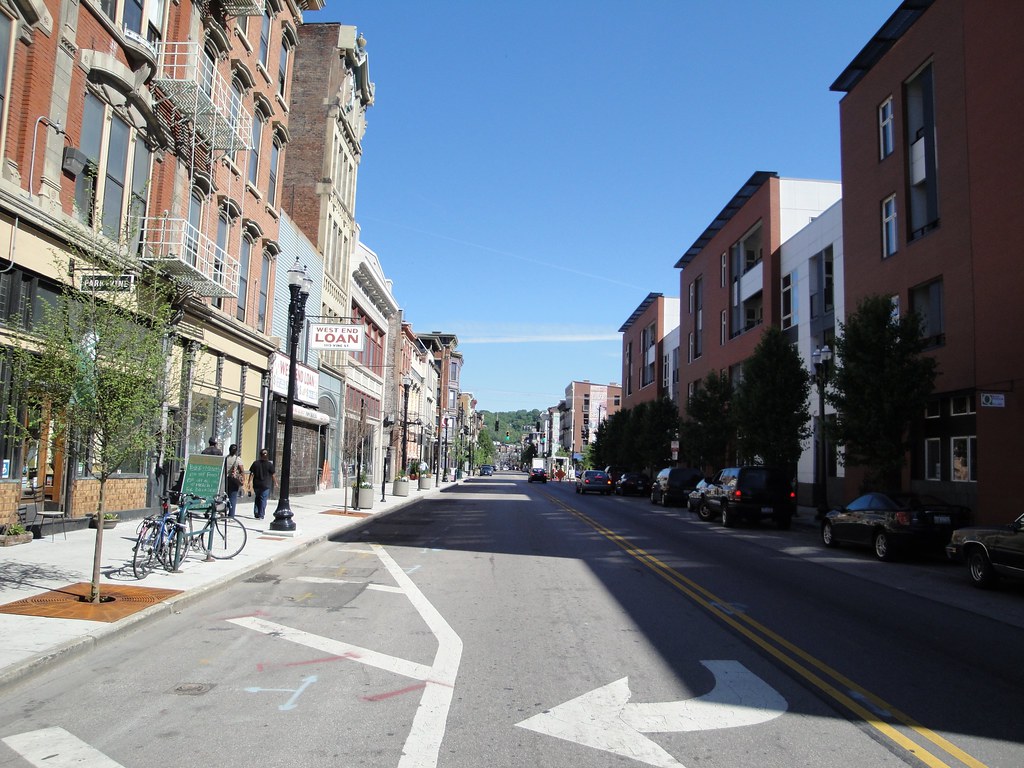
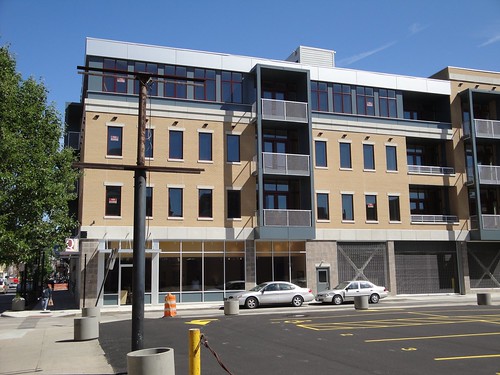
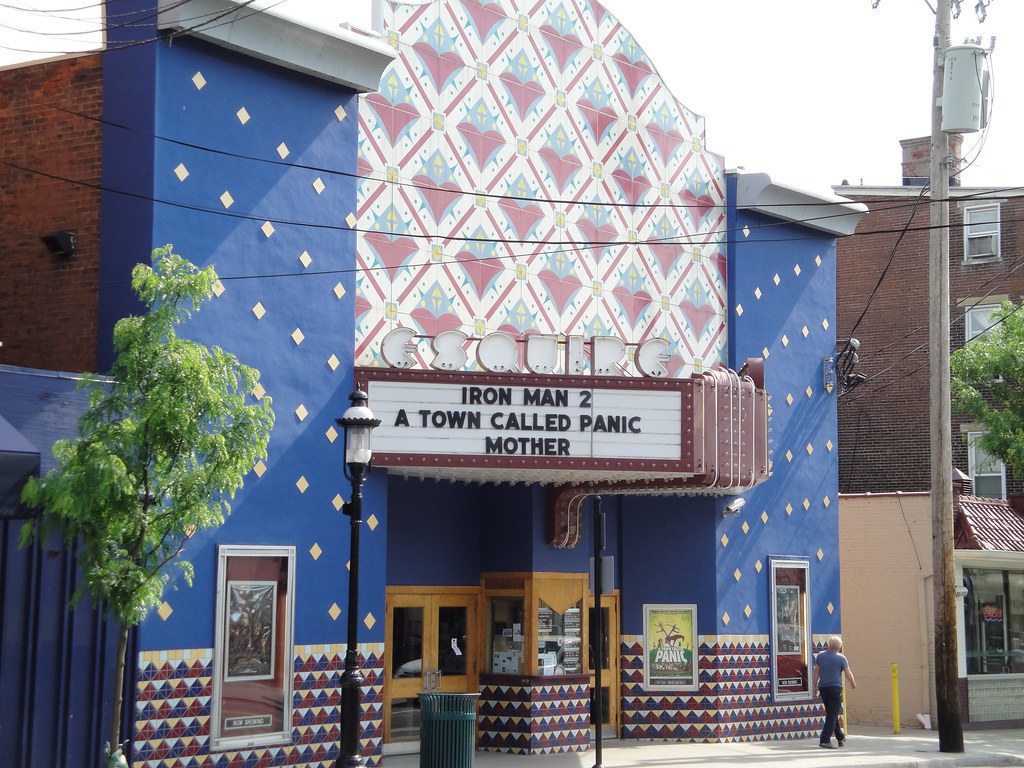
Also like many such districts around the country, the city has targeted this as an arts district. Here’s one theater:

One reason is that there are still such an incredible number of vacant and boarded up buildings that few development projects have resulted in displacement.
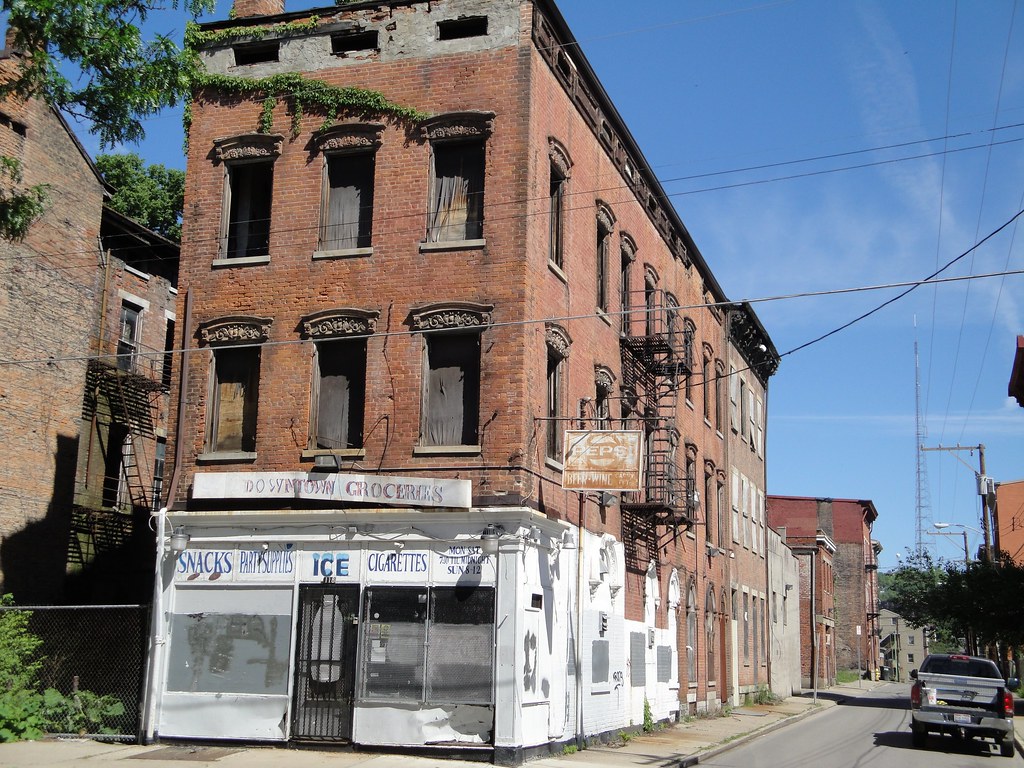
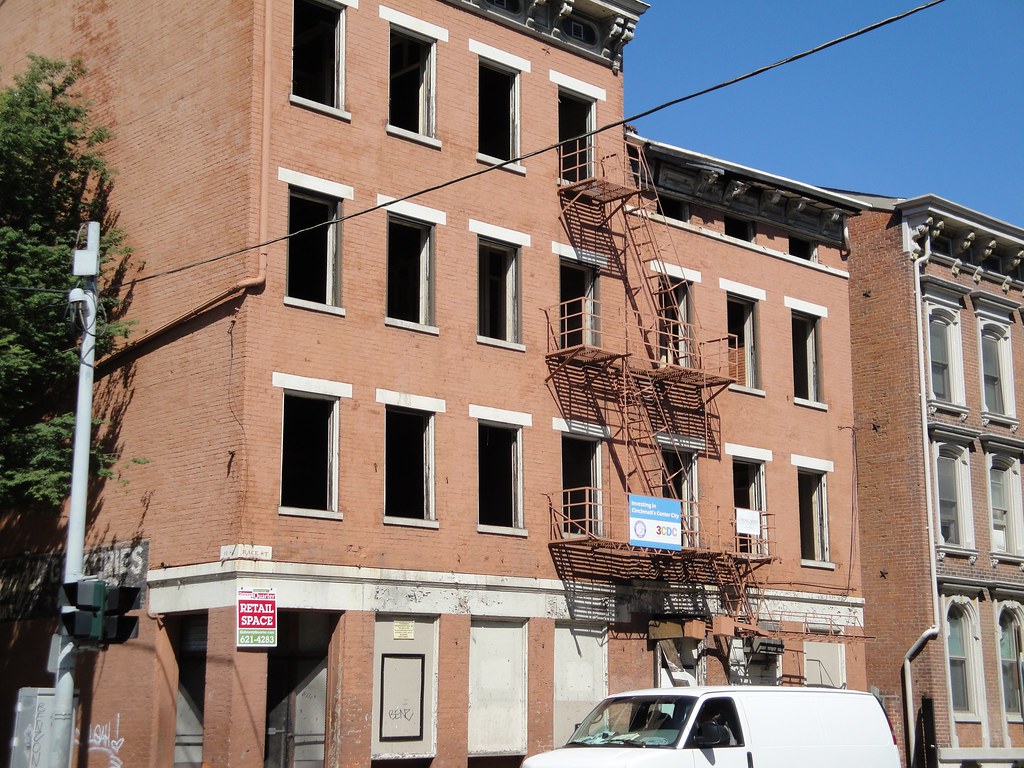
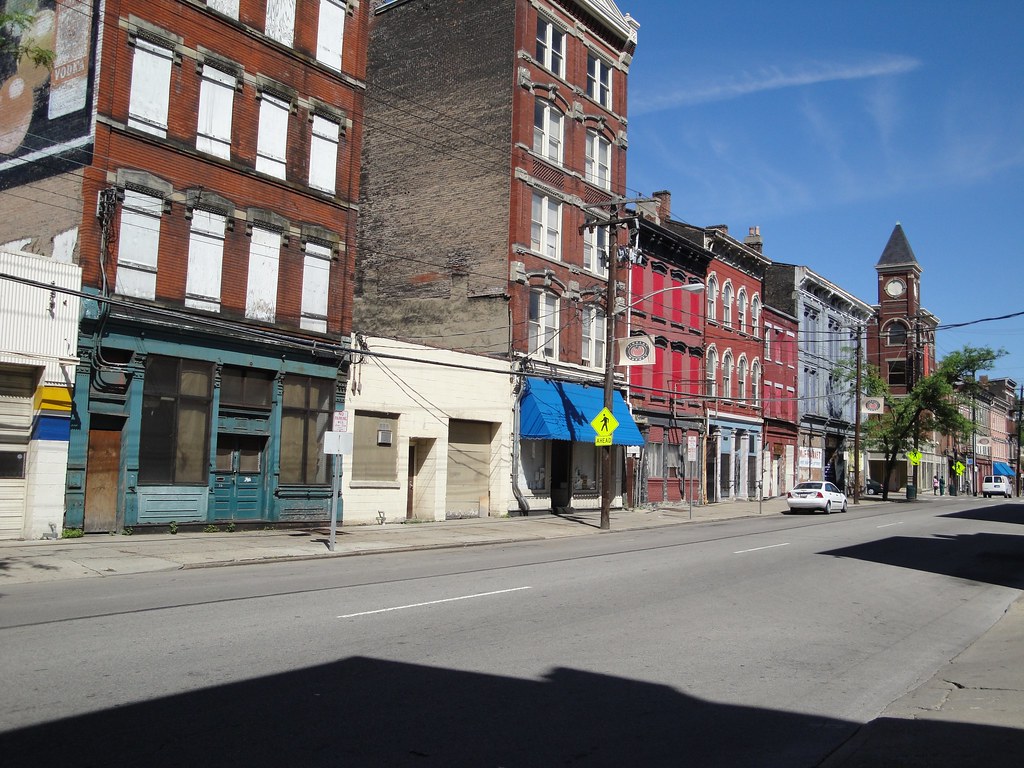
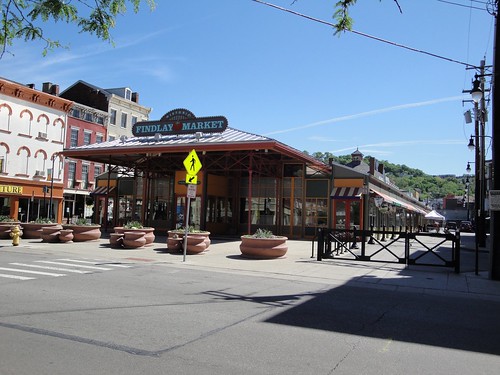
But it’s time to move on. Cincinnati residents are justifiably proud of OTR, but almost to a point where you might think it is the only thing they’ve got going on. It’s a constant chorus of “Over the Rhine, Over the Rhine, Over the Rhine…..” But there are at least 10-15 other neighborhoods in Cincinnati that most cities would kill to have.
Northside
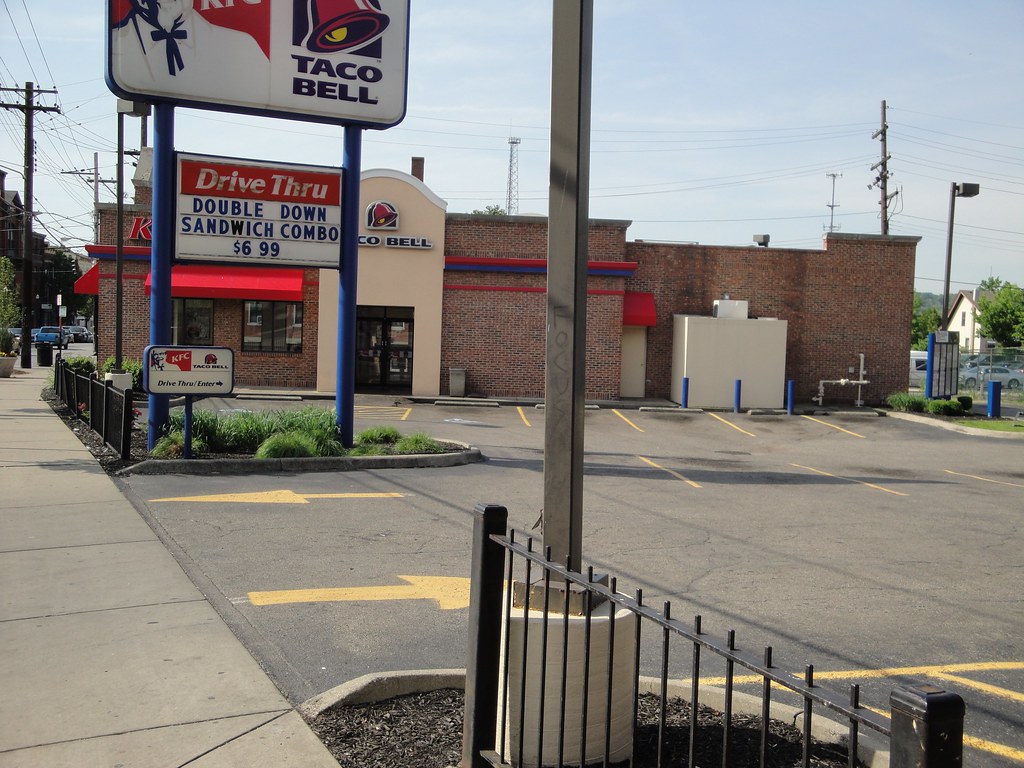
Northside is the neighborhood Greg Meckstroth called the “gayborhood minus the gays.” It’s one of Cincy’s premier hipster districts.


Clifton
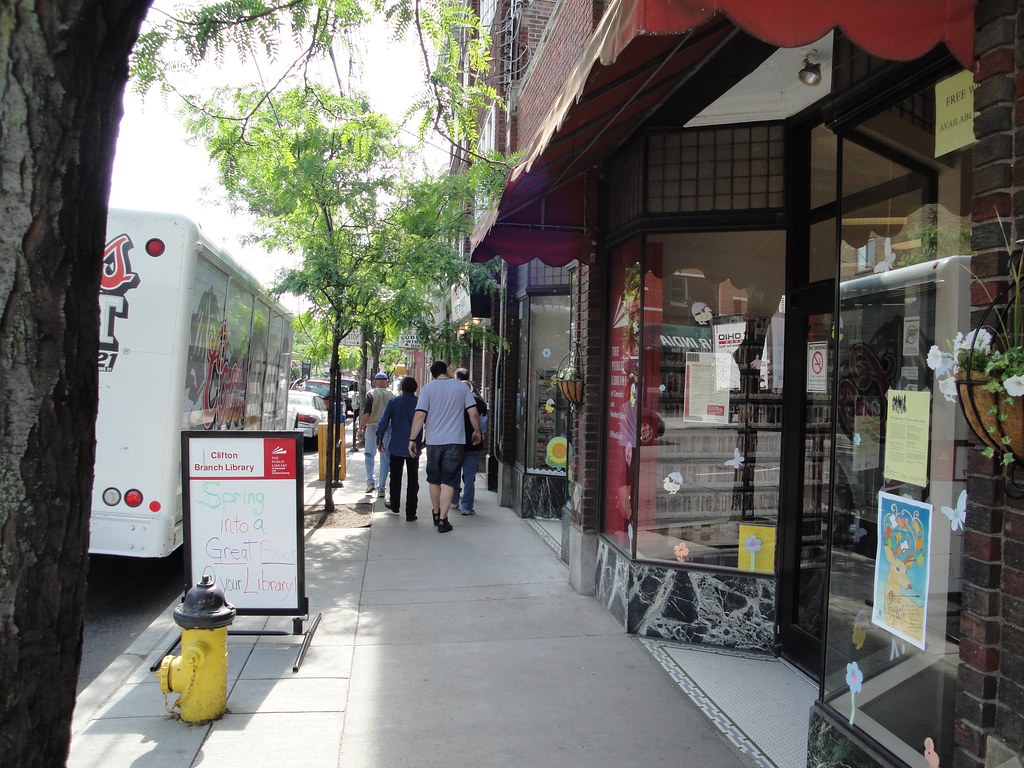
Clifton might be the most complete neighborhood commercial district in the city. It has not only coffee shops, restaurants, and bars, but also a grocery store, a drug store, and as you can see here, even a library branch. It pretty much has everything you need to take care of your daily needs.

University of Cincinnati
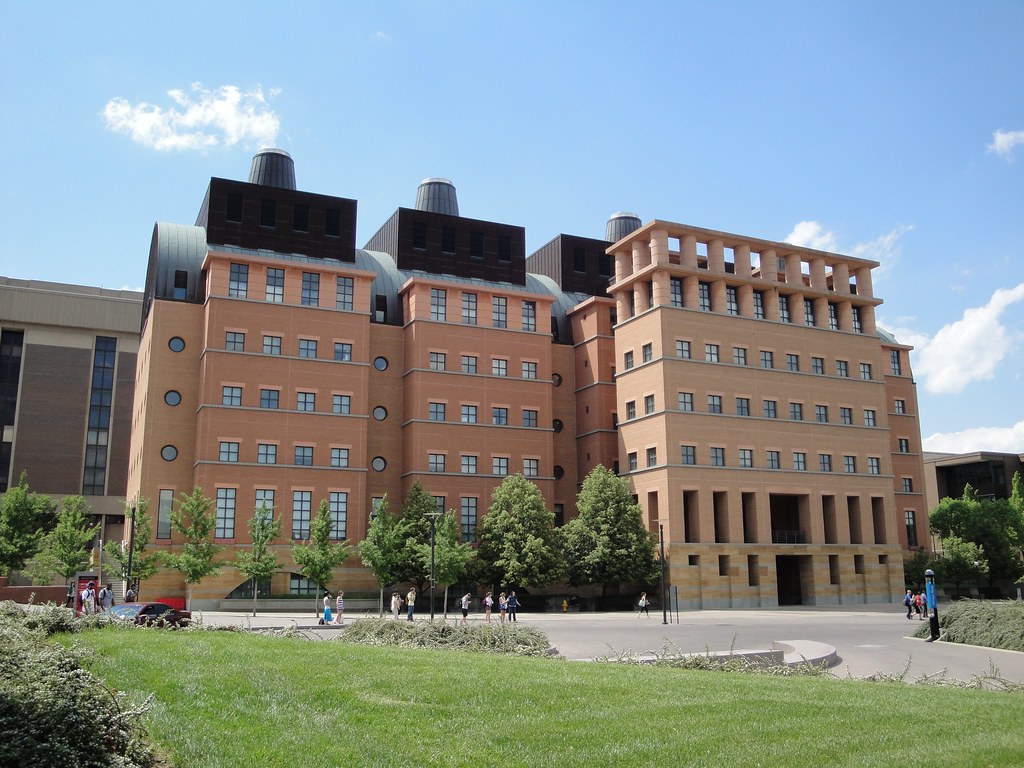
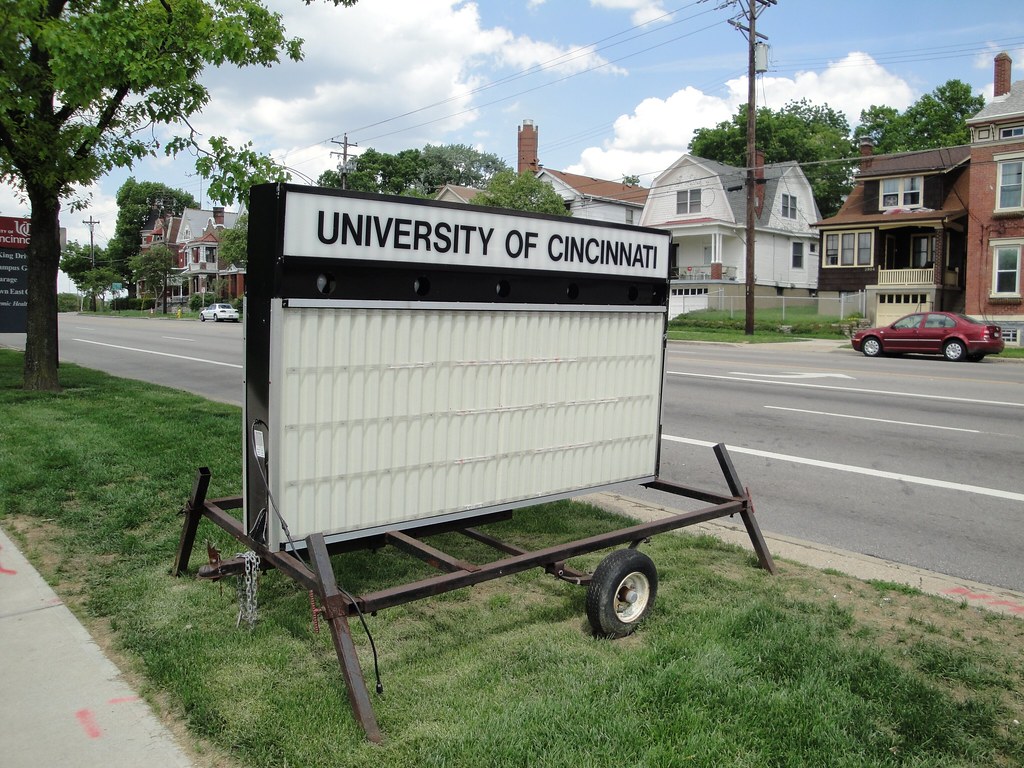
Clifton is basically where the University of Cincinnati is located. One interesting thing about the campus recently is that they hired a number of well-known contemporary architects to design their new buildings. Here’s one by UC alum Michael Graves:
DeSales Corner
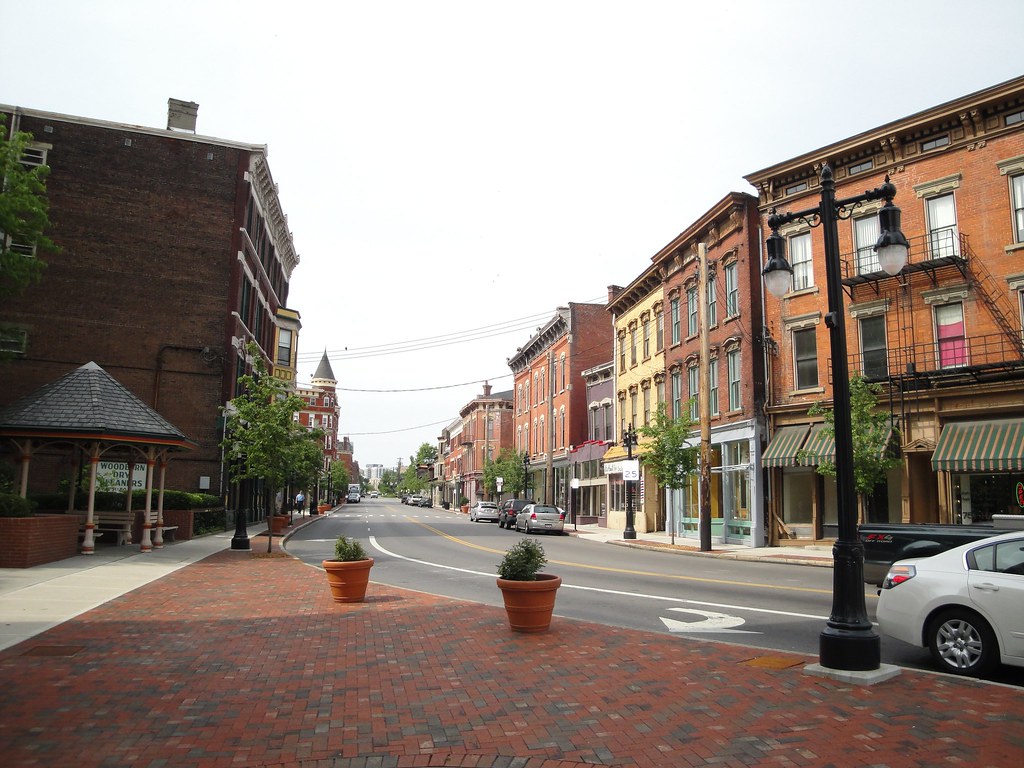
DeSales Corner was once a rival to downtown Cincinnati, as the major buildings there will attest. It isn’t often that you see seven story buildings in neighborhood commercial districts. This is like some of Chicago’s more intense districts, like Uptown or Wicker Park.


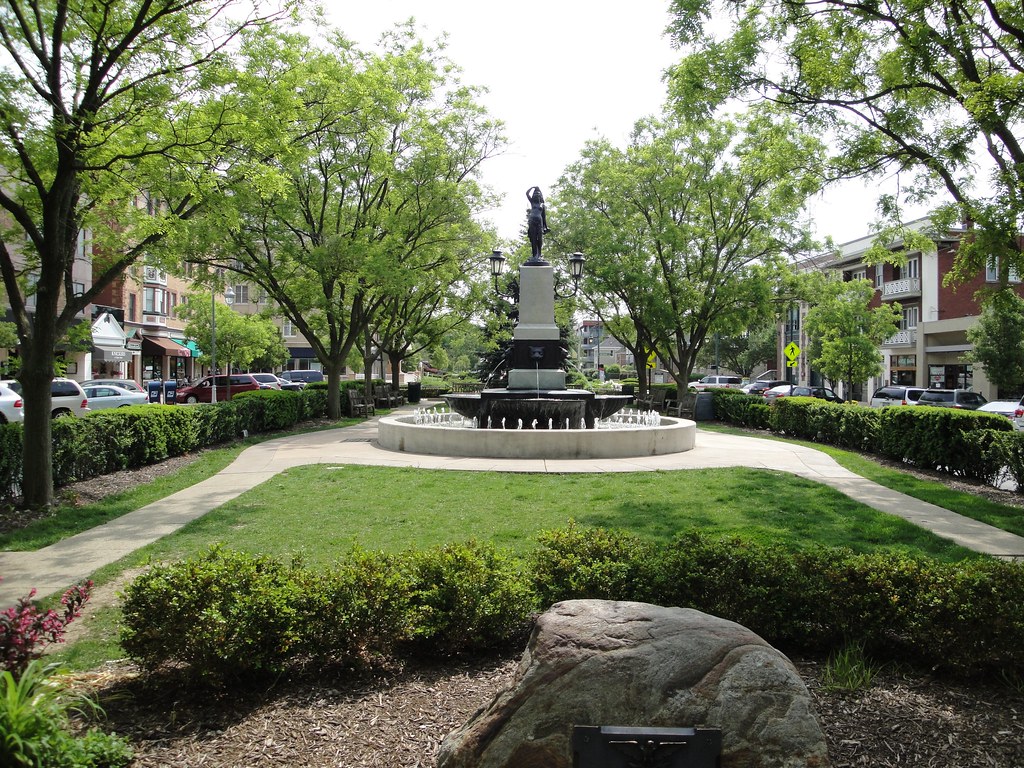
Hyde Park Square
When I visited this place, only one word came to mind: money.

More on Cincinnati
A Midwest Conundrum
Cincinnati Is Cool – by Mike Doyle at his blog CHICAGO CARLESS
Agenda 360 – a review of Cincinnati’s regional strategy
Water Works and the Commonwealth – a look at Cincinnati’s proposed water works transaction
Thanks for the photo tour. I have been looking forward to this post for a few weeks now. You hit it on the head with regard to Cincy’s assets….it is an embarassment of riches. And yet is seems that no one outside of Cincinnati knows this, so I am glad you did this post and, in doing so, bringing much deserved attention to the Queen City. When I lived there, I often felt frustrated….a city with so many great things ought to be a great city. Fortunately, there seems to be a lot of great things currently going on and some real grassroots efforts that are starting to show signs of progress.
Wow, I really want to go. I must say, it’s somewhat shocking in that intact areas of this kind of quality usually fill up or hold on. What are the connections and distances like? How many highways, parking lots and dead spaces in between?
I suppose, Pittsburgh’s North Shore area with East Ohio Street, The War Streets, Manchester and the like is similarly disapointing. Tremendous assets just not quite jelling. Even so, the building density here is much more like the South Side, which always somehow held on as a pretty decent business district.
Thanks for the photos. I haven’t been to Cincinnati in 20+ years, but I do remember the city having an unparalleled building stock. Problem is, it’s probably more urban than anything anyone has really wanted in Cincy for 50 years.
Nice post on a beautiful city. I have lived in all three major cities in Ohio, and they are so incredibly different. After six years in Cincy, which I loved, it struck me as the first city of the south-with all the inherent tensions that might suggest.
I believe “A Midwest Conundrum” was one of the first posts I read on this blog, and thus played a big role in getting me hooked. Glad to see you revisit the topic and expand on it, Aaron.
Great photos, and it was great meeting you during your visit. Next time you’re in town, I’ll be happy to show you a few more great places around town that you and Randy didn’t get a chance to tour.
Cincinnati really IS about its neighborhoods. They are almost like separate towns each with its own vibe, local characters, and destinations. For anyone planning on visiting, please make sure to explore beyond the decent-but-getting-better downtown.
And, I’m so glad you got to visit Ludlow Ave./Clifton Gaslight District. I live 1/2 block from Ludlow and, working from home, there are some weeks I never use my car. It’s the one neighborhood in the city that is truly walkable with everything I need within 3 to 4 blocks.
I think you are on to something pete-rock, but I don’t think it is a problem of Cincinnati being more “urban” than it has wanted, but I think it is that it has been more “urban” than it can sustain.
It’s easy for many mid-sized cities to restore their one, two or even half-dozen historic urban districts. But in Cincinnati, as Aaron discussed, there are 12-15 of these neighborhoods…and they’re big is size. The demand just hasn’t been there to fully restore and maintain all of these neighborhoods, but fortunately, Cincinnati has been able to keep most of them intact enough that they still exist.
As the “embarrassment of riches” saying suggests, Cincinnati has too much good stuff going on for its own good. Cincinnati has the riches of a much larger city, without the wealth or population to sustain it.
For many neighborhoods, the hardest part to fix has been the retail districts. They were individual hubs for the diverse neighborhoods of the city and provided most of what a person needed, but there just isn’t the demand for that many retail districts in a car-dominated city.
David M, the problem may be the current retail environment is incompatible with the old urban forms.
When you think of storefront retail, like what you see in the Cincinnati photos, those tend to attract boutiques for a high disposable income, low volume clientele.
These are hard to port for chain stores, who need a broader range of incomes and high volumes — and typically a moat of parking.
Or, chain stores want to move in to these districts only to find civic or community resistance. Target, for instance, has been eager to try different urban format stores, yet in many cases it faces resistance on account that it would overwhelm traffic or kill local stores.
So you could have an imbalance of retailer and audience. A retailer might not want to risk operating an urban format store, or it might take a chance only to find out the community pushes them out because it is a chain or it’ll produce traffic and noise.
The demand of a loyal customer base may be there.
Honestly, Aaron there is just not enough info in these photos. It seems pretty clear that you focused on so many of the nice intact places and buildings. Something is missing.
How did you yourself get around, by car or by foot? How far could you go or did you want to go in each area by foot? What are the transit links like and how much does it cost? What’s the geography between areas?
My guess has to be that there are lots of gaps here. Also, terrain is really important in that, like Pittsburgh this is a place with a lot of hills, isn’t it?
My guess is that by including some satelite views along with the photos, you could have told a far more complete story.
@cmh
re:city of the South
in the Virginia suburbs of DC, we have a slow transition to the south, with most of Northern VA feeling very un-southern except for the roads named after confederate generals
so it did surprise me how southern Northern Kentucky felt, area out by the airport was filled with southern accents – if I didn’t know any better would have thought I was in Tennessee
that said, the north side of the river didn’t feel southern at all
Thanks for the comments.
John, I already have more photos in this post than in any I’ve ever done, so some things had to be dropped for constraints. This is intended to be a photo tour of neighborhood business districts, not a comprehensive overview.
However, we did drive around. Cincinnati has walkable areas, but the city as a whole is clearly car oriented. There is bus transit, but like many similar sized cities it is fairly weak. These neighborhoods are not generally linearly connected along continuous commercial corridors. Yes, there is plenty of unbuildable land due to hills.
That Northside KFC was established there as an Arby’s or something probably in the late 70s (no brick). It sat vacant for years. If you noticed a large vacant corner lot a block south, that was a battleground a few years ago when a chain drug store wanted to develop there with, yup, a drive thru & a giant parking lot. That plan got bounced.
No question that Cincinnati packs a punch. But I do take issue with a couple things. First of all, why would you bother giving credence to ANYTHING Wendell Cox says, even if it does reinforce the point you’re making? He’s an ultra-conservative anti-urbanist by most accounts, and his conclusions (positive or not) should not be given validation on this forum.
“Cincinnati simply has the greatest collection of assets of any city its size in America.”
This comment really reveals your relative unfamiliarity with cities such as St. Louis, Pittsburgh and Baltimore. Cincinnati is certainly a gem, but none of these cities is any less impressive in terms of architecture, history or culture. I don’t think it’s appropriate to make such assumptions until you have had an opportunity to get to know these other cities. As a St. Louisan, I feel just as strongly that St. Louis can make the very same claim.
Jeff:
I don’t want to speak for Aaron, but he has written and studied St. Louis quite a bit. I would say that he might even be more familiar with St. Louis than he is Cincinnati, but that’s just a guess.
http://www.urbanophile.com/category/cities/st-louis/
On this note though, I would say that Cincinnati, Pittsburgh, St. Louis, Milwaukee and other Midwestern cities seem to punch above their weight. They have the architecture, culture, geography and urban amenities for cities much larger…especially when you compare them to the new growth cities of the southeast and southwest.
Quite simply, those new growth cities just don’t have the assets found in the older Midwestern cities which are more comparable to the mega cities found on the East Coast. Atlanta, Houston, Dallas-Ft. Worth, Charlotte, Miami and Phoenix all wish they had the same assets, or at least something comparable. What they have is the job and population growth…and with that…the money.
Jeff, as St. Louisians are fond of pointing out, the St. Louis metro area is significantly bigger than Cincinnati (the gaps has closed in recent years, but mostly from the Census Bureau adding large numbers of Cincy counties to the MSA). Pittsburgh and Baltimore are also historically much larger regions.
Also, “assets” does not refer to just buildings. Cincinnati’s cultural institutions, geography, unique local culture, quantity of Fortune 500 companies, etc. also have to be factored in.
In fairness, Pittsburgh is probably a decent comp, but again, historically much bigger.
Randy- that post you cite was written by a guest blogger. Aaron has stated that he is has not spent a lot of time in St. Louis. I agree with all of your points. I only wish the great cities of the Midwest were closer together.
Jeff:
That wasn’t a particular post I cited, that was the link to all of the posts published on The Urbanophile with a St. Louis tag. The first post just so happens to be by a guest blogger. Scroll down the page and you will see a potpourri of St. Louis posts.
Wow. That Michael Graves design looks like a re-hash/mash-up of all his Indy buildings (RCA/Thomson, Art Center, NCAA Hall of Champions). And not in a good way.
Interesting that some say Cinti feels “southern”. It has always felt “east coast” to me, way more eastern than any Midwest city other than Chicago. )I think that’s the built environment and topography working together.)
I could not agree more about Cincinnati having an unusual amount of vintage neighborhoods. As a Realtor who specializes in all of Cincinnat’s older neighborhoods I can say we have a huge amount of historic building inventory in every direction. One of my favorite things is showing people new to Cincinnati property. Newcomers always comment on how pretty the city is and are surpised about all the hills. But what gets the most comments is the OTR area. People are amazed at the architecture, want to know what it is called and why is there so much of it. I have so much fun sharing the unique history and culture of this city.
I’m not sure if the amount of vintage neighborhoods is what stood out as much as what look like vintage intact and fairly high density areas and shopping districts. Places that if full would hold lots of people, businesses and work well with transit.
I would imagine a place like Pittsburgh could compete with its many areas of wonderful old homes but has so many lost areas between.
Yes, I looked closer at the Flkr sets and there are lots of photos. The lack of info on connections and geography is important.
Here’s my guess. A number of people on here have mentioned the problem of every city chasing a very small “high end” urbanist market. I think this is partly because the cost of fancy renovations and things like the ADA impose costs beyond what relatively poor cities can support and that often places are in such bad shape by the time redevelopment comes but also because few places have really seen the value of true organic bottom up development. That’s funny since the model areas like SOHO,The East Village and Williamsburg in NYC everyone wants to be like developed organicaly and often illegaly.
If many of these buildings are in fairly good shape and just empty, what we have here is more a regulatory, zoning and marketing problem.
I assure you that there is lots of demand out there, among other groups like the young. It’s just not instant, high end condo demand and it might not be all local.
This could be a place for a serious attempt to attract lots of outsiders. No doubt, Cincy is obsessed with what it’s suburbs think of it but has done little to sell itself outside that market.
Cincy by the way, is not far from Paducah, Kentucky which has been very succesful doing much more with less.
This really does look like a deep cultural issue related to history.
Comparing Paducah, Kentucky with Cincinnati is like comparing Louisville with New York City. Or like comparing Macon, GA with Chicago.
Simply wonderful to see. Good job and thanks.
“doing much more with less.”
That was very much my point.The partcular reference here is to Paducah’s Artist Relocation Program. This is a small town with no nationaly known brand at all, that has attracted quite a lot of complete outsiders to a historic waterfront area with big flood issues.
Paducah stands out as one of the very few campaigns launched by any towns in the rust belt or midwest to atttract complete outsiders. This is a national campaign using primarily the web and ads in national arts magazines.
Pittsburgh’s Penn Ave Arts Initiative is never pitched beyond the region in any aggressive way, even though it’s worked pretty well. Cleveland invests a lot in attracting tourists but no significant amount on new residents.
Just from the photos posted, I find it hard to believe something can’t be done.
This is about having some guts.
the thing about Pittsburgh is that the very high number of colleges and really close proximity to the big east coast market means that it’s secret is likely to slip out one way or another.
Cincinnati, is likely just too off the beaten track and radar screen to have that luxury. Somebody needs to make a sales pitch.
I could come up with lots of obvious target markets.
I understand, and my point is that it is fairly easy to accomplish a singular program in a small town without the multitude of issues facing larger cities. Sure, Cincinnati hasn’t done the same things as Paducah, KY or even Chicago for that matter. Each place is unique and has approached things differently.
But in terms of attracting artists, you should look at the Pendleton Arts Center – http://www.pendletonartcenter.com/cincinnati_oh.html – in Over-the-Rhine. Also, look into what Rookwood Pottery is doing in terms of bringing in artists from outside of Cincinnati to work as professionals and apprentices alike. This too is located in Over-the-Rhine…it’s just that we’re talking about a much larger scale here than Paducah, KY.
http://www.rookwood.com/
We have so many wonderful residential neighborhoods in Cincinnati. I have lived in Pleasant Ridge for more than 30 years…old homes, diverse community, but struggling business district. Check us out!
Randy, I really fail to see the logic in your train of thought. Are you saying because you are much bigger and have so many assets, you can’t do much while a place like Paducah can?
I take this thing pretty personally, in that I as an artist who lived in NYC almost all my life (never had a car) tried to do some research, specifically looking for an affordable urban type city. I also started an art gallery, which didn’t work out.
I knew about Paducah and visited a few other places like Lowell Mass and Providence/Pawtcket Rhode Island. Philly was off my list mostly due to price and also crime, which really is not a joke there.
I knew Pittsburgh because my sister lived here and also because of CMU’s art dept.
Cincinnati, most certainly would have been on my radar screen had they made any major attempts at all to put it there. Location wise it was a bit more out of the way and I needed a certain proximity to the east coast and family ties. Even so, almost any serious effort would almost certainly have gotten me to visit.
I mean hello, if lots of folks say your city reminds them of popular expensive east coast cities wouldn’t it make sense to tell your story there and show them what you got?
I had the opportunity to move to Cincinnati after I graduated from Ohio State with my Master’s in 2000, and even interviewed for some jobs in the area. However I decided to stay in Columbus, and perhaps my reasons why will shed some light on Cincinnati.
I do want to preface by saying that these observations do not speak for everyone or every corner of Cincinnati, and from what I can tell things have changed quite a bit in the last decade.
My wife (then girlfriend) was from that area. I remember moving to Columbus from Connecticut to go to Ohio State and thinking that is was a dull city at first. I didn’t get down INTO Cincinnati itself until close to graduation. My wife was attending an event, so I had time to drive around and check things out. I was blown away by the beauty and charm and seeming sophistication of the place that seemed so much bigger and more cosmopolitan. By the end of the day, I was absolutely convinced that I wanted to move to Cincinnati after graduation.
I began learning more about the city to understand what it was like. After I was done, I decided to stay in Columbus, for these reasons:
1) Despite the charm, many of the neighborhoods were in very bad shape and quite dangerous. I had returned to Over-the-Rhine and found myself in some situations that were quite scary, and I have been in some of New York’s worst neighborhoods and not been that nervous.
2) I learned that I would probably have a hard time assimilating into the cultural fabric of the city. While I am a moderate politically, I found the attitudes of many in the area downright shocking in terms of race and other conservative hot-button issues. The racial tensions of the time were real and you could see it on the streets. But it went beyond that. I slowly learned that Cincinnati is probably the Midwest’s version of Boston (where I also lived) in some ways-a city that has cultural “cliques”. They are awfully proud of their heritage-rightly so-but if you were not born there, you don’t have it.
3) While Cincinnati has great physical assets, I found that the street-level cultural assets were fairly lacking. At the time it did not have many restaurants, bars, shops, etc. that make places interesting. Additionally, the attitudes about the urban city at the time, essentially that it was for the poor and minorities, made me think that they would not put a lot of effort into changing things.
When I looked at the big picture and compared the two cities, Cincinnati ended up seeming stagnant, while Columbus seemed to have all of the mojo (and I hadn’t been sold on Columbus until that point). Columbus has one of the most boring landscapes in America, has a much more poorly developed physical fabric and doesn’t have anywhere near that pedigree that Cincinnati has. But Columbus, as a big college town, was a place where I could 1) be accepted-newcomers are welcomed and in fact dominate the city 2) see definite progress-Columbus’ urban core has progressed light years in the past decade 3) already had a very well established “street level” cultural assets-lots of districts with shops, a good restaurant scene, a great bar scene, great coffee shops, etc. 4) didn’t have the cultural drama of race relations that Cincinnati had and 5) didn’t have any neighborhoods that were anywhere near as dangerous as some Over-the-Rhine and other inner-city neighborhoods.
Perhaps my experience explains why Cincinnati has not grown as much as some other places. Perhaps not, but either way I hope they do well, because the city does have a great core of assets upon which to build.
Re: Paducah’s arts district- I did some research on their program a couple of years ago and I got the impression that many of the artists that relocated there were married couples in their 50’s-60’s, retired, and had homes that they owned and sold in other, larger cities. They seemed to be people who would not have to worry about supporting themselves by selling their artwork. I can’t think of a neighborhood in Cincinnati where something like that would work. Yes, the architecture is incredible, and some of the neighborhoods would make amazing arts districts, but most of them aren’t the kind of places you want to settle down and retire in. The Pendleton Arts Center is a great place to visit one evening a month, but artists there are lucky if they make enough money to cover the rent-the residents of the city just don’t purchase enough artwork to make it worthwhile to be an artist in Cincinnati. The artwork that does sell is mostly pretty paintings of Riverboats and Fountain Square. I think a previous poster was correct- too many great neighborhoods, but not enough people to support them….We’ll just have to see what happens to the Pendleton neighborhood when they build the casino next year.
“I assure you that there is lots of demand out there, among other groups like the young. It’s just not instant, high end condo demand and it might not be all local.
This could be a place for a serious attempt to attract lots of outsiders. No doubt, Cincy is obsessed with what it’s suburbs think of it but has done little to sell itself outside that market.”
It’s sad that Cincinnati is the unofficial branding and consumer marketing center of the US, if not the world, but can’t seem to be able to market itself beyond its own suburbs/region.
Attracting outsiders to Cincinnati via historic renovation is something I covered on my blog last year:
http://www.drew-o-rama.com/designcincinnati/2009/06/why-arent-we-attracting-new-people.html
Yes, that’s about what I’ve heard about Paducah too however this is a pretty extreme case.
Also, admit that you are not an artist and really have no knowledge of the real problem.
Lots of artists in cities like NYC are already represented by galleries and have some connections and income. I myself have work in the collection of MOMA, The Whitney, The Fog Museum, MFA in Houston and some other big collections.
Even so, if I was lucky, I might earn 30,000 a year off my work. Now it’s true that I was a somewhat extreme case in that lots of artists have teaching prof gigs.
Even so, there are many, many, many creative people who already have some connections and do things like film or video work in which location is a lot less important.
The most important problem is not the size of the local collector base (although that would be nice), but the general lack of connection to the outside world. This is a huge problem. After I moved to Pittsburgh, several rumors circulated that I had gone blind since Pittsburgh was at that time so off the big city radar screen.
The fact is that a low cost place to do work with some level of density and affordability is what most artists want. Incomes over the 50,000–100,000 or more it takes to live in the “hot places” are still pretty rare in the arts.
Even if what you do is more craft oriented it’s not that big a deal to hit the roving alt craft fair circuit to sell your stuff. (google the great couple who run Tugboat Press in Pittsburgh)
The current dream one hears among folks in places like Williamsburg now is that they will stick around long enough to make connections and leave once their career takes off.
Of the people I knew almost everyone not very sucessful, very wealthy or tied to a rent controled apartment has left.
Lots of people are looking for an escape hatch.
Another great business plan is to split your time between two cities which is what artists like Swoon and the Street Art Collective folks do.
The point is that it’s not up to a city to even be snooping into this stuff. They just have no clue. Just tell people about your town, and free up the zoning and other regulations that drive up costs. If nobody shows up fine.
Right now one is dealing with so little info and with lots of ignorance because no effort has been made.
John, I’m not sure the point you are trying to make. You picked one specific program for which Paducah is justly famous and are using that to say it is a better city that Cincinnati. That’s nuts. I would be the first to agree that Paducah does Paducah’s program better than Cincinnati or anyone else. But that’s meaningless in the grand scheme of things.
I didn’t say “better”, but I did suggest it might have a level of cultural openess that’s greater than Cincinnati. If you read the comments you see that a number of people who know Cinncinati much better than are not arguing that much.
Why is this place so off the charts that so few people know about it while what really is a tiny town like Paducah has reached out enough to advertise for residents in national publications? Which galleries participate in national or international art fairs? There are a few in Columbus you see and hear about but Cinncinati rarely comes up. The Hadid designed Museum was about the last non baseball thing I’ve heard of. Of course, I know a bit more now because I’m somewhat interested.
The Shepard Fairey , “street art” is a pretty good symbol since he’s floating around on a grand tour of shows and hiring lots of people to put these things up. Just the kind of two tiered art world of either hyper local shows with no out of town artists with a major museum doing shows to show the locals what “real famous artists are doing”.
The general rule, that I found was very true about Pittsburgh was that places that were even remotely open popped up.
Artist bios and resumes can tell you a lot. If museums, galleries and alternative spaces have lots of juried shows or group shows open to emerging artists from anywhere, one pretty quickly learns of them.
Same thing goes for artist residency programs. I think it’s very much that way with music cubs also. Everyone knows the places that are open to new acts. They get national buzz pretty fast.
It’s about cultural openess and this is one thing that’s very hard to transform or transplant.
A place like Youngstown is getting phone calls from start ups in Austin.
Ultimately, the purpose of a city has always been as a place to trade in ideas and products and that requires a lot of openess.
I think your article should highlight the accessibility of quality family entertainment venues. Cincinnati may not have the wealthy Chicago patrons to fund fabulous urban cultural attractions, but families can and do get to the zoo, the acquarium, the ball parks, the librairies, the museums within minutes and without spending a fortune in parking fees or transportation or time in miserable traffic.
Great post Mr. Renn!
@Jeff, in defense of Wendell Cox and opposed to what his Wikipedia page would have you believe, he really isn’t anti-urban so much as he is anti-waste and big government urban renewal style planning.
I have become fascinated with Over-the-Rhine as a result of its facebook page (http://www.facebook.com/OverTheRhine) and have learned a lot about it including the following:
Over-the-Rhine (OTR) is the largest, most intact urban historic district in America. Covering over 360 acres and 1000 buildings, OTR is vying for the title of “Greenest Neighborhood in America” by becoming the largest LEED certified neighborhood in America.
Arthur Frommer, the famed travel writer, spoke fondly of Over-the-Rhine during a visit in September 1993. Frommer said that, “In all of America, there is no more promising an urban area for revitalization than your own Over-the-Rhine. When I look at that remarkably untouched, expansive section of architecturally uniform structures, unmarred by clashing modern structures, I see in my mind the possibility for a revived district that literally could rival similar prosperous and heavily visited areas.”
And isn’t the area from the river/riverfront part to Banks development/downtown to OTR to UC/zoo/Clifton getting a streetcar line and a fairly urban casino?
I really think we have a lot of consensus in these comments both from people who live there and from outside, that Cinncinati seems to have lots of assets and be a place that could interest almost all of us.
The thing is that if this is anything like Pittsburgh, the clock is really ticking. Empty unloved buildings can deteriorate pretty fast. also, from the little I know about the city’s financial position many loved institutions are at great risk.
This place has to make rapid moves to make moe people aware of it.
I have several off hand ideas. The first is to take a hard look at the relationships with the colleges. Are all of them walled off from the city or could some buildings and programs be shifting and mixed into the city like the OTR and downtown area? Youngstown is doing a great job with making those links,(that’s how the incubator happened) getting the students involved with the city. In Pittsburgh, Point Park (awesome) is playing a great role putting dorms downtown and building synergies between it’s leading arts, theater, dance and business programs and the downtown cultural district. Even Seton Hill in Greensburg is putting their studio arts and theater stuff down off the hill into downtown.
It’s pretty crude and disgusting to see amazing places fall apart while money is spent on mega contraptions like the university building you showed.
Also, to be brutal about it, if OTR had the guts it might try to market itself as a black cultural mecca.How many remotely intact, historic black areas are left in America? The vast majority were taken out by the wrecking ball.
This would also fit perhaps with the casino situation. Suppose, instead of big monopoly slots oriented gaming, you sprinkled smaller card rooms, and high skill game venues and small hotels throughout the the Downtown and OTR areas?
The start of almost anything has to be some kind of active campaign to make the town more known to the kind of people of any income range that love and want to live in that type of city.
Wow, looks great, and you didn’t even hit Mt. Adams or Norwood. I bet there’s even more good stuff down there on the Ohio, but I don’t know Cinci nearly as well as an Ohioan should. I’ve always been a Columbus and Cleveland guy.
John 9:48, I have some photos of Mt. Adams on my previous “Midwest Conundrum” post if you are interested.
Cincinnati has its charms, to be sure. Having grown up in Columbus, pickled in its comfortable affluence and and flat, sprawling boomtown blandness, Cincinnati’s architecture, hills, history and ethnic character was/is endlessly fascinating.
Then I moved to Pittsburgh for college…and, well, if you like Cincinnati, you really should visit Pittsburgh. Its assets — cultural, architectural, topographical — are comparable. In many ways, the two cities seem separated at birth.
There’s one big difference, though. Pittsburgh’s story of near-death and rebirth is simply without precedent in American cities. 25-30 years ago, it was where Detroit is now — left for dead after the collapse of the steel industry. Only there were no bailouts for Big Steel.
Pittsburgh slowly, painfully, turned it around through strategic investment, economic diversification, and the sheer fanatical devotion of those who stayed — and many who had to leave, as Jim Russell of Burgh Diaspora indicates.
Hey, come see for yourself. No, there probably aren’t a ton of well-paid job offers waiting here right now for urbanist bloggers (sorry Jim! Keep trying!), no matter how well-regarded. But there are good jobs, at least — something you couldn’t say with confidence even 5 years ago.
Yes, they seem very similar as boomtowns of the mid to late 19TH century. Imagine how close Pittsburgh’s North Side would be to OTR if the old Allegheny City street grid and central Federal Street area still existed. (they are even similar in that both attracted lots of people from what we know as Appalachia.)
Even so, Pittsburgh is much closer to the major cities of the East Coast and has colleges on a different scale and level.
I can’t agree that Pittsburgh’s revival is amazing (Look to Hong Kong and Singapore) in fact given it’s enourmous wealth the better question is what took it so long. Even now the revival is on petty shaky legs and far too dependent on government spending and the colleges.
The thing about Pittsburgh is that it’s a place too close and with too many important things to have faded from people’s minds. In some ways it’s more like Detroit in terms of it’s brand.
Cinncinati is just a place people can forget is there. It has to go out and sell itself!
In response to John Morris’ post on Cincinnati strategies, UC has invested heavily in the area around the school in Clifton recently, so there is work being done there. I can’t say that they have been reacing down into OTR though. The other “big dog” Xavier, is in an inner-ring suburban community.
In terms of OTR being the “historical black Cinci neighborhood”, I’m not sure that’s totally accurate. It was originally a primarily German neighborhood, and there was a canal separating it from downtown (hence the name “Over-the-Rhine”). It did become largely African-American in the mid-20th century, but I wonder if there are other neighborhoods that would be more historically appropriate as the black cultural center of the city. I guess you would have to ask the African-American community in Cincinnati that question.
A few years ago, UC’s Niehoff Studio had a space on the edge of OTR where students worked on neighborhood-specific projects. I don’t know much about it, and I believe that the program is now in Mount Auburn.
It’s frustrating to see the photos of unused buildings in OTR, and to read some of the comments, when my partner and I have been looking for a small building to buy in the neighborhood and have found that to be out of reach. There’s a lot of hand-wringing about all the abandoned structures, but it seems that property owners are sitting pretty while they wait to either sell or rehab.
Well, Harlem itself was once a populated by Jews, Italians, and other old ethnic groups. the primary period of black migration into urban areas was from I think 1900 – 1960, so this isn’t that far from that.
Even so, whatever the history, there really are very few really urban areas left with both nice central locations, a good building stock and historic black populations. D.C. seems to be reviving that way.
I’m pretty bullish on Pittsburgh, but the Hill is just not too likely to come back. It’s heart and soul was the lower Hill and really that’s just gone. even more disturbing is that the city still seems to be pushing already disrupted communities further from the central urban parts of town. The North Side has really been gutted like a fish and sits as a bunch of marginally connected fragments.
Pittsburgh might be stabilizing it’s white population and be attracting new people but for blacks the picture is a lot worse. since I’ve been here, in six years I’ve seen a lot of people leave for either Brooklyn, D.C. or Atlanta.
I don’t know much about St Louis but it sounds like the urban core is a remote shell of it’s former self.
If OTR, could become a mixed ethnic area say like Fort Green in Brooklyn, that would be even better!
For another perspective on Cincy
http://news.cincinnati.com/article/20100605/NEWS01/6060327/-Cincinnati-subway-documentary-debuts-
there is always the tale of the unfinished subway.
Thanks so much for this post! I love Cincinnati and have lived in Cinci for most my life! I also went to the University of Cincinnati so The Nati has a warm place in my heart!
Though I will have to say that you made it seam as though Clifton has developed much more than Northside and I just wanted to let you know that Northside as well has many bars that feature our exceptional local musicians, numerous gay bars, biker bars, a couple clubs, a library, a video store, a Farmers Market in the center Park, Hofner, once a week, a small grocery also just opened, coffee shops, bakeries, a drug store, a childrens craft center, countless restaurants that range from high end to vegan friendly to cheap amazing burritos. Northside also has multiple vintage/crafty merchandise stores. I am the owner of one of these vintage stores and I will have to say that the community of vintage stores in Northside is strong. Most businesses in Northside are independently owned and operated with a as well which is not something one can say about Clifton. I just wanted to let you know how Northside has progressed from a rarely visited and dying neighborhood to a thriving, community driven, exciting place to be a part of!
Also, I am a manager at the Esquire Theater and yes the movie “Mother” that you mentioned was the Korean Version that you thought it was and we only get some Blockbuster hits in the summer, normally we just have documentaries and foreign films.
Thank you so much for this post, I love Cincinnati! And of Cincinnati I love Clifton and Northside the most so I am very appreciative!
Good point about Harlem, John.
John, good point on Harlem.
It just seems that if one had to point out a really big significant difference between Pittsburgh today and Cincinnati, it’s race. I think Pittsburgh is 25% black or so with the percentage falling while Cincinnati is over 45% black. Pittsburgh might be the new Portland or San Francisco but it’s not likely to be the old Pittsburgh of Teenie Harris and The Courier.
More importantly, blacks in Pittsburgh are being shoved or leaving the central areas of the city and there is no real successful place in the city for the black middle class.
I don’t mean to imply that some areas of the city like Shadyside, Friendship, Squirrel Hill or places like Manchester or The War Streets don’t have middle or upper income blacks or that they are actively discriminated against in those places. But, there just isn’t the kind of centered, thriving sense of community from what I can see. It’s a pocket here and a wonderful street there but the guts are just gone.
And, Pittsburgh is far from being alone. The fate of historically black communities in America is pretty grim. (Read the book Root Shock)
I just feel like this could be a real niche for Cincinnati as a wonderful centered urban place where black businesses and culture are welcome and at least not destroyed. Of course, if this drew other people too that also would be great.
OTR just looks like that could be a big part of that.
I guess what I’m saying in plain English is that the city should be thinking about chasing that market. (and that’s why I think it takes guts)
Even 15 years ago, the word black neighborhood painted a picture of a poor area and black inner city for sure meant that(even though that never was exactly true and that the people who painted these pictures were often racist). Now, one might think of Harlem or some parts of D.C. Atlanta or Brooklyn like Fort Greene or Bed Sty.
The next cutting edge is to see if one can create places like their used to be that were not so divided by class.
John: Central Harlem had its white flight in the 1910s, and was nearly 100% black by 1920. West Harlem became black around the same time. The Harlem Renaissance was not in a diverse neighborhood. East Harlem had Italian pockets for longer, but it’s more accurate to say that with suburbanization and urban renewal, Harlem expanded and incorporated formerly Italian areas. A modern comparison would be how Chinatown is expanding and incorporating Little Italy and parts of SoHo and the Lower East Side.
That’s true. My point really isn’t that much about history as much as the here and now. Most historic black urban areas that have any livability factor at all have been destroyed. (Some places like Detroit, always had issues with real livability and density)
If one was looking for a big historic urban type neighborhood with a nice street grid, nice structures, the potential for a great arts and shopping district and with a good black cultural scene and strong black middle class, how many choices would you have? How much would it cost to live or start a business there?
I’m not saying Cincinnati has all this in spades, but it sure looks like it has the bones and some structure to support the development of that kind of thing.
John:
My experience has been that Cincinnati has a long way to go before it’s actively fostering the city as the “Atlanta of the Midwest” as you seem to be suggesting. I mean they had major race riots in 2001. There was a LOT of racial tension.
I think that many in the metro area came to see OTR as the “black” neighborhood. It had an extremely high density of affordable housing for very low-income residents. Now every city has something like this area, but in Cincinnati, given the racial strife, it was magnified. While many other cities were revitalizing their best historic neighborhoods in the 90’s, Cincinnati did not seem to be making any sincere efforts until a few years ago. And I’m not just talking about the elected officials. The population at large it seems was stuck in the 60’s in terms of racial attitudes.
It appears that the riots in 2001 shook things up a bit. The City, through 3CDC, is working hard now to revitalize sections of OTR, and UC is working to revitalize Clifton. The Model Group, a local developer, is rehabbing some of the Section 8 housing into showcase affordable apartments. They have some of the nicest low-income housing I have ever seen (and that’s what I do). So things are starting to happen. I remember reading an article in 2002 that basically said if OTR was in a coastal city, it would have been revitalized years ago. But it was in Cincinnati, and the attitude was that we don’t waste money on that area.
“If OTR was in a coastal city, it would have been revitalized years ago. But it was in Cincinnati, and the attitude was that we don’t waste money on that area.”
Well, there you have it. This is a city like Pittsburgh who is so beautiful in so many ways, yet she sits in bed while her husband looks at photos of other women.
If people there, don’t appreciate the city, they need to market themselves to people who would.
This sort of thing happens a lot in Pittsburgh on The North Side where folks come into town to see a ball game or go to The Warhol, end up in The War Streets and start thinking about buying a house. Usually they are from somewhere like D.C. or San Francisco wher similar areas cost a fortune.
OTR just looks like that kind of place except on a much bigger scale. If folks in it’s suburbs don’t like the place they can just stay out.
In your earlier piece on the city you mentioned the real problem Cincy faces in passing: The entire region’s divided among feudal cliques, with it’s resources devoured by competing (sometimes ethnic) enclaves. On a 1 mile strip of road that turns into a major north-south artery the speed limit changes 5 times, between 20 and 40 mph! This is done to fund 2 tiny, corrupt community governments that truly have no reason to exist.
This insanity extends to taxation: If you happen to work in Cincinnati, and have a home in the Deer Park school district but technically live in Sycamore Township, payroll taxes for Cincinnati are taken and kept, while Deer Park takes the money and makes you fight to get it back (even though the school taxes are property-based, and the district has no connection to the crooked faux government of Deer Park!
Cincinnati is living proof of why the fondest dreams of Republicans don’t work. At some point, small governments become too responsive and deeply inefficient. Millions of dollars are blown across Hamilton County by tiny, useless government entities, responding to penny ante parochial concerns. There are probably more city council members, mayors, commissioners and elected local officials in this one county than there are members of the US Congress. They step all over each other’s initiatives, and water down resources to the point where nothing useful can be funded. Lots of micro-governments are inherently LESS responsive, because they’re resource starved. They can’t do big things because they lack the scale and credit of a larger community.
The end result is a terrible churn of people and resources. DHL closed a hub they’d invested millions to control in Wilmington (Warren County), and re-opened it at CVG across the river, after Wilmington’s tax breaks expired. Sara Lee moved from Cincinnati, to Blue Ash then to Northern Kentucky, again chasing tax breaks. The suburb of Sharonville built a deulling convention center to compete with facilities Downtown, which compete with facilities blocks away across the river. Robbing Peter to pay off Paul is the norm thanks to too many elected officials, responding to too many tiny, knee-jerking enclaves. Most of the programs and ideas coming out of these micro-governments are bad, none of them are vetted or correlate with broader urban plans.
Socially these enclaves aren’t especially positive or beneficial. They mostly exist to advance the interests of the well connected locals, not the broader community. Each community has it’s own little Hitler rich guys or homers who have lived there forever, calling all the shots for the benefit of themselves and their friends. If you’re in Montgomery and named Gregory, you get what you want. If you’re in Indian Hill and named Lindner, you set the speed limits. If you’re on the west side and named Luken, you get to be mayor or a seat in Congress after you get bored killing light rail and transport corriders that might bring opportunities to poor people, living in geographically inaccessible, disconnected neighborhoods you’ve zoned them into.
All of these ills stem from the same source: way too many little, useless government entities. We have to pay each of the literally HUNDREDS of city councilfolks at least $20,000/year to meet weekly to ruin our lives. We empower DOZENS of mayors to blow through tax dollars on whims. It adds up to stagnation. There’s nothing left over to actually get things done after you pay these clowns and fund their pet projects (usually benefitting their friends, family and others who need no charity).
Unigov would fix all this. But it can’t happen. The ethnic and social divisions are so deep that county residents would never stand for giving the majority city residents the opportunity to block their beloved local boondoggles. Barring major revolution in social attitudes, Cincinnati will always be a backwater.
I don’t know if this is appropriate but if anyone who lives in Cincinnati well wants do a post on my blog, I would like that very much.
My goal which isn’t exactly humming yet is to build a greater info and idea flow between Pittsburgh and the outside world. Cincinnati, is likely of not that much geographic interest in the way Youngstown, Cleveland, D.C. and Columbus might be but it’s just too similar and interesting to pass up.
My particular interest here is the intersection between, art, culture, urban design and regional economics so that’s sort of what I’m looking for. also, I guess I’m looking for practical ideas, actual examples of things that are and are not working etc…
My email is in the title page.
Another great place around cincy is Xavier.
Like you mentioned and as is evident by the pics you took, Cincinnati has several great neighborhoods. Thing is, it seems like urban revitalization of neighborhoods that could increase their number is not a major priority of residents there. Woodburn-Madison, with the DeSales Corner, seems to be in the same place it was with these photos back in 2004.
http://www.urbanohio.com/forum2/index.php/topic,311.0.html
While the Gateway Quarter block in OTR is great and gives an example of how amazing the entire neighborhood could be, it just doesn’t look like much progress has been made further north even a block or two judging from the pics you took. Maybe I’m wrong, but it seems like residents in Cincy are just happy to rest on their laurels and just stick with what they’ve already got.
Columbus is certainly progressing more slowly than I’d like when it comes to moving beyond the Short North, but there are tangible improvements being made in numerous areas, particularly in the major west-side neighborhoods of Franklinton
http://columbusite.wordpress.com/wp-admin/post.php?post=2661&action=edit
and the Hilltop
http://www.urbanohio.com/forum2/index.php/topic,23033.0.html
where new neighborhood events have attracted a good number of visitors and storefronts are now starting to be filled in their dense, but much too empty urban business districts on W Broad just a short drive from Downtown. Neither have the architecture of OTR or the buildings along the DeSales Corner, but momentum is building. I would like to go down south and be wowed by OTR and East Walnut Hills someday, but I just don’t get how people don’t see just how great these places would be with just a little bit of work. Still, it’s hard to complain about the ones that are in good condition.