As many cities, particularly smaller industrial ones, continue to struggle with the loss of manufacturing jobs, people wonder how or if these places will come back and again become economically prosperous. I think the potential for economic renewal at least partly depends on whether or not a place is a true city or a shadow city. What do I mean by that? Here is one way I categorize the economic life of cities. One can divide companies into three types: Local goods and services. These are things like banks, grocery stores, dry cleaners, … [Read more...]
Archives for 2010
The Other Side of Detroit
That picture is of a house in the city of Detroit. Surprised? Don't be. Detroit actually contains numerous intact neighborhoods ranging from working class to upscale. These are seldom shown in the voluminous photo tours of the city that tend to focus exclusively on decay, and too often on the same handful of sites such as Michigan Central Station, a practice Vice Magazine dubbed "ruin porn." The decay is there. The collapse is real. That is the story. But it's not the whole story. Amid the truly legitimate and titanic struggles of Detroit … [Read more...]
The Outsiders
What does it take in a city to bring about change? I believe that one key prerequisite for change is a critical mass of outsiders; that is, a large enough of group of people who moved there without a background or personal connection to a place. Why? Outsiders are willing to imagine things being different in the first place since they already experienced and indeed grew up in an environment that is different. It's sort of like visiting a foreign country for the first time. We notice how all sorts of little things are different, prompting … [Read more...]
Replay: The Importance of Aesthetics in Transportation Facility Design
As I sat down to write a review of INDOT's nice 46th St. bridge replacement project in Indianapolis, it occurred to me that a sort of prologue was in order. I often talk about the importance of aesthetics and design identity in roadway design, but have to date not justified why that is something we should care about. I argue that there are national and regional trends that lead to this, especially in a Midwestern city. These cluster in three groups: Trends in international economics and culture Transformation of the public square in … [Read more...]
Downsides of Consolidation #2 – Cost Increases, Dilution of Urban Interests, Deferred Problems
This is the second and last installment in my mini-series on the downsides of city-county consolidation, or "big box" vs. "small box" government. Part one covers neighborhood redevelopment challenges. For those of you who didn't read that, I'm not opposed to city-county consolidations at all, and generally think they've been positives in places that have pursued them. I am merely examining some of the trade-offs that come with that choice. Like any form of government, this one too has its challenges. Cost Increases Proponents of government … [Read more...]
Small Cities Should Have Fareless Transit
Following on from my transit award, I thought I'd turn from Chicago to smaller cities and look at ways they can design better transit systems. I think one of the best ways to do this is to simply build fareless systems. Why have a fare in the first place? It is odd that we pay per use on transit. We don't pay to check books out of a library. We don't pay to visit most city parks. We don't pay when the police or fire department come to our house for a legitimate emergency. Most non-utility municipal services are provided for free to users and … [Read more...]
Downsides of Consolidation #1: Neighborhood Redevelopment
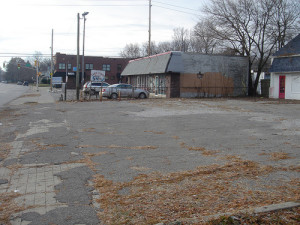
This is the first in a short series of posts on the downsides of city-county consolidation. Actually, it might better be described as a discussion of some of the pros and cons of "big box" vs. "small box" municipal government. It is similar to business. It seems like every large business is either doing one of two things: centralizing or decentralizing. There's a sort of cycle of reincarnation about this. Every model has its flaws, and people tend to gravitate towards the other side of the spectrum from time to time when the problems of the … [Read more...]
Why Transit Used to Be Profitable and Isn’t Now
It’s a complicated issue, so here’s a little background (I have a Masters in Urban Planning so I’ve read a lot). Streetcar lines (and subways in some places) were profitable businesses, just like railroad lines. But there were a few features that we don’t have today. First, it was a new mobility technology so it opened up land that was too far away to be developed. There is no such land now in metro areas because highways and have cars make all areas equally accessible. Second, they were a real estate play as much as a transportation … [Read more...]
An Examination of City-County Consolidation
[ This piece will serve as a warm-up to a forthcoming series on the downsides of the consolidation of US city and county governments. I updated it from the original with a bit of information about the current mayoral election in Louisville. ] H. V. Savitch and Ronald K. Vogel of the University of Louisville authored the paper "Suburbs Without a City", analyzing the merger of Louisville and Jefferson County, and in the process making many good observations about or relevant to other consolidated cities like Indianapolis and … [Read more...]
Joel Kotkin on the Future of the Heartland
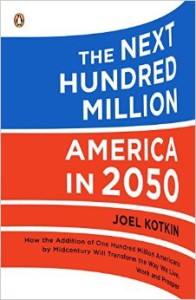
Joel Kotkin is an unpopular figure in many urbanist circles. I suspect that doesn't bother him too much. His writing suggests he even delights in it at times, as he seeks out perhaps the most provocative contrarian examples he can find to challenge urbanist conventional wisdom. He champions Houston as a paragon of urban success, for example. And he's been known to extol the popularity and virtues of the suburbs. A typical piece is his 2005 "Rule, Suburbia: The Verdict's In, We Love It There." Among his various ventures, Kotkin is the … [Read more...]