Subscribe/Feeds
Recent Comments
- Alon Levy: "Racaille: yeah, you’re almost certainly right. I just checked this on..." on Diversity in Providence
- Gary Welsh: "You have some..." on Replay: Fast and Cheap Ways to Improve Public Transit in Indianapolis Right Now
- Matt Hall: "Sure they have selling points. I’ll never forget the friends..." on Pittsburgh: Shadows of the City
- Racaille: "“Minority population growth actually bailed out the entire region...." on Diversity in Providence
- John Morris: "The Pittsburgh video doesn’t just not play up model types,..." on Pittsburgh: Shadows of the City
Search
Archives
- ▼2013 (86)
- ▼May (17)
- Diversity in Providence
- Pittsburgh: Shadows of the City
- East Coast, West Cosat - What About Our Coast? by Pete Saunders
- Replay: Fast and Cheap Ways to Improve Public Transit in Indianapolis Right Now
- Why Gentrification?
- Frenetic Zurich
- Chicago: The Daley Deals by Robert Munson
- Milwaukee's Future as Part of Greater Chicagoland
- Casinos Are City Ruiners by Richard Florida
- Casinos Ruin Cities
- Migration in Rhode Island
- Miniature Melbourne
- Worcester v. Providence: Is Downtown Revitalization the Sum of Urban Revitalization? by Stephen Eide
- Replay: Parallel Societies
- The 2012 Year in Unemployment
- The Gilded City
- Meet Me in Milan
- ►April (17)
- Madison's Reality Distortion Field, Or A Look at the Farmers Market by Chuck Banas
- Global Cities Don't Just Take, They Give
- The Sound and the Fury in Chicago
- More of the Coolest and Best City Videos
- A Better Commuter Rail Expansion Plan for Providence
- SynergiCity: The Book, The Exhibit And The Prophets’ Road To Profits by Robert Munson
- Replay: The Problem of Innovation
- The 2012 Metro Year in Jobs
- The City: A Documentary
- Federal Immigration Policy Should Cater to Local Needs by Scott Beyer
- NYU's Marron Center and the School of the City
- New York Day
- Providence by the Numbers
- How to Reinvent a City in a Way That Is Embraced by a City by Rod Stevens
- Why Cities Matter
- A Culture of Corruption by Angie Schmitt
- No Parking, No Problem
- ►March (15)
- Rhode Island's Problem Isn't Poor Leadeship
- God's Architect: 60 Minutes on Sagrada Família
- How Do We Finance Walkable Neighborhoods? by Francisco Traverso
- Finally Some Privatization "Good News" in Chicago
- The Power of Cities in Branding Companies
- New York: Night and Day
- “Livability” vs. Livability: The Pitfalls of Willy Wonka Urbanism by Richey Piiparinen
- Replay: Building New Audiences for Our Classical Music Institutions
- The Power of Corporate Logos in Branding Cities
- Los Angeles Reconsidered by Drew Austin
- Replay: Are You a Consumer or a Producer?
- Do Cities Really Want Economic Development?
- Never Built Los Angeles
- What Killed Downtown? by Eric McAfee
- The Weekly Standard Blows It On Transit
- ►February (20)
- Singapore: The Lion City
- Reason #763 Why Houston Is Prosperous by Keep Houston Houston
- Replay: The Privatization-Industrial Complex
- Why All Your Impressions of Detroit Are Wrong
- Time Lapse Philadelphia
- Infographic: Chicago's Racial Demographics
- Could Buenos Aires Be a Model for Thinking About US Cities? by Lee Epstein
- Replay: What Makes a City Desirable?
- Interesting Reading
- Paris and the Shifting Geography of Creativity
- Chicagoism, Part 5: Where We Go From Here by Robert Munson
- Churches and Parking
- Why Are There So Many Murders in Chicago?
- Chicagoism, Part 4: How Chicagoism Works Again by Robert Munson
- God Made a Factory Farmer
- Hail, Columbia! Podcast
- Rural Mythology Is Alive and Well in America
- Hail Columbia! Welcome to America's New Second City
- Is Urbanism the New Trickle-Down Economics?
- What Assets Should We Privatize?
- ►January (17)
- Reinventing Metro Providence
- Infographic: NFL Fans According to Facebook
- Chicagoism, Part 3: Reinventing Services, Starting Accountability Reforms by Robert Munson
- Replay: The New Industrial City
- Why Republicans Need Cities
- Creating a "Race to the Shop" Competition for Advanced Manufacturing by Bruce Katz and Peter Hamp
- Toronto: City Rising
- Chicagoism, Part 2: Starting the Transition to Sustainability by Robert Munson
- The Strategic Case for Mass Transit in Indianapolis
- Rust Belt Chic, Providence Style
- The City of Light
- Chicagoism, Part 1: Lessons from the 20th Century by Robert Munson
- Detroit Future City
- My First Impressions of Rhode Island
- Cityscape Chicago
- Mumbai Is a Beautiful City by Rameshwari Takle
- The Urbanophile 2012 Year in Review
- ▼May (17)
- ►2012 (209)
- ►December (11)
- Milwaukee’s Relationship with the Chicago Mega-City Revisited by David Holmes
- What to Change the World? Start With Your City
- IRS Cancels Then Uncancels Migration Data Program
- Replay: This is Why We're Broke
- Is the Acela Killing America?
- Bicycle Culture by Design
- If You Don't Understand Urban Political Theory, You Probably Don't Understand Land Use by Richard Layman
- What Are You Doing For Your City?
- Transforming Bogotá
- The State of Chicago Index
- What I Believe
- ►November (15)
- Please Support the Mission of the Urbanophile
- Time Lapse San Francisco
- Regarding Smart Cities
- No Reservations Cleveland by Richey Piiparinen
- Goodbye, Chicago
- Providence Knows Nothing?
- Cincinnati 2012
- Detroit - America's Whipping Boy by Pete Saunders
- Chicago's Northwest Indiana Advantage
- Global Connectivity and International Air Passengers
- Carol Coletta on Breathing Art Into the City
- New England vs. Midwest Culture by George Mattei
- Replay: The Rupture
- Is College Worth It?
- Shock and Awe
- ►October (13)
- Kuala Lumpur Day-Night
- Don't Fly Too Close to the Sun
- The Decline of the Family
- Summer Barcelona
- The Broken Nature of Civic Leadership by Alex Ihnen
- Improving Chicago's Business Climate
- Chicago: The Midwest's Global Gateway
- Paris: Allo, Allo
- The Meatspace City by Drew Austin
- Film Review: Detropia
- Don't Believe What People Tell You About Your City
- Paris in Motion, Part Two
- Big Boxes: Keeping All the Ducks in a Row by Eric McAfee
- ►September (22)
- Thoughts on Chicago's Tech Scene
- A Look at Educational Attainment
- Founder Mobility
- The Coolest Transit Ad Ever
- A Look at Commuting
- Review: The New Geography of Jobs
- A Look at Median Household Income
- Some Additional Chicago Fixes
- Where Do You Live?
- Anatomy of Los Angeles
- The Ultimate Houston Strategy by Tory Gattis
- Rethinking Brand Chicago
- Mike Pence vs. Mitch Daniels
- The End of the Road for Eds and Meds
- How Many Governments?
- Little Bangalore
- David Gunn on Amtrak’s $151bn NEC Plan and How He Rebuilt the Harrisburg Line by Stephen Smith
- Fixing Chicago: Rahm's Work in Progress
- Brief Notes from a Trip to Philadelphia
- Night Fall Los Angeles
- The Brief Wondrous Life of the One Dollar Bus by Jefferson Mao
- Indianapolis to Downsize, Downgrade Orchestra
- ►August (16)
- Gaps in Chicago's Global City Fabric
- Memphis: The Comeback
- Chicago: Hog Butcher No More, But Service Purveyor to Same? by Bill Testa
- Chicago As a Global City
- Carmel, IN Named Best Small City in America to Live In
- Infographics: The Decongestion of Manhattan, New York Walking Commutes
- Dubai: City on the Move
- Anorexic Vampires and the Pittsburgh Potty: The Story of Rust Belt Chic by Richey Piiparinen
- What Is a Global City?
- Life In a Bubble - And On One
- Cities of Aspiration
- City Love Videos
- Why I Live in Indianapolis by Drew Klacik
- Replay: The Columbus, Indiana Values Proposition
- The Good, the Bad, and the Ugly
- Paris in Motion
- ►July (21)
- Why Technology Is Driving More Urban Redevelopment by Mark Suster
- State of Chicago: Lacking a Calling Card Industry
- A Report from CNU20
- Fort Wayne: My City
- Historic Heritage of the Rust Belt by Robert Bruegmann
- The Business Model Innovation Factory by Saul Kaplan - A Review by Aaron M. Renn
- State of Chicago: The Risks of Recovery
- Why I Don't Live In Indianapolis
- Infographic: Corporate Headquarters
- Eurolapse
- Manchester: From Cottonopolis to Creative Industry by John Montgomery
- State of Chicago: Explaining the 1990s Versus the 2000s
- High Speed Rail Advocates Discredit Their Cause - Again
- Infographics: High Tech, Melting Pot Cities, Church vs. Beer
- Why Mayors Can Make or Break a City
- Chicago, Summer Crime, and the Slide Towards Detroit by Mark Bergen
- London on a High
- Cincinnati vs. Cincinnati
- State of Chicago: New Century Strengths
- Will New York's Economy Strangle Itself With Success?
- State of Chicago: The New Century Struggle
- ►June (19)
- Misreferencing Misoverestimated Population by Chris Briem
- Who's Your City?
- Infographic: Sprawl Is Alive and Well
- Video: Selling Bike Culture
- Regarding Black Urbanism by Pete Saunders
- State of Chicago: The Decline and Rise
- The Value of Transit: Rezoning Grand Central
- Infographic: CTA Revenues and Costs
- Biking Through China's Countryside
- The Tension Between Newcomers and Oldtimers in an Old City by Richey Piiparinen
- Replay: Religion and the City
- Second-Rate City Podcast
- Detroit Rising
- Chicago: The Second-Rate City?
- Media Finally Wakes Up to Louisville Tunnel Boondoggle, But Misses the Bigger Picture
- Where the BRICs Are
- Chicago Accelerates Renewal of Key Transit Line
- European Financial Centers in History by Beate Reszat
- Replay: A Midwest Megaregion
- ►May (14)
- Infographics of the Week: Underwater Mortgages, NYC Tech
- L.A.’s Westside Subway is Practically Ready for Construction, But Its Completion Could be 25 Years Off by Yonah Freemark
- Replay: Minneapolis-St. Paul - White, Liberal, Cold
- Downtown Cincinnati on the Rise
- Can Liverpool Win a Place Back on the Global Stage? by Tim Clark
- New York Considers Parking Meter Privatization
- Correction: OECD Chicago Review
- Will Yet Another Fiasco Finally Convince Rahm Emanuel to Cancel Chicago's Parking Meter Lease?
- Infographics of the Week: Social Media Neighborhoods, Civic Change
- Eduardo Paes on the Four Commandments of Cities
- Re-Branding Indianapolis Through Humanitarian Efforts by Kelly Campbell
- The OECD Reviews Chicago
- Venice In a Day
- Detroit: A Biography - A Review by Pete Saunders
- ►April (22)
- Replay: Megaregions - A Review by Aaron M. Renn
- Common Driver Behaviors
- More Parking Madness in Providence
- First Time to the D by Alan Sage
- What Exactly Does an Infrastructure Bank Do For Us Anyway?
- Providence: The Quiet Revival by Alon Levy
- Real Scene: Berlin
- Yet Another Privatization Debacle in Chicago
- Nashville Rolls On
- US Metro Population Growth Slows
- Are Some Buildings Too Ugly to Survive?
- The Moscow Metro
- Providence: The Rust Belt's Most Northeasterly Point? by Nicholas Cataldo
- Replay: "James Drain" Hits Cleveland
- Census Bureau Releases Latest Take on America's Urban Areas
- Louisville and Lexington Point the Way to Greater Inter-Regional Cooperation
- Hoosiers to Pay 80% of Local Tolls for Ohio River Bridges Project
- Detroit on Film
- Demolishing Detroit
- Density, Vibrancy, and Opportunity Zones by Tory Gattis
- If You Don't Like Privatization, You'll Have to Do Better Than This
- More Thoughts on the Urban Hierarchy
- ►March (17)
- The Great Reordering of the Urban Hierarchy
- Manhatta
- Applying Jane Jacobs Tenets of Vibrant Neighborhoods to Car-Based Cities by Tory Gattis
- Replay: Buffalo, You Are Not Alone
- NYC Energy Use Infographic
- MiniLook Kiev
- Consensus and Vision by Alon Levy
- The Chicago Tribune Doesn't Get It On Regional Economic Development
- Metro Job Recovery in 2011
- On the Riverfront in Cincinnati
- Democratic vs. Elite Consensus by Alon Levy
- The Sorry State of American Transport
- Creative Transportation Financing in Indiana
- The City of Samba
- Consensus and Cities by Alon Levy
- Replay: Civic Iconography Done Right - Chicago's City Flag
- Transit Use Up, Commute Times Down in New York City
- ►February (16)
- Blow Up
- Generating and Preserving Urban Diversity
- What Kodak's Failure Might Teach Detroit About Success by Rod Stevens
- The Return of the Monkish Virtues
- Transport Devolution Won't Stop Boondoggles
- Don't Brand Your City
- The Reasons Behind Detroit's Decline by Pete Saunders
- Replay: Louisville - Vice City
- Humor: Somebody Really Hates Bicycle Helmet Laws
- Louisville: A Tale of One City by Rollin Stanley
- Facing Tough Facts in Louisville
- Replay: Role Reversal
- Keeping Up With the Urbanophile
- A Visit to Youngstown by Joe Baur
- Replay: Brookings' New Geography of Urban America
- From Naptown to Super City
- ►January (23)
- The Software of Placemaking by Rod Stevens
- Urban Data the Easy Way
- Do Unto Localities As You Hate the Federal Government Doing Unto You
- The Case for Quality of Space
- Ten 2012 Trends That Will Affect Planning and Economic Development by Chuck Eckenstahler
- Providence and the Virtues of Scale
- Can Detroit Build Its Way Back to Prosperity?
- Silicon Valley vs. Silicon Alley, Economic Security, Guadalajara
- Vancouver: An Olympic Urbanist Preview by Jarrett Walker
- Replay: Neighborhood Redevelopment and the Downsides of Consolidation
- The Shifting Landscape of Diversity in Metro America
- Indiana's Bridge Deal Boondoggle, Part 4 - A Better Plan
- Murmansk in Motion
- Detroit: A City on the Move
- Indiana's Bridge Deal Boondoggle, Part 3 - INDOT's Mini-Big Dig
- How Demolition Came to Mean Stabilization by Rob Pitingolo
- Indiana's Bridge Deal Boondoggle, Part 2: Hoosiers to Pay Even More With Tolling
- Indiana's Bridge Deal Boondoggle, Part 1: A Financial Fiasco
- Faith and City Planning
- The Urbanophile 2011 Year in Review
- 60 Minutes: There Goes the Neighborhood
- This Is Sprawl, Pittsburgh Edition
- No, Freeways Are Not Dead by Keep Houston Houston
- ►December (11)
- ►2011 (161)
- ►December (11)
- Merry Christmas Miscellany
- Chicago: What's Changed? What Hasn't? by Richard C. Longworth
- Indiana Abandons Long Range Transportation Planning
- What Does Globalization Mean to Non-Global Cities?
- Planes, Trains, Automobiles, and Silicon Subways
- Indy to Repurpose Stadium Seats at Bus Stops
- Replay: Migration - Geographies in Conflict
- Traffic in Ho Chi Minh City
- Three Years Down, 72 More to Go On Chicago Parking Meter Lease by Michelle Stenzel
- Is the Indianapolis Superbowl Shuffle Video Really That Bad?
- How to Revitalize Your Urban Core Neighborhoods
- ►November (13)
- Bad US Rail Practices and What It Means for FRA Regulations by Alon Levy
- Thanksgiving Day Open Thread: What Are You Thankful For About Your City?
- Replay: Is It Game Over for Atlanta?
- Jan Gehl on Cities
- Tory Gattis on Social Systems Architecture and Why It Matters
- Summit for NYC Videos Now Posted + Lathrop Homes Radio Segment
- New York: The State of the MTA's Mega-Projects by Carson Qing
- Chicago: Lathrop Homes Redevelopment Public Kickoff
- Back to the City
- Live State Policy Difference Experiment in Progress
- A Year in New York
- Are Food Deserts Exaggerated? by Angie Schmitt
- Review: Urbanized - A Film by Gary Hustwit
- ►October (12)
- Toronto Tempo
- Cities as Software by Marcus Westbury
- Announcing the Walk Indianapolis Architectural Tours
- Indiana Not Seeing Economic Refugee Surge from Surrounding States
- Rahm Emanuel Brings Congestion Pricing to Chicago
- A Beginning Agenda for Making Smart Growth Legal by Kaid Benfield
- Replay: A Civic Going Out of Business Sale
- The Witold Rybczynski Interview by Brendan Crain
- Review: The Gated City by Ryan Avent
- The Cost of Congestion, The Value of Transit
- Race Matters in Milwaukee – Part 4: Segregation and Education by Nathaniel Holton
- Globalization and the Airport
- ►September (16)
- Replay: Planning and Free Market Density
- San Francisco: The City
- Race Matters in Milwaukee – Part 3: The Effects of Milwaukee's Segregation by Nathaniel Holton
- A Decade in College Degree Attainment
- The Texas Story Is Real
- Hire the Urbanophile
- Race Matters in Milwaukee - Part 2: The Causes of Milwaukee's Segregation by Nathaniel Holton
- Will Sagrada Família Be Mankind's Last Ever Great Artistic Statement for God?
- New York Stands High
- 2010 GDP Data Shows Nascent Recovery in Many American Metros
- Race Matters In Milwaukee – Part 1B: How Segregated Is Milwaukee? (con't) by Nathaniel Holton
- Remembering 9/11
- Indy: Help Keep the Historic "Georgia St." Name
- LA Light
- Race Matters In Milwaukee - Part 1A: How Segregated Is Milwaukee? by Nathaniel Holton
- Replay: Chicago - A Declaration of Independence
- ►August (16)
- VC Investments and More Thoughts on the Programmer Shortage
- Is There Really a Developer Drought?
- “Sick Housing Market” Ranking Shows Why Many “Top-10” Lists Should Be Deep Sixed by Drew Klacik
- Beer and Evolving Urban Culture
- Alex Steffen TED Talk on the Shareable Future of Cities
- Miriam in the Midwest by Miriam Fathalla
- Building Suburbs That Last #6 - Limit Restrictive Covenants
- Megabus - King of the Road
- Commercial District Revitalization and Return on Investment by Richard Layman
- Replay: The Brand Promise of Indianapolis
- A Decade in Metro Area Personal Income Growth
- The Problem With Boosterism by Angie Schmitt
- The Shifting Urban Geography of Black America
- A Decade in State GDP Growth
- That's One Way to Make Sure Nobody Parks in a Bike Lane
- Bizarrchitecture by Brendan Crain
- ►July (12)
- Replay: Migration Matters
- Geoffrey West TED Talk on the Surprising Math of Cities
- How Urbanist Visionaries Can Muck Up Transit by Jarrett Walker
- New Data Shows Slowing Migration in America
- Let's Face It, High Speed Rail Is Dead
- Desolation Angel by Detroitblogger John
- Why States Matter
- Replay: Do Cities Need a Creative Director?
- More Privatization Good News in Indiana
- Are States an Anachronism?
- The Coolest and Best City Videos
- The Urgency of Reforming the Federal Railroad Administration by Alon Levy
- ►June (13)
- Replay: Picture-Perfect Portland?
- Why Aren’t We Building ‘Emotionally Connected’ Cities? A Guest Post by Peter Kageyama
- Employment Challenges Facing Smaller City Downtowns
- Did INDOT Cancel the Remainder of the Northeast Corridor Project?
- Five Innovation Myths Applied to Urbanism by Brendan Crain
- Replay: Resolving the Paradox of Success
- Job Migration from the Suburbs to Downtown
- The Cleveland Comeback: Version 5.0 by Richey Piiparinen
- On Urban Education
- Announcing the Indianapolis Neighborhood Map
- Aerotropolis: An Interview with Greg Lindsay by Geoff Manaugh
- Replay: Metropolitan Linkages
- The Taxi As Public Transportation by Drew Austin
- ►May (7)
- ►April (11)
- Replay: The Return of the Native
- Amtrak Should Innovate with Hiawatha Service Pricing by Jeramey Jannene
- A Ruralophillic Detour
- Brutalism: Worth Saving? by Brendan Crain
- This Is Why We're Broke
- Replay: The Power of Greenfield Economics
- The Sprawl Bubble by Chuck Banas
- Does Privatization Actually Transfer Risk Away from Government?
- Le Flâneur
- Ohio's Geographic Advantages
- The 31-Flavors of Urban Redevelopment by Rod Stevens
- ►March (16)
- Census 2010 Offers Portrait of America in Transition
- Conscious Urbanism: The Heidelberg Project by Brendan Crain
- Why Is Government in This Business Again?
- Replay: The Logic of Failure by Dietrich Dörner
- It's 2011, Do You Understand Your Human Capital Networks Yet?
- Beyond Brain Drain
- Urbanoscope
- Metro/County Census Results So Far (Plus a Brief Look at Jobs)
- Pushing the Racial Dialogue in Cincinnati by Tifanei Moyer
- Civic Iconography Done Right - Chicago's City Flag
- Replay: The City as a Platform
- Thematic Maps Made Easy
- The Rupture
- Urbanoscope
- A Few Studies
- Saint Jane by Will Wiles
- ►February (18)
- A Better Way to Find, Look At, Analyze and Display Civic Data
- Replay: Transit Ridership Framework
- New Metro GDP Data Released
- Census 2010 and Urbanizing Indiana
- Collective Pride, Worthy Choices by John L. Krauss
- The Mobility Bank
- Urbanoscope
- The Big City CBD Advantage
- Chicago Takes a Census Shellacking
- Hoping Detroit Fails by Jim Russell
- Super-Regionalism in Kentucky
- Replay: Is Nashville the Next Boomtown of the New South?
- Imported from Detroit
- Welcome to the Urban Revolution (Part Two) by Evan O'Neil
- The Problem of Innovation
- Urbanoscope
- Can Chicago Get Out of Its Parking Meter Lease?
- Welcome to the Urban Revolution (Part One) by Evan O'Neil
- ►January (16)
- Indianapolis Must Reinvent Itself Again
- Replay: The Importance of Social Structures to Urban Success
- The Urban Energy Efficiency Retrofit Challenge
- Yes There Are Grocery Stores in Detroit by James Griffioen
- The Urgency of Reform
- Urbanoscope
- A Better Way to Look at Data - Beta Testers Wanted
- Erie Expatriates Seeking Jobs…in South Korea by Kristi Gandrud
- Chicago: The Cost of Clout
- Replay: A Tale of Two Blizzards
- Century of the City
- Yes, We Do Need to Build More Roads
- Place Is the Space by Ben Schulman
- Failure to Communicate: Accentuate the Positive
- Urbanoscope
- 2010 Urbanophile Year in Review
- ►December (11)
- ►2010 (210)
- ►December (16)
- Urbanoscope
- Taking Chicago Transit from Good to Great, Part Five - Getting It Done
- Taking Chicago Transit from Good to Great, Part Four - Paying for It
- Census 2010 National and State Results Released
- Does Policy Matter?
- Replay: What Is a Strategy?
- The Silicon Valley Advantage
- Bruce Katz at the Brookings Global Metro Summit
- Taking Chicago Transit from Good to Great, Part Three - Cost Control and Governance
- Minneapolis-St. Paul: White, Liberal, and Cold
- Urbanoscope
- State GDP Performance
- Taking Chicago Transit from Good to Great, Part Two - Raising the Bar on Design
- College Degree Density Revisited
- Replay: "They're Not Current"
- New York City's Taxi of Tomorrow
- ►November (16)
- Taking Chicago Transit from Good to Great, Part One - Building the Vision
- Urbanoscope
- Thanksgiving Open Thread: What Are You Thankful For About Your City?
- Building Suburbs that Last #5 - Redevelopment Insurance
- Replay: Louisville - An Identity Crisis
- European Urban Quality of Life
- After Daley's Retirement, Chicago Needs a New Approach by Greg Hinz
- Are People Really Fleeing Shrinking Cities?
- Urbanoscope
- Indy: Livability Starts Now
- Pittsburgh and the Magic of Failure by Ben Schulman
- Religion and the City
- Replay: A Better Road to Clean Water Act Compliance
- The Privatization-Industrial Complex
- Universal Fare Media
- Can Global Cities Work? by Richard C. Longworth
- ►October (16)
- Urbanoscope
- Open Thread: World Class Chicago
- Core City Educational Attainment
- Matthew Mourning: Random Thoughts on the Cult of Destruction in St. Louis
- Piercing the Narrative
- Replay: What's Killing California?
- The Asset Trap
- Pittsburgh City Council Votes Down Parking Meter Privatization
- Drew Austin: Against Transportation
- Chicago's Eroding Competitive Performance (Chicago vs. New York)
- Urbanoscope
- NJ Gov. Chris Christie Channels His Inner "Chainsaw Al" Dunlap
- New York's Quality of Life Agenda
- Constantin Gurdgiev: Knowledge Economy and Dublin Water Woes
- Megaregional Migration
- Replay: Good Economic Development - Indy's Internet Marketing Cluster
- ►September (17)
- Chicago's Metra Postpones Bridges Project
- A Civic Going Out of Business Sale
- Jason Tinkey: The World Laps Chicago
- Present at the Creation
- Urbanoscope
- Detroit Lives!
- Iowa's "Agro-Metro" Future
- Indianapolis Parking Meter Lease Is a Danger to Downtown
- Are Networks or Size More Important to Urban Success?
- Replay: Spheres of Influence
- There's No Such Thing As Green Industry
- Nuvo: A Mayor for the New Millennium
- Indianapolis Parking Meters - The City's Response
- Urbanoscope
- The Power of Brand Detroit
- Indy's "Son of Chicago" Parking Meter Lease to Be a Disaster for City
- Labor Day Open Thread: What Do Successful Lower Income Neighborhoods Look Like?
- ►August (19)
- Richard Layman: Richard's Rules for Restaurant Driven Development
- Urban Universities Done Right: Chicago's "Loop U"
- Urbanoscope
- The Physical Evolution of Infrastructure
- The Index: Michigan and Ohio
- Parking Meters and the Perils of Privatization
- Replay: Fantasy Transit Maps
- What Is the Real Function of an Arts Organization?
- Stuck in the 90's
- Jim Russell: Catch a Rising Star - Pittsburgh
- Rebranding Columbus
- Urbanoscope
- Lessons From Beirut
- Help Stop Metra From Destroying Part of Chicago's Transit Infrastructure
- The New International Style
- Replay: Columbus - The New Midwestern Star
- The Demographics of Property Tax Revolts
- Noah Kazis: Shaping the Next New York - The Promise of Bloomberg’s Rezonings
- The Mark of a Great City Is in How It Treats Its Ordinary Spaces, Not Its Special Ones
- ►July (16)
- Urbanoscope
- Globalized Professional Services
- Mike Doyle: Meet Me In St. Louis, Not Milwaukee
- Chicago's Structural Advantages (and Professional Services 2.0)
- Replay: Detroit - Urban Laboratory and New American Frontier
- Commuting Market Share Is the Wrong Way to Judge Transit
- Urban America's Quality vs. Quantity Dilemma
- H. L. Mencken: The Libido for the Ugly
- It's Time for America to Get On the Bus
- Urbanoscope
- The Specter of Autarky
- "James Drain" Hits Cleveland
- Randy Simes: Cincinnati's Dramatic, Multi-Billion Dollar Riverfront Revitalization Nearly Complete
- The Columbus, Indiana Values Proposition
- A Better Tomorrow
- Urbanoscope
- ►June (18)
- City Profile: Milwaukee by UrbanMilwaukee
- Buffalo, You Are Not Alone
- Replay: The Decline of Civic Leadership Culture
- Personal Brands and City Brands
- Chuck Banas: Putting Parking In Its Proper Place
- Chicago and the Epicenter
- Urbanoscope
- City Economic Weight
- Jarrett Walker: Los Angeles - The Next Great Transit Metropolis?
- Does Anyone Really Believe Human Capital Is Important?
- Replay: Bruce Mau's Massive Change
- The Spread of California's Governance Disease
- Creative Winter
- Richard Florida: How to Revitalize Rust Belt Cities
- The Neighborhoods of Cincinnati
- Urbanoscope
- The Talent Disconnect (or, Pittsburgh's Talent Failure)
- Chicago (and New York) Stories
- ►May (17)
- Replay: Creative Destruction Is Real
- FTA Administrator Peter Rogoff Delivers Tough Love to Transit Advocates
- City Profile: St. Louis by UrbanSTL
- Next American Suburb: Carmel, Indiana
- Midwest Miscellany
- New Grass Roots: People for Urban Progress
- Is It Game Over for Atlanta?
- Richard Herman: Will a Dying Cleveland Finally Turn to Immigrants?
- Brookings' New Geography of Urban America
- Replay: Louisville - The Case for 8664
- The Authentic City
- Megan Cottrell: Eviction Is to Black Women What Incarceration Is to Black Men
- Review: The Great Reset by Richard Florida
- Midwest Miscellany
- Do Cities Need a Creative Director?
- London and the Power of Place
- Failure to Communicate: Beyond Starbucks Urbanism
- ►April (19)
- Replay: What Made the Burnham Plan of Chicago Successful
- Top Down or Bottom Up Leadership? Both!
- Chuck Banas: This Is Sprawl
- Thoughts on a Federal Policy for American Cities
- Midwest Miscellany
- If You Want Sustainability, Provide Economic Security
- Drew Austin: Brief Interviews with Hideous Cities
- The New Look of the American Suburb
- In Praise of the Chicago Opera Theater
- Replay: True Cities and Shadow Cities
- Density Reconsidered
- Ryan Avent: The Urban Economy
- The Other Side of Detroit
- Midwest Miscellany
- Getting to Yes Faster
- Carol Coletta: Innovative Cities
- Why It's So Hard For Small Cities to Get Great Design
- Replay: The Outsiders
- Can Your City Compete?
- ►March (20)
- "Brain Drain" vs. "Steel Drain"
- Megan Cottrell: Don't Fall in the Poverty Trap - You May Never Get Out
- Getting Serious About Talent
- Midwest Miscellany
- Midwest Success Stories
- Census Bureau Releases 2009 Population Estimates
- Richard Longworth: Paying for Cities
- A New New Media for Cities
- Janette Sadik-Khan on Changing the Transportation Game
- Replay: The Importance of Aesthetics in Transportation Facility Design
- The Next Industrial Revolution
- Detroitblog: Solitary Man
- The City as Platform
- Midwest Miscellany
- Detroit: Embracing the Ruins
- Carl Wohlt: Learning from Starbucks
- Downsides of Consolidation #2 - Cost Increases, Dilution of Urban Interests, Deferred Problems
- Replay: Small Cities Should Have Fareless Transit
- The 10% Solution
- Featured Site: Branding for Cities
- ►February (17)
- Downsides of Consolidation #1: Neighborhood Redevelopment
- Midwest Miscellany
- St. Louis: Reconnecting the City to the River
- Peter Christensen: Why Transit Used to Be Profitable and Isn't Now
- Eye on the TIGER
- Replay: An Examination of City-County Consolidation
- Cleveland and the Regionalism Challenge
- Featured Sites: Girls on Bikes
- Cincinnati: The Urge to Merge, Or Learning to Love Your Urban Geography
- Cincinnati: The State of the Arts
- Midwest Miscellany
- Joel Kotkin on the Future of the Heartland
- Drew Austin: The Living...The Built...The McDonald's Parking Lot
- An Interview With the Urbanophile
- Replay: Preserving Our Mid-Century Heritage
- The Power of Greenfield Economics
- Chris Barnett: It Falls From the Sky
- ►January (19)
- Framework: Transit Ridership
- Midwest Miscellany
- Another Epic Public Space WIN in New York
- Drew Klacik: Place-Based Clusters
- The Core Vitality Imperative
- Replay: Impossibility City
- You Can't Fight the State DOT - Or Can You?
- Michael Scott: Robert Clifton Weaver's Quest to End Housing Segregation - Has Anything Changed?
- Portland and the Limits of Urban Planning Policy
- Midwest Miscellany
- Want Talent? Drink at Lunch!
- High Tech Won't Save California's Economy - Or Ours
- No Promise of Safety
- Will Anyone Stand Up For American Industry?
- Replay: The Giant Sucking Sound
- Migration Matters
- Jarrett Walker: Learning, Again, From Las Vegas
- The Urbanophile 2009 Year in Review
- Midwest Miscellany
- ►December (16)
- ►2009 (178)
- ►December (13)
- Building Suburbs That Last #4 - Supporting Home Based Businesses
- Detroit Roundup
- The Safety Bogeyman
- A Plan for Detroit
- Replay: Invert the World
- St. Louis: Gateway Arch Grounds Design Competition
- A Midwest Megaregion?
- Midwest Miscellany
- Randomly Quotable
- Review: Megaregions, Edited by Catherine L. Ross
- The Mayor as CEO
- Columbus: Fantasy Transit Maps
- Role Reversal
- ►November (15)
- Midwest Miscellany
- Thanksgiving Open Thread: Your Civic Ambition
- Back From Barcelona
- Migration: Geographies in Conflict
- Ryan Avent: Disruptive Technologies
- Replay: Mega-Skepticism
- Principles of Privatization - Part 4: Guidelines for Action
- Reducing Carbon Should Not Distort Regional Economies
- Indy: Parallel Societies
- The Urbanophile in the News
- Pro Sports As Naming Rights Deal
- Principles of Privatization - Part 3: Uses of Funds
- Report from the Rail~Volution
- Midwest Miscellany
- Cincinnati: Water Works and the Commonwealth
- ►October (17)
- Chicago: Lewis Mumford on Daniel Burnham
- Principles of Privatization - Part 2: Value Levers
- Replay: Bad Example
- New York: Leadership in Transportation Design
- Welcome to the New Urbanophile 2.0
- Principles of Privatization - Part 1: Taxonomy of Transactions
- The White City
- Midwest Miscellany
- Chicago Transit at a Crossroads
- Cincinnati: Vote No on 9
- A Better Road to Clean Water Act Compliance
- Chicago Transit: From Good to Great, Part 5 - Getting It Done
- What's Killing California?
- Replay: Failure of Ambition
- Midwest Miscellany
- Transit Roundup
- Midwest Metro GDP, Unemployment
- ►September (14)
- Planning and Free Market Density
- Chicago Transit: From Good to Great, Part 4 - Paying For It
- Pittsburgh Renaissance?
- Re-Imagining the Good Life
- Other Michigan Cities
- Midwest Miscellany
- Imperial Columbus and the Principles of Regional Finance
- Chicago Transit: From Good to Great, Part 3 - Cost Control, Governance, the Racquet
- Indy: The Failure of the Canal Walk
- Midwest Miscellany
- Spheres of Influence
- Guest Post: Recrecational Hinterlands
- Labor Day Open Thread: Best and Worst Midwestern Cultural Traits
- Pedestrian Deaths, Nashville Style
- ►August (14)
- Chicago Transit: From Good to Great, Part 2 - Raising the Bar on Design
- Midwest Miscellany
- Robert Irwin - Light and Space III
- The Downside of Living Carless in a Small City
- A New Version of the American Dream
- Chicago Transit: From Good to Great, Part 1 - Building the Vision
- The New Industrial City
- Midwest Miscellany
- Guest Post: Is Sacramento an Indianapolis Wannabe?
- Detroit: Urban Laboratory and the New American Frontier
- Replay: Chicago Corporate Headquarters and the Global City
- Midwest Miscellany
- Indy: Four Projects
- Cincinnati: The Great Streetcar Debate
- ►July (18)
- Midwest Miscellany
- Louisville: The Legacy of Jerry Abramson
- Replay: The Aloneness of an Urbanophile
- The New Economy Counter-Trend, or The Shrinking Amenity Gap
- Indy: Good Economic Development - Internet Marketing Cluster
- Why So Many Southern Cities Are Successful
- Race and the City
- Midwest Miscellany
- Indy: Good Economic Development - Energy Systems Network
- Clean Water Act Compliance Costs Are Hurting Our Cities and Promoting Sprawl
- Globalization and Civic Leadership Culture
- Midwest Miscellany
- High Speed Rail Roundup
- St. Louis: City Garden and the Millennium Park Effect
- Chicago: Transportation and the Burnham Plan
- Replay: What Business Are You In?
- Replay: Kansas City's Edifice Complex
- Shrinking the Rust Belt
- ►June (16)
- Louisville: The Case for 8664
- "Amtrak on Steroids" is Not "High Speed Rail"
- Building Suburbs That Last #3 - The Mother of All Impact Fees
- The High Line
- Midwest Miscellany
- End Property Tax Collection in Arrears
- The Midwest Mindset
- The Modern Wing at the Art Institute of Chicago - Part 2: The Nichols Bridgeway, Or Re-Imagining Monroe St.
- Midwest Miscellany
- Creative Destruction Is Real
- The Urbanophile Named One of Chicago's Top Online News Sites
- Replay: Globalization and the Soft Power of Cities
- The Modern Wing at the Art Institute of Chicago - Part 1: The Exterior
- Mega-Regional Reputation and Other Midwest Miscellany
- Tony George, the IMS, and the New Midwest
- The Talent Equation
- ►May (14)
- Louisville: A Tale of Two Cities
- Midwest Miscellany
- Chicago: Preventing the Self-Destruction of Diversity
- A Crisis of Values
- The Successful, the Stable, and the Struggling
- Midwest Miscellany
- Indy: Australian and Spanish Investors Hurting, Hoosier Taxpayers Smiling
- Columbus: The New Midwestern Star
- The Rise of the New Grass Roots - Part 2: The Applications
- Transit Pricing Reconsidered
- The Rise of the New Grass Roots - Part 1: The Phenomenon
- Midwest Miscellany
- "They're Not Current"
- The Future of the American Newspaper
- ►April (16)
- Resolving the Paradox of Success
- Chicago: East Chicago's Industrial Past
- The New Discipline of True Urban Design
- Midwest Miscellany
- Cleveland: Reactions to "What's Wrong" Post
- Cleveland: What's Wrong?
- The Giant Sucking Sound
- Why Don't People Buy Art?
- Midwest Miscellany
- Chicago: What Made the Burnham Plan Successful?
- What Does Urban Success Look Like?
- The Outsiders
- Job Sprawl and Other Midwest Miscellany
- Impossibility City
- Detroit: Out-Migration Devastates Michigan (and the Midwest)
- Small Cities Should Have Fareless Transit
- ►March (14)
- The Urbanophile Wins Chicagoland Chamber of Commerce Transit Innovation Competition
- Cincinnati: Agenda 360
- Midwest Miscellany
- Strategies Done Right - Indianapolis Museum of Art
- Chicago: Pecha Kucha - Urban Design Disasters
- Census Bureau Releases 2008 Population Estimates
- Building Suburbs That Last #2 - New Urbanism and Parcelization
- Louisville: Vice City
- Detroit: Not the Future of the American City
- Midwest Miscellany
- Why Progressives Should Be Pro-Business
- Indy: Could Marion County Implode?
- Boomers, Innovation, and the New Economy
- High Speed Rail and Other Midwest Miscellany
- ►February (12)
- Chicago: Reconnecting the Hinterland, Part 2B - On Innovation
- GaWC Issues New Global City List
- Building New Audiences for Our Classical Music Institutions
- Chicago: Reconnecting the Hinterland 2A - Onshore Outsourcing
- Midwest Miscellany
- Chicago: Reconnecting the Hinterland, Part 1B - High Speed Rail
- Chicago/Indy: A Tale of Two Blizzards
- Chicago: Reconnecting the Hinterland, Part 1A - Metropolitan Linkages
- The Logic of Failure
- Columbus: Downtown Mall to Be Demolished
- The Return of the Native
- Midwest Miscellany
- ►January (15)
- Indy: ICVA Hits Home Run with New Brand Concept
- Chicago: Architectural Note - The Midwest Has Winters
- Building Suburbs That Last #1 - Strategy
- I Almost Got Killed
- Miscellaneous Musings
- Quotes from the Burnham Plan
- Chicago: A Declaration of Independence
- Detroit Roundup and Other Miscellany
- Review: Retrofitting Suburbia
- "Cincinnati is Cool", "Some of Us Chose to Live Here", and Other Musings
- Preserving Our Mid-Century Heritage
- Urban Alumni Networks
- "Our Product is Better Than Our Brand"
- Future of the Market Square Arena Site
- Miscellaneous Musings
- ►December (13)
- ►2008 (126)
- ►December (10)
- ►November (16)
- Miscellaneous Musings
- Detroit: Do the Collapse
- Kris Kimel Gets It
- Indy's Increasing International Population
- The Facts on the Ground
- Charlotte, Bruce Mau, and Other Miscellaneous Musings
- What is a Strategy?
- Review: New Indianapolis Airport Terminal Part 7 - Conclusion
- Review: New Indianapolis Airport Terminal Part 6 - Miscellaneous, or Rethinking the Airport as Public Space
- Review: New Indianapolis Airport Terminal Part 5 - Artwork
- Miscellaneous Musings
- "We're Out of Ideas"
- The Global City of the Future
- Bad Example
- Review: New Indianapolis Airport Terminal - Part 4: Signage
- Review: New Indianapolis Airport Terminal - Part 3: Finishes and Furnishings
- ►October (12)
- Why I Love Jury Duty
- More Louisville Transit Goodness
- Kansas City in Monocle, Cincinnati in Minneapolis
- A New Approach to Regional Economic Development in Indiana
- This Is Not Your Father's CTA
- Review: New Indianapolis Airport Terminal - Part 2: Interior
- Review: New Indianapolis Airport Terminal - Part 1: Exterior
- Invert the World
- Chicago: Corporate Headquarters and the Global City
- Globalization and the Soft Power of Cities
- Updated: What Do We Want Our Cities to Be?
- More Thoughts on Indianapolis Public Transit
- ►September (11)
- Failure of Ambition
- Review: Massive Change by Bruce Mau
- Fast and Cheap Ways to Improve Public Transit in Indianapolis Right Now
- 100th Anniversary of the Burnham Plan
- The Really, Really Cheap Manifesto
- The Financial Crisis: Good for Chicago?
- Group Considers Closing Monument Circle to Traffic
- Milken Institute: 2008 Best Performing Cities
- Are You a Consumer or a Producer?
- Miscellaneous Musings
- Indy's Appeal to the Educated
- ►August (9)
- The Forces of Globalization
- Mini-Review: I-74 Interchange at Ronald Reagan Parkway
- Deepening the Linkages Between Indianapolis and Indiana
- The Streetlights of Chicago
- The Sustainability of Urban Amenities
- Modern Architecture, Hoosier Style
- Mega-Regional Migration
- I Have a Dream: Public Sculpture Edition
- The Great Inversion
- ►July (14)
- Hospitals, Competition, and Life Sciences
- Miscellaneous Musings
- What is Your Ambition?
- Smart Economic Development Strategies: MusicCrossroads
- The Globalization Reading List
- Major Moves is Majorly Great
- More Mind-Blowing Louisville Historic Transit Pictures
- The Importance of Social Structures for Urban Success
- Mega-Skepticism
- Artists in the Midwestern Workforce
- More Smart Economic Development Strategies
- The Brand Promise of Indianapolis
- Naptown Gets Harmonic
- The Downtowns of Ohio
- ►June (15)
- Postcards from Milwaukee
- Hope for Urban Schools - At What Cost?
- Indianapolis is Making Major Moves
- The Urbanophile Conjecture
- Nashville: The Next Boomtown of the New South?
- Postcards: Hoosier Gothic
- Brookings Institution Releases New Metro Area Rankings
- More Good Reading and News Briefs
- Commuter Rail Proposed for Indianapolis
- Review: US 31 Supplemental Draft Environmental Impact Statement
- The Hustler as a Key Component of Urban Success, or Why Greed is Good
- Louisville's Elevated Electric Rail System
- The One That Got Away
- City Rankings: Behind the Surveys
- Rethinking Brain Drain
- ►May (10)
- Economic Development Strategies, Done Right
- Kansas City: A Downtown Profile
- Louisville: An Identity Crisis
- Indiana Transportation Briefs
- Double Trouble
- Indianapolis: Mayor Ballard 100 Day Report
- Cincinnati: A Midwest Conundrum
- New Urbanist Developments in Atlanta
- A New Rail Transit Plan for Indianapolis
- Pecha Kucha: Urban Aphorisms
- ►April (10)
- Indiana University School of Music on an Upswing
- Indiana Transportation Updates
- Bureaucracy-2, Democracy and the Rule of Law-0
- Review: Caught in the Middle by Richard C. Longworth
- Unintended Consequences of Consolidation Legislation
- Tax Reform Trouble
- Simon Company Enters High Rise Residential Market
- City Benchmarking Report
- The Europeanization of American Cities
- What Makes a City Desirable?
- ►March (11)
- Census Bureau Releases 2007 County and Metro Area Population Estimates
- Houston: The Next Great World City?
- INDOT Changing to Make Major Moves Happen
- Review: Indianapolis Library Expansion - Part Three: The Interior
- Renzo Piano on Architecture
- Updated: A Fashionable Affair at the IMA
- Review: Indianapolis Library Expansion - Part Two: Artwork
- Columbus Ranked #1 Up and Coming Tech City
- Cities on the Edge of Chaos
- Review: Indianapolis Library Expansion - Part One: The Exterior
- Review: 46th St. Bridge Replacement
- ►February (7)
- ►January (1)
- ►2007 (90)
- ►December (5)
- ►November (9)
- Ohio Facing $3.5 Billion Road Construction Shortfall
- Projected Metro Area GDP Growth and Impact of Housing Market
- Metropolitan Area GDP
- The Real Basis of a Local Economy
- Quote, Unquote
- Super-70 Completed
- Why Rail Transit Is a Bad Idea for Indianapolis
- Pretentious Quote of the Day
- Does "Smart Growth" Discriminate?
- ►October (7)
- ►September (1)
- ►August (4)
- ►July (15)
- Kansas, Missouri Facing Road Funding Crunch
- Restore 64 Wraps up Early in Louisville
- Project Review: Lewis and Clark Parkway Widening in Clarksville, Indiana
- Downtown Malls In Columbus and Indianapolis
- Mini-Review: I-80/I-94 Widening in Northwest Indiana and Chicago
- Theodore Roosevelt on Leadership
- Columbus and Indianapolis Size Comparison
- A Comparison of the Columbus and Indianapolis Freeway Systems
- Project Review: I-465 Northwest Fast Track
- Postcard: German Village, Columbus, Ohio
- Updated: Transportation Briefs
- How Many Stars Can the Skyline Take?
- Project Reviews: 757 Mass Ave. and the Villagio in Indianapolis, Part Two
- Indiana Convention Center Expansion Design Revealed
- Good Articles in the FT Weekend
- ►June (10)
- Kansas City's Crossroad's Arts District
- More Transportation Leadership from Missouri
- City of Parks Taking Shape in Louisville
- Followup on Gentrification
- Indianapolis Outer Loop
- Project Reviews: 757 Mass Ave. and the Villagio in Indianapolis, Part One
- Indianapolis Needs a New MPO Structure
- A Tale of Two Marriotts
- Suburban Downtown Booms
- Orchestra Illustrates Cleveland's Dilemma
- ►May (12)
- Postcard: Old Louisville
- Aiming High at the Indianapolis Zoo
- Super Duper 70
- More on Arts and Accessibility
- Impressions of Nashville
- Must Read David Hoppe Column on the Arts
- Great Pedestrian Environments
- Hotel Mundane Facelift Announced
- The Kentucky Derby
- INDOT's Strange Priorities
- Market Street Ramp Project in Indianapolis, Part Two
- Market Street Ramp Project in Indianapolis, Part One
- ►April (5)
- ►March (6)
- ►February (9)
- The Aloneness of an Urbanophile
- Carmel: Leadership in Action, Part Three
- Carmel: Leadership in Action, Part Two
- The Shrewdness of Mitch Daniels
- Carmel: Leadership in Action, Part One
- What Makes a Great Orchestra? (Or a Great City?)
- Louisville's 2007 Competitive City Report: A Critique
- Think Tank Ranks Bioscience Jobs Concentration
- Postcard: Fountain Square, Indianapolis
- ►January (7)
- ►2006 (3)
Best Of
- Another Epic Public Space Win in New York
- Are States an Anachronism?
- Brookings' New Geography of Urban America
- Bruce Mau's Massive Change
- Caught in the Middle
- Chicago's City Flag is Civic Iconography Done Right
- Chicago: A Declaration of Independence
- Chicago: Corporate Headquarters and the Global City
- Chicago: Looking Beyond the Loop
- Chicago: Metropolitan Linkages
- Chicago: Onshore Outsourcing
- Chicago: The Cost of Clout
- Chicago: What Made the Burnham Plan Successful?
- Cincinnati: A Midwest Conundrum
- Cleveland: What's Wrong?
- Columbus: The New Midwestern Star
- Detroit: Do the Collapse
- Detroit: The New American Frontier
- Detroit: The Positive Side
- Do Cities Need a Creative Director?
- Downsides of City-County Consolidation
- Geographies in Conflict
- Getting Serious About Talent
- Globalization and Civic Leadership Culture
- Globalization and the Soft Power of Cities
- High Speed Rail
- Impossibility City
- Indy: 15 Quick, Easy, and Cheap Ways to Make a Big Urban Design Impact
- Indy: A Crisis of Values
- Indy: Could Marion County Implode?
- Indy: Embracing the City-Region
- Indy: Fast and Cheap Ways to Improve Public Transit Right Now
- Indy: Our Product Is Better Than Our Brand
- Indy: The Brand Promise of Indianapolis
- Invert the World
- Is It Game Over for Atlanta?
- Joel Kotkin on the Future of the Heartland
- Kansas City's Edifice Complex
- Louisville: An Identity Crisis
- Louisville: The Case for 8664
- Louisville: Vice City
- Mayor as CEO
- Megabus: King of the Road
- Megaregional Skepticism
- Megaregions by Catherine L. Ross
- Migration Matters
- Nashville: First Impressions
- Nashville: Next Boomtown of the New South?
- New York: Leadership in Transportation Design
- No Parking, No Problem
- On Innovation
- Picture-Perfect Portland?
- Pittsburgh Renaissance?
- Preserving Our Mid-Century Heritage
- Re-Imagining the Good Life
- Retrofitting Suburbia
- Small Cities Should Have Fareless Transit
- The Great Reset by Richard Florida
- The Importance of Aesthetic Design in Transportaton Facilities
- The Importance of Social Structures for Urban Success
- The Logic of Failure
- The New Industrial City
- The Problem of Innovation
- The Talent Equation
- Thoughts on a Federal Policy for American Cities
- What Business Are You In?
- What Is a Strategy?
- What Is Your Ambition?
- What's Killing California?
- Why Rail Transit Is a Bad Idea for Indianapolis
- Will Sagrada Família Be Mankind’s Last Ever Great Artistic Statement for God.?
- Yes There Are Grocery Stores in Detroit
Posts By Topic
Posts By City
- Atlanta
- Austin
- Baltimore
- Bangalore
- Barcelona
- Beirut
- Berlin
- Birmingham (Alabama)
- Bogotá
- Boston
- Buenos Aires
- Buffalo
- Charlotte
- Chicago
- Cincinnati
- Cleveland
- Columbus (Indiana)
- Columbus (Ohio)
- Dallas
- Denver
- Detroit
- Dubai
- Dublin
- Fort Wayne (Indiana)
- Grand Rapids
- Guadalajara
- Ho Chi Minh City
- Houston
- Indianapolis
- Kansas City
- Kiev
- Kuala Lumpur
- Las Vegas
- Lincoln (Nebraska)
- Liverpool
- London
- Los Angeles
- Louisville
- Madison (Wisconsin)
- Manchester
- Melbourne
- Memphis
- Mendoza (Argentina)
- Milan
- Milwaukee
- Minneapolis-St. Paul
- Moscow
- Mumbai
- Murmansk (Russia)
- Nashville
- New York
- Newcastle (Australia)
- Paris
- Philadelphia
- Pittsburgh
- Portland
- Providence
- Rio de Janeiro
- Rotterdam
- Sacramento
- San Francisco
- Seattle
- Singapore
- St. Louis
- Tel Aviv
- Tokyo
- Toronto
- Vancouver
- Venice
- Vilnius
- Washington
- Youngstown
- Zurich
Posts By Author
- Aaron M. Renn
- Alan Sage
- Alex Ihnen
- Alon Levy
- Angie Schmitt
- Beate Reszat
- Ben Schulman
- Bill Testa
- Brendan Crain
- Bruce Katz
- Carl Wohlt
- Carol Coletta
- Carson Qing
- Chris Barnett
- Chris Briem
- Chuck Banas
- Chuck Eckenstahler
- Constantin Gurdgiev
- Dave Reid
- David Holmes
- David Hoppe
- Detroitblogger John
- Drew Austin
- Drew Klacik
- Eric McAfee
- Evan O'Neil
- Francisco Traverso
- Geoff Manaugh
- George Mattei
- Greg Hinz
- H. L. Mencken
- James Griffioen
- Jarrett Walker
- Jason Tinkey
- Jefferson Mao
- Jeramey Jannene
- Jim Russell
- Joe Baur
- John L. Krauss
- John Montgomery
- John Vranicar
- Kaid Benfield
- Keep Houston Houston
- Kelly Campbell
- Kevin Kastner
- Kristi Gandrud
- Lee Epstein
- Marcus Westbury
- Mark Bergen
- Mark Suster
- Matthew Mourning
- Megan Cottrell
- Michael Scott
- Michelle Stenzel
- Mike Doyle
- Miriam Fathalla
- Nathaniel Holton
- Nicholas Cataldo
- Noah Kazis
- Pete Saunders
- Peter Christensen
- Peter Kageyama
- Rameshwari Takle
- Randy Simes
- Richard Florida
- Richard Herman
- Richard Layman
- Richard Longworth
- Richey Piiparinen
- Rob Pitingolo
- Robert Brugemann
- Robert Munson
- Rod Stevens
- Rollin Stanley
- Ryan Avent
- Scott Beyer
- Stephen Eide
- Stephen Smith
- Tifanei Moyer
- Tim Clark
- Tory Gattis
- Will Wiles
- Yonah Freemark
Sunday, April 18th, 2010
The New Look of the American Suburb
This article is about the intersection of two trends I’ve written about before: suburban redevelopment and immigration.
If you want an easy demonstration of the unsustainability of the classic American suburb, just take a drive around the inner ring suburbs of almost any city, starting with the ones that have a classic branching, winding streets, not traditional grids or those that grew up along transit lines. It is easy to find untold miles of decay, of “dead malls”, “grayboxes”, and subdivisions that have seen better days. If most of today’s new suburbs think they’ll fare any better, they are going to be in for a rude shock in 30 years or so.
Some have argued that what we need are “suburban retrofits,” where older areas are redeveloped along new urbanist lines. While this is certainly an attractive option in some places, particularly in town center areas, the sheer quantity of decaying older suburbs means this isn’t a viable option across the board at the moment. Retrofits are hard to pull off and expensive to boot. There simply isn’t enough planner/political bandwidth or TIF dollars to make it happen on a wholesale basis. So we have to find some method to renew most of these areas in place.
Enter immigrants. In older cities, immigrants were historically crammed into near downtown ghettos like the various “Chinatowns” and the like we see. Today, in cities that have them, those districts might still have a cultural role, but they are no longer the demographic core of their communities. Also, for cities without longstanding histories of immigration, these ghettos never developed. Instead, today immigrants disperse throughout metro areas. You find them everywhere from inner city neighborhoods to the most posh suburbs. One of the places along that spectrum you can find them are these inner ring suburbs.
I want to share some pictures of immigrant driven revitalization of inner ring suburbs through some facts and photos from Indianapolis. But I think you’d find similar things in many cities across the nation.
Indianapolis was traditionally one of America’s least diverse cities, featuring only the classic black-white split. But it has seen a large influx of immigrants in the last decade. Its metro foreign born population is only 5.19%, which is small, but the Indianapolis Star reported last year that this represented a 70% population increase since 2000. Unlike some towns which have seen immigration driven almost entirely from Mexico, Indianapolis has seen a very diverse set of immigrants, that come from all over the globe, including 26,000 Asians and 10,500 Africans. The Indian population has doubled to 6,000, the Pakistani and Nigerian populations have tripled to 1,000 each. There are 5,600 Chinese and 1,500 Burmese. These aren’t huge numbers today, but given the network effects of international immigration and the lead time to build a large community (remember the example of the large community from Tala, Mexico, which has its roots in the 1970’s), this represents a potential future tsunami of immigration, provided the economy stays strong, the local climate welcoming, and a bit of pro-active marketing takes place. Again, I’m sure we’d see similar diversity of immigrants in other cities, ranging from Detroit’s Arab community to Bosnians in St. Louis to Somalis in Columbus, Ohio.
The most diverse area in Indianapolis is Pike Township on the northwest side. Though technically part of the city today, it is originally an inner ring suburban area. Its schools have children from 63 different countries speaking 74 different languages. The Lafayette Square area on the southeast boundary of Pike Township is a classic struggling inner ring commercial zone, complete with a dying mall.
Yet the presence of all of those immigrants has led to a spontaneous renewal of parts of this struggling area in the form of businesses catering to local ethnic populations.
One of them is a 62,000 square feet international supermarket called Saraga:

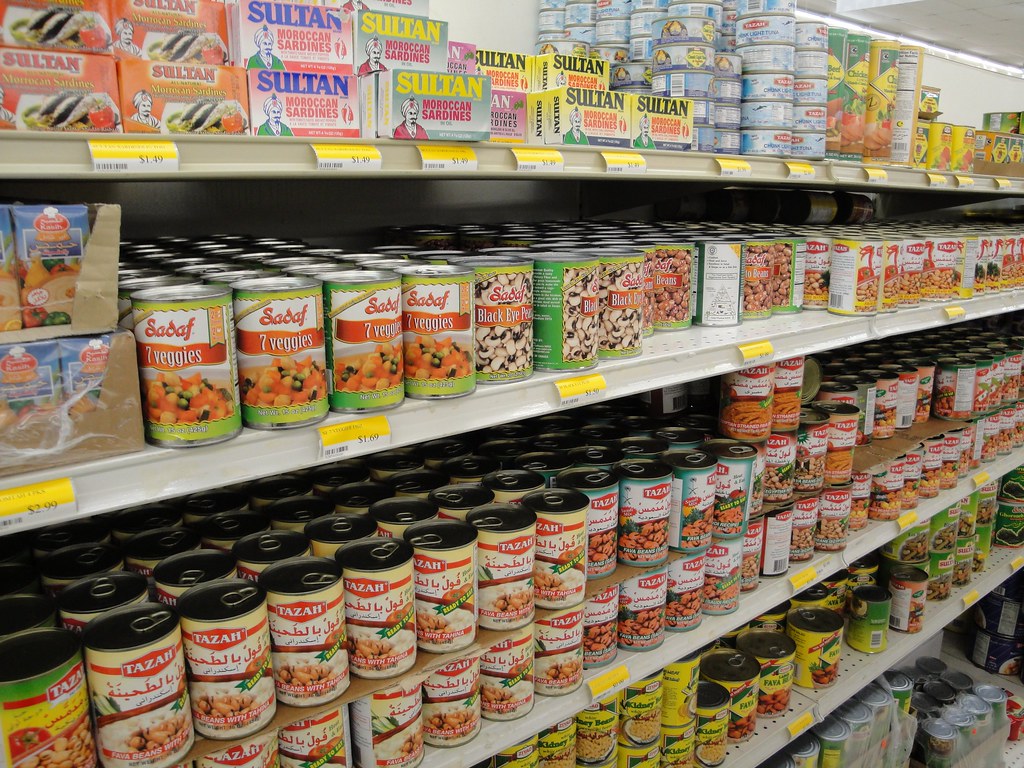
Saraga is run by Korean brothers Jong Sung and Bong Jae Sung and features hundreds of spices and 40,000 products from around the world, ranging from house made kimchi to a halal meat department. Lest I stir up too much suspicion I didn’t take many photos inside the store, but wanted to share one shot of some of the contents from a Middle Eastern aisle:

The owners are planning to open a second location on the South Side. They are facing a lot of competition from an array of new specialty markets in their current location, and also want to be positioned closer to the burgeoning immigrant community on the South Side and south suburbs. Not long ago the South Side of Indianapolis was stereotyped as the “redneck” side of town, but as American Dirt chronicled, this has changed a lot. While not part of the favored quarter, the South Side has increasing diversity both ethnically and in terms of incomes. Notably the South Side has become epicenter of the Indianapolis Sikh community.

Saraga should be careful. There are already two Indian groceries and a Mexican grocery in Greenwood. Here is part of the competition in Lafayette Square:

This, and many of the other establishments, might not look like much. But imagine what it would look like if they weren’t there.
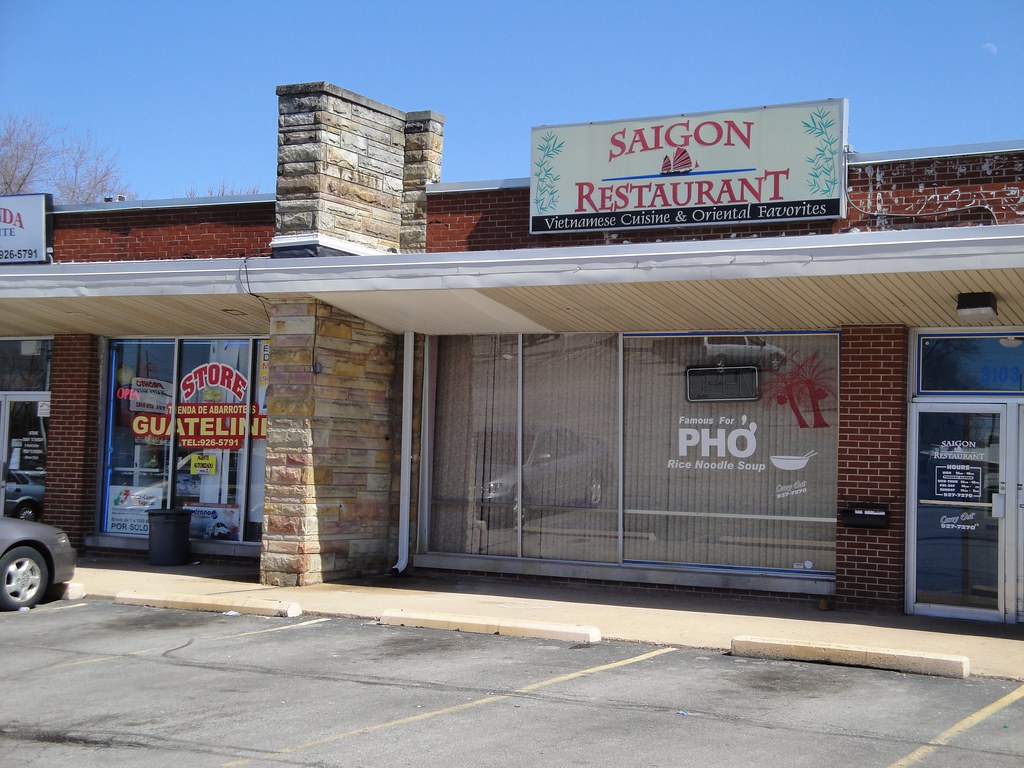
Here’s one of my favorite signs from a nearby strip center, showing the diversity of establishments rubbing elbows:
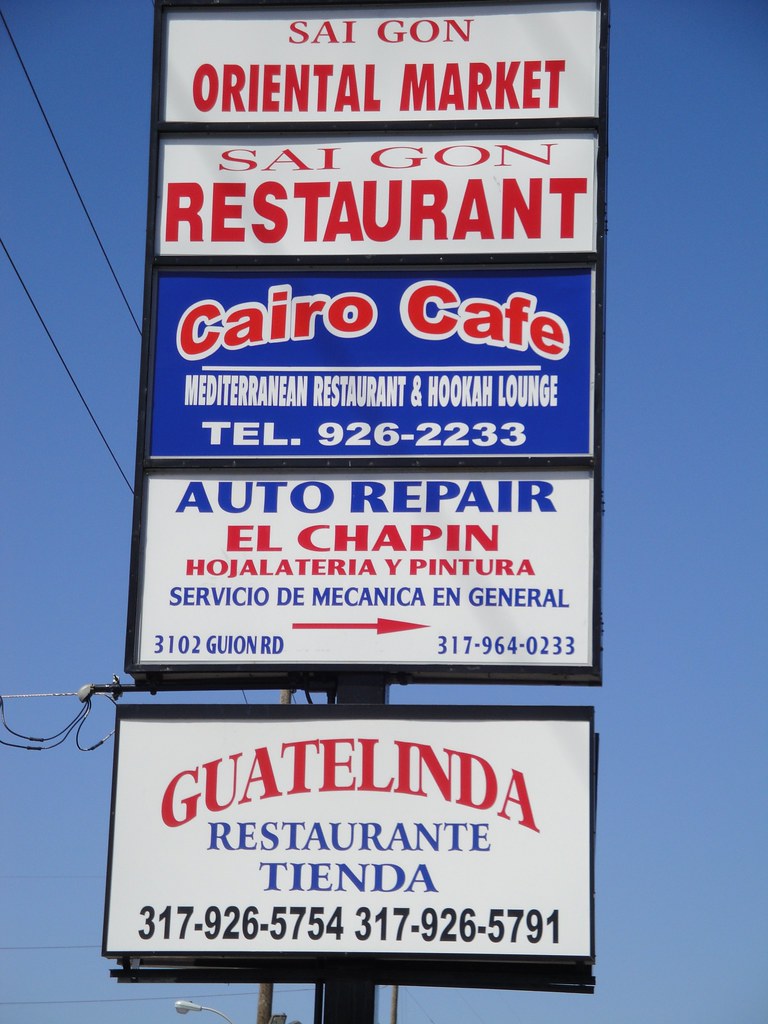
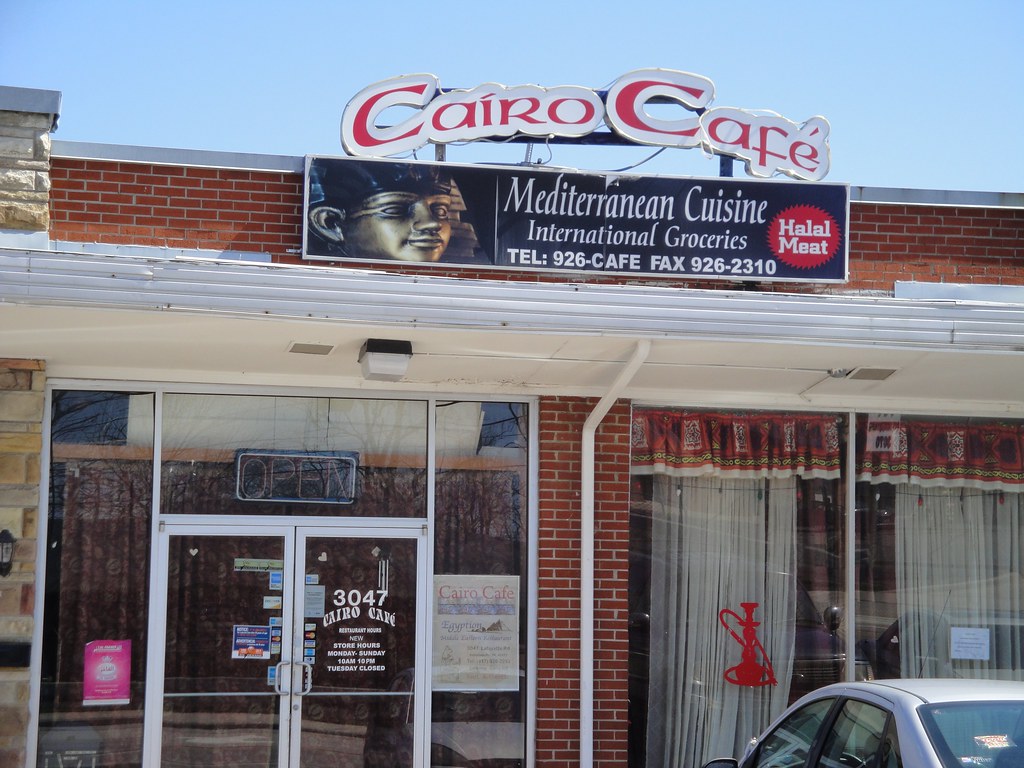
The facade of Cairo Cafe shows a typical Indianapolis pattern, where an ethnic restaurant does double duty as a small scale specialty grocery.

It’s the same thing at the Vietnamese restaurant Saigon and Guatelinda. Saigon is beloved of hipsters, but I’ve got to confess I don’t think it is very good.

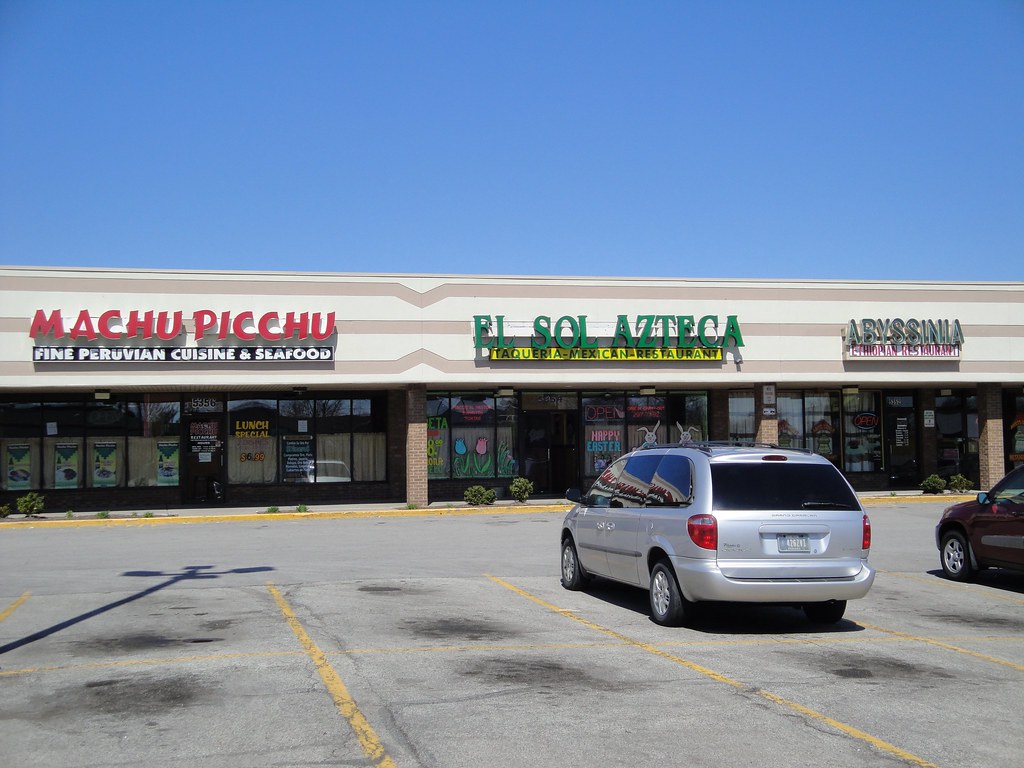
Another nearby strip mall always blows my mind for the diversity of restaurants and stores it contains. You might need to enlarge this one to see, but it’s a Peruvian restaurant next to a Mexican restaurant next to an Ethiopian restaurant:

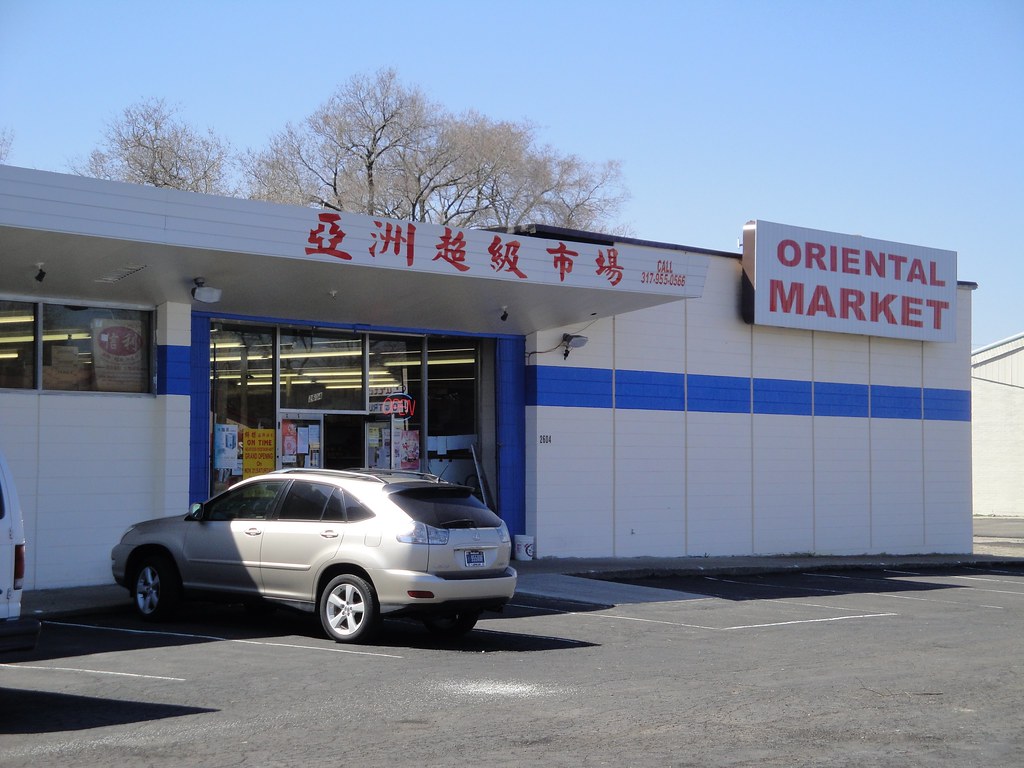
A pastry shop next to another oriental market:

Some type of Latino shop:

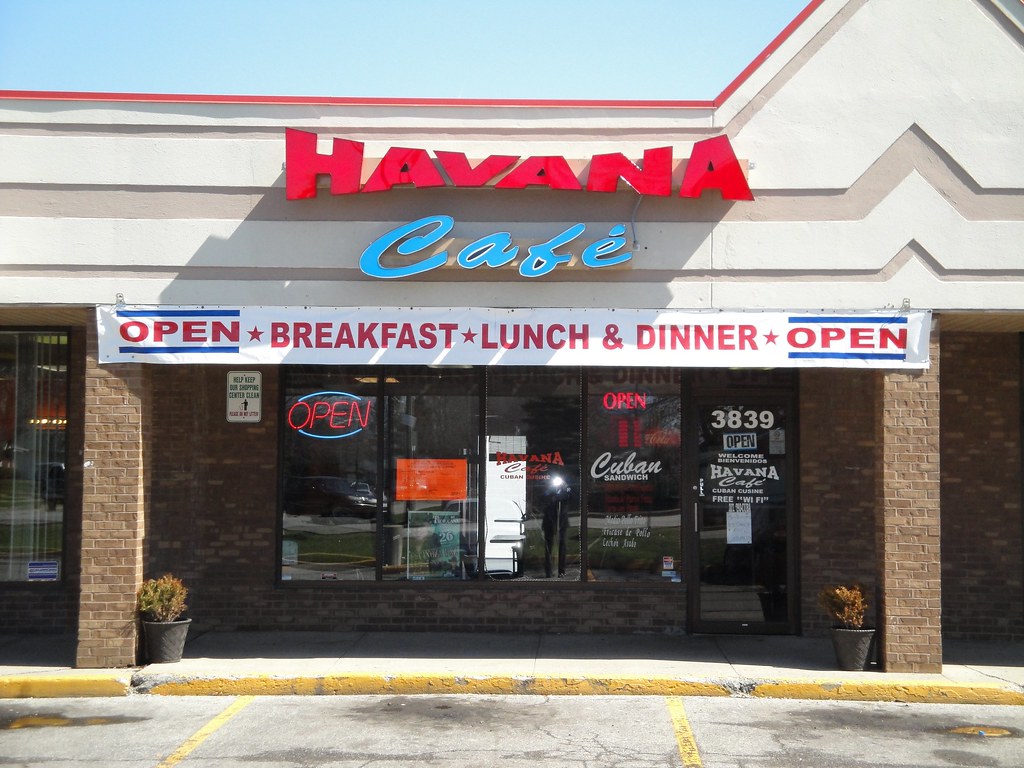
A Cuban sandwich shop:

Hopefully this gives you a flavor for how immigrants can be a force of renewal for older, struggling suburban area. I’ll admit I focused on food establishments, since that’s what’s most interesting to me, but there are plenty of others. This also shows the increasingly multi-cultural face of America, even in an interior city in the middle of Midwest corn country. If I were a city with lots of these struggling areas – and let’s face it, that’s most cities – I’d sure want to get me a lot more immigrants pronto.
In the interest of completeness, I should also note that the Lafayette Square area has also become home to large number of independent black-owned businesses. In addition to being Indy’s immigrant heart, Pike Township has also emerged as a key hub for the region’s black middle class. That will have to be the topic of a future post, alas.
35 Comments
Topics: Demographic Analysis, Economic Development, Sustainability
Cities: Indianapolis
Tags: suburbs
35 Responses to “The New Look of the American Suburb”
Leave a Reply
Telestrian Data Terminal
A production of the Urbanophile, Telestrian is the fastest, easiest, and best way to access public data about cities and regions, with totally unique features like the ability to create thematic maps with no technical knowledge and easy to use place to place migration data. It's a great way to support the Urbanophile, but more importantly it can save you tons of time and deliver huge value and capabilities to you and your organization.
About the Urbanophile
Aaron M. Renn is an opinion-leading urban analyst, consultant, speaker, and writer on a mission to help America’s cities thrive and find sustainable success in the 21st century.
Contact
Please email before connecting with me on LinkedIn if we don't already know each other.
Urbanophile in the News
The Wall Street Journal: Chicago Revises Parking Meter Deal
City Journal: Hail, Columbia!
The Wall Street Journal: New York Scraps Privatizing Parking Meters
National Review: Police Chief Rahm Emanuel
The New York Times: The Great Inversion and the Future of the American City
Twitter Feed
"Wade remains one of the dirtiest players, and biggest whiners, on the Planet Basketball." - http://t.co/phbmfW5Uuv
Bob Kravitz: Dwayne Wade should be suspended for elbow to Lance Stephenson's haed - http://t.co/phbmfW5Uuv
RT @WaterFireProv: If u are coming to #WaterFire tomorrow, we ask a simple favor. Please vote: http://t.co/lLUAi2PKEt"
RT @Gail_Lord: Life after kids? Is #Generation Y a ‘Game Changer’ for Housing? - Developments - WSJ http://t.co/YPROXf5kW0
MT @terryteachout: ...I spent 2.5 hrs driving from O'Hare to the theater at an average speed of 5 mph I love Chicago, but not its traffic.
National Blogroll
- A Daily Dose of Architecture
- American Dirt
- Atlantic Cities
- Black Urbanist
- BLDGBLOG
- Burgh Diaspora
- CEO's for Cities
- City Ledes
- Cogito Urbanus
- EconoMetro
- Economics of Place
- Everybody Walk
- GOOD
- Human Transit
- Kaid Benfield
- Kneeling Bus
- Mammoth
- Market Urbanism
- MetroTrends
- New Geography
- Next American City
- NYU Rudin Center Blog
- Pedestrian Observation
- Places: Design Observer
- Planetizen
- Rebuilding Place in the Urban Space
- Rust Wire
- Shareable
- Steven Can Plan
- Streetsblog
- The Architect's Newspaper
- The Avenue / Brookings
- The Corner Side Yard
- The Heidelberger Papers
- The Overhead Wire
- The Transport Politic
- Urban Omnibus
- urbanOut
- Where


I’m glad you’ve written about the “international flavor” of the Midwestern suburbs! Recently I pondered the racial/ethnic/cultural composition of Columbus (my hometown) and how it considers itself a “white” region in many ways, despite growing trends to the contrary. Columbus definitely benefits from having Ohio State, which may make its international character more obvious, but certainly the traditional black-white split is still present, if not immediately visible.
http://cityforward.wordpress.com/2010/04/12/columbus-ohio-white-city/
I’m fascinated by the use of the word “Oriental” in these business names. It has been profoundly out of fashion as an ethnic descriptor for at least a couple of decades, but businesses are choosing the word that works.
Many Asian businesses continue to self-describe as “Oriental” rather than “Asian”, though quite a few explicitly list the nationality or culture of their business (Chinese, Japanese, etc). AFAIK, some consider the term “oriental” to be unfashionable because the term “orient” originally referred to the Middle East (cf “oriental rug”) and not the Far East–but none of the Asians I know are bothered by the term or consider it offensive.
At any rate, there’s a strip mall near my house that used to have a mixmash of businesses from different cultures (Lebanese, Chinese, Vietnamese, Mexican, and an Italian restaurant to boot–not to mention a car wash and a drive-up espresso stand). None of them were particularly remarkable, but it didn’t stop the Oregonian from describing the mall as a multicultural landmark within the Portland area–a comment which is laughable on so many levels, I don’t know where to start. (Nowadays, the mall in question has mostly Mexican businesses; as Mexicans dominate the neighborhood).
At any rate, ethnic business coming into strip malls which previously served the “local” US population (black or white), is not a new phenomenon.
The explanation is largely economic: class C retail space is cheap, allowing a bootstrap start-up. Many first-ring suburban houses are nearing the end of their economic life and require major mechanical and energy-saving retrofits, so they’re cheap too.
For three centuries, North American immigrants have sought cheap living & working space; this is just the latest incarnation.
Oh, man, I love Saigon Cafe. Does this mean there is better Vietnamese in Indy, or is it just easier to find better stuff in Chicago (I’ve been to a place on Argyle that was good, but I think I still like Saigon better)?
Sorry for the non-sequiter. This is it’s kinda where I was heading with the West Washington Street post with regards to encouraging immigration, but you did it better and with more clarity.
I love the Cairo Cafe; they have a small, but tasty buffet of various Egyptian / Mediterranean fare. I really like Saigon as well…
Pike township is so very underrated.
It may still be awhile before Pike stops being the place that eats professional sports careers and starts being where you go for memorable food.
Pike Township: Restaurants you Remember
Also, not pictured, India Palace, just north of the zombie mall. They have food with homemade yogurt and farmers cheese. That was a good meal.
*King of Technicality Alert* Also, if it’s south of 38th Street in the Lafayette Square area, it’s in Wayne Township. */End alert*.
Definitely similar things going on in the Denver suburb of Aurora. So interesting.
If you enjoy Vietnamese food, try King Wok at 4150 Lafayette Road. It’s outstanding.
The immigrant story is very complex and calls into question some assumptions about density.
Many,many,many years ago when the suburbs first developed thay were seen as a good place to raise the larger families many people still had. Now, one just assumes that giant Mc Mansion type houses are filled just a few people.
Where my sister lives in Belrose, Queens people have torn down or built onto small houses to make room for huge extended families. This has also been a huge issue on the North Side of Queens Blvd in Forest Hills.
However, this does not refute Jane Jacob’s density arguments, in fact it proves them.
Great post. A very similar pattern is happening on the South side of Nashville. There is an astonishing variety of immigrant run businesses, from restaurants, groceries, barber shops, clinics, law firms, car dealerships, etc., etc. On the topic of retrofitting, one sees a lot of pedestrians and Nashville’s meager bus service is active in the area. However, with its sprawling suburban strip mall growth pattern, the area makes pedestrian accessibility difficult if not dangerous, car ownership is still the rule. The question is how to keep the entrepreneurial vigor of the area (affordable rents and affordable housing) while making it denser and walkable. A question for the Metro Nashville as a whole, really.
For outstanding Vietnamese try Long Trahn @ 71st and Graham rd next door to GT South’s.
Very traditional and better than those included in the blog. Thanks for highlighting several varying ethnic eateries and the related markets. Makes me hungry just thinking about it. Well I have holes to dig so I am off….
Hey! This looks like Los Angeles!
No fair stealing all of our glory. Give us our mix of immigrants back, or else!
The trend in New York is that most immigrant communities have an inner-urban neighborhood functioning as a cultural center as well as a residential center, but that there’s still significant suburbanization of immigration. So, for example, the largest Chinese areas are Chinatown, Flushing, and Sunset Park, all of which are growing, but the Chinese middle class is suburbanizing; the Dominican community is centered on Washington Heights, but there’s a lot of spillover into North Jersey and the South Bronx; and so on.
The more suburban immigrant groups are also the richer ones. With Indians, arguably the richest immigrant group in the US, it’s easier to identify Indian suburbs, for example Edison, than Indian city neighborhoods. Chinese and Koreans are somewhat less suburban, and Dominicans even less so.
Yes, Pittsburgh’s South Asian population is mostly suburban–but it’s some what interesting in that it grew up around the Westinghouse complexes east of the city which hired so many Indian engineers.
“The question is how to keep the entrepreneurial vigor of the area (affordable rents and affordable housing) while making it denser and walkable. A question for the Metro Nashville as a whole, really.”
The thing to study is how many people per house. When I worked for a Korean Grocer in Queens, I was the only non family “employee”, at night, the big extended family of grandparents, kids etc who all worked there got in the van and drove to their house in Manhasset, which was probably not small.
Likely they had all pooled their money/ labor to buy that house which is I think a pretty common trend.
One other huge factor may be at work, which is that almost all of these groups are somewhat real estate mad and see homes as investments.
My basic point is that one can’t always guess the population just by looking at the housing stock.
This post reminds me a great deal of a small version of events unfolding in Ontario over recent years/decades. The Greater Toronto Area is a major receiving area for immigrants, ethnic enclaves have sprung up all around the area, in new suburbs, old suburbs and the inner city. It’s interesting to see patterns in Canadian urban ecology cropping up in the Midwest. You might be able to get an idea of where the trend is going by looking at Ontario cities. Like Governor Daniels, many mayors embrace the new arrivals and increasingly diverse communities to create new urban identities.
By the way, re: Oriental:
No Asian I know uses this word, except to refer to Orientalism. I’ve only seen this word used by people who stereotype Asians. However, the Asians I know are all highly educated, and mostly Chinese; the Vietnamese business class may use different vocabulary.
In addition, businesses may use phrases that are deprecated in common speech, playing on stereotypes (are the people who own Saigon Grill necessarily from Ho Chi Minh City?). For example, nobody in Singapore uses the term “Far East,” but the phrase is common on malls: Far East Plaza, Far East Shopping Centre, a few stores within Paragon and Lucky Plaza. (Search “Far East” on maps.google.sg).
Indianapolis: Nuke it from orbit. It’s the only way to be sure.
I’ve been to the amazingly diverse strip mall on 38th street. It is a curious creature to be sure but the levels of anomie generated by the acres of asphalt tundra and the utter wasteland-ness of the place generates epic levels of suicidal tendencies. Surely humanity doesn’t go out like this, does it?
Honestly, in some of these strip centers in my city, they have probably never been as active. It’s like they have revived and exceeded their heyday.
What I know is important to them is the small storefront space. Meanwhile, brand new mixed use town centers struggle to keep their small storefronts open. The irony.
By the way, one reason Charlotte’s Light Rail has been successful is because it serves the immigrant population along South Boulevard. It has not been the result of TOD efforts. Our current streetcar project will also serve another area like this, on our highest ridership corridor, on Charlotte’s Central Ave.
What makes the concentration of immigrants possible is of course affordable rental housing. A successful center like this outside of Cary, NC, is adjacent to a trailer park community. The affordability of housing combined with transit service and commercial spaces for small shops creates a perfect combination to create immigrant districts.
“Meanwhile, brand new mixed use town centers struggle to keep their small storefronts open. The irony.”
The key word there is probably new. Spaces like that almost always have to rent for more to cover their construction costs. Read Death & Life again.
Do we really need to see every photo of immigrant dense TOD districts?
I would agree with “cdc guy” at comment#4.
I think it is defintly about inexpensive housing and inexpensive retail space. But i think that its also about jobs.
Yes the store owners are self-employed. But many of them depend on their fellow immigrants for customers. And these immigrants move to where the jobs are.
I mentioned in a comment here a week ago that in the Washington DC and Baltimore area the tendency of the latino immigrants is to move into an older blue collar neighborhood that is starting to become shabby and is becoming de-populated.
The latinos arent the cause of the neighborhood going downhill. Often they are the only ones who want to move in.This often makes them the “solution”. These types of neighborhoods tend to be very near wealthier neighborhoods where there are jobs.
In Baltimore City the rich neighborhoods [ which have construction and restraunt jobs] circle the waterfront.And the immigrants have moved into the blue collar neighborhoods that circle around the rich neighborhoods. The immigrants live in blue collar neighborhoods that are within 10-15 minutes walking distance of the richer neighborhoods.
In the suburbs of DC they seem to have done the same thing. Langly Park which is right on the border of wealthy Montgomery County is a perfect example.
Baltimore is a cheap place to live in.And so are many midwestern cities. But if the cities arent careful the immigrants will skip the urban areas and just move into the suburbs. Many cities seem to take it for granted that immigrants will move into urban areas.
New York , LA and Chicago can have that atitude and get away with it.But the other cities in America cant take immigrants for granted.
@John: Yes, if Death & Life were a song, it would be set on “replay”. ‘)
By the “irony” in my comment, I meant to comment on the difference in the cultural dynamics, the approach to entrepreneurship. I want to know what allows immigrants to think of starting from the boot straps, to see the value of usable spaces, and to revitalize incrementally (rather than wholesale). And to gently prod maybe (as Mr. Renn does above) how we can see them as partners (not as the unstated enemies) of district revitalization strategies.
Here’s what Jane Jacobs said on the topic: http://tcstreetsforpeople.org/node/1025
A long-term unintended consequence of Indianapolis’ UNIGOV: by dint of capturing most of the first-ring suburbs in the city boundaries 40 years ago, the city also captures the immigrants and their revitalization activity today. To his credit, our present mayor recognizes the importance and value of this activity. Somehow, though, I doubt that’s what Sen. Lugar and his political allies had in mind at the time.
Greg Travis, 50-75 years ago utopian urban planners despaired of what they considered urban wastelands, nuked them, and built beautiful new places like Cabrini-Green. Be careful what you wish for.
I don’t disagree with cdc guy at all that “urban renewal” was the catalyst for some, if not all, of the worst destruction of our civic environment in the post WW II era. But it begs the question of whether or not “urban renewal” begat suburbia, or the other way around. I tend to side with the latter. The atomic-era sentiments and general american attitudes towards what it meant to “move forward” (i.e. scrape off the old detritus, pour concrete into forms representing the new, declare victory atop a (literally and figuratively) whitewashed environment) guided what was meant and understood by “urban renewal” — and it didn’t turn out well, at all.
That said, Cabrini Green is a rather poor example of good-ideas-gone-bad in the name of urban renewal. Yes, issues of race thoroughly permeate any notion of “urban renewal” (all too often a code for “relegate non-whites and the poor to walled ghettos”) but race played a particular place in the development and history of Chicago’s projects, of which Cabrini Green was only the most notorious but perhaps not the most interesting (that distinction, I think, goes to the Robert Taylor homes) and you really can’t point to Chicago’s experience as iconic of the “urban renewal” impetus. I think that New Haven, CT or even Albany, NY are better examples.
Too often in the Urbanophile, I sense a nostalgic desire to preserve the essence of the historic city but within the new “modern” suburban paradigm. It strikes me as a have-your-cake-and-eat-it-too desire and thus all too human. But ultimately destructive I think, due to the inherent conflicts of interest between the suburban and the urban and the fact that the former is naturally corrosive to the latter.
I think a realistic acknowledgement of the current primacy of the automobile in American culture and society has to be the beginning place for all urban planning. All those cars really do have to be parked somewhere.
This does, of course, lead directly to “New Urbanism” that translates in places like Indianapolis (without mass transit) to “hide the parking lot out back”.
Until it’s possible and relatively easy and non-threatening to live in a city like Indianapolis without driving everywhere in a car (as it already is in places like NYC, Boston, Philadelphia, DC, Chicago), no one will do it. To make it possible, incremental steps (as opposed to massive “nuke” change) are the best way forward.
Ask everyone to drive one or two miles less each day this year…then do the same again next year. Build a good transit system and ask people to ride one day a week. Then two. Crawl before walking; walk before running.
In recent years I have been jazzed to sample one off ethic restaurants in former franchise junk food locations. Possibly the best Mid Eastern food in Berkeley (and there is a good selection) is in a recycled KFC building. And when I was in South Bend a couple years ago, we found some good SE Asian food in a strip mall.
I beg to differ, it’s not possible nor relatively easy or non-threatening to live in Indianapolis without a car.
In the winter, one will freeze in the winter while suffer greatly in the summer from the relentless sun and very bad air. When is the last time you walked across any big asphalt parking or even down West Street in the middle of July or February? Depending on the weather, walking in Indianapolis can be utter hell.
A majority of the streets are not safe for pedestrians. Not to mention, the lack of bus shelters or the many bus stops located on a patch of dirt or grass due to the lack of sidewalks. Plus the bus routes are inane. Cannot compare Indianapolis to DC or NYC or even Atlanta.
Riding a bike is very dangerous also; the bike lanes are not safe. Pot holes, need I say more?
Regine, please read my post again: it said UNTIL IT IS POSSIBLE in Indianapolis to live without using a car as it is in East Coast cities and Chicago, no one will do it.
I agree with you that it is not now possible, practical, or safe to live carless except in very limited areas, and that there is much to do to improve mass transit here.
This phenomenon is also taking place in Columbus. I see many suburban shopping/retail centers that were prosperous when I was a kid growing up in the 80s, but have fallen on hard times as development pushed further outward. Thankfully, some of that space is being leased by first generation immigrants. Every now and again, it’s definitely worth a trip from the central city for some good Vietnamese, East African or vegetarian Indian food. The surroundings aren’t pretty, but the food is good, cheap and authentic.
CDC Guy: I’m going to make an appointment to get my eyes checked! I misread your sentence and went off on a tangent. My sincerest apologies.
Sometimes I get a little frustrated because of Indy’s culture. Rather than play catch-up I wish we could play leap-frog instead.
Nice, provocative post, Aaron. I link to it here.
I’m surprised that you went to the trouble of reviewing all these grocery stores in this part of town and didn’t mention Lee’s supermarket, the very best one. You can get real yams there and durian too.
Living without a car in Indy? If an employer would pledge to hire the next employee car-free, that would be one person in town living without a car. That employee would be required not to have a driver’s license as a condition of employment. Got a driver’s license? No job for you. Start small with one employee. If that works make the next hire car-free.
If you work and live downtown in Indy (as I do) it is possible, though not particularly easy, to go without a car. I haven’t yet because my car is paid fof and see no reason to sell it, but I only put about 3000 miles/year on it.
I bike or walk to work year-round. I primarily use the car to go to Broad Ripple or the north side and that is only a couple of times a month, or drive to the airport for work travel (and I could take a cab, bus, or Carey for that). If I didn’t have a car, I could rent one from one of the downtown car rental locations.
So we’re obviously not conducive to doing it, but it can be done in the downtown core.