Subscribe/Feeds
Recent Comments
- Joe Baur: "Thanks for all the thoughts! I can’t speak to every single..." on A Visit to Youngstown by Joe Baur
- MetroCard: "Youngstown’s in good company (or bad, but I guess it depends..." on A Visit to Youngstown by Joe Baur
- Douglas: "Thanks for the interesting story. Pleased to get some more details..." on A Visit to Youngstown by Joe Baur
- Michael: "The Paramount Theatre is not going to be saved. They are going to do..." on A Visit to Youngstown by Joe Baur
- John Morris: "Yes I have been around downtown and felt fine. I just..." on A Visit to Youngstown by Joe Baur
Search
Archives
- ▼2012 (26)
- ▼February (3)
- ►January (23)
- The Software of Placemaking by Rod Stevens
- Urban Data the Easy Way
- Do Unto Localities As You Hate the Federal Government Doing Unto You
- The Case for Quality of Space
- Ten 2012 Trends That Will Affect Planning and Economic Development by Chuck Eckenstahler
- Providence and the Virtues of Scale
- Can Detroit Build Its Way Back to Prosperity?
- Silicon Valley vs. Silicon Alley, Economic Security, Guadalajara
- Vancouver: An Olympic Urbanist Preview by Jarrett Walker
- Replay: Neighborhood Redevelopment and the Downsides of Consolidation
- The Shifting Landscape of Diversity in Metro America
- Indiana's Bridge Deal Boondoggle, Part 4 - A Better Plan
- Murmansk in Motion
- Detroit: A City on the Move
- Indiana's Bridge Deal Boondoggle, Part 3 - INDOT's Mini-Big Dig
- How Demolition Came to Mean Stabilization by Rob Pitingolo
- Indiana's Bridge Deal Boondoggle, Part 2: Hoosiers to Pay Even More With Tolling
- Indiana's Bridge Deal Boondoggle, Part 1: A Financial Fiasco
- Faith and City Planning
- The Urbanophile 2011 Year in Review
- 60 Minutes: There Goes the Neighborhood
- This Is Sprawl, Pittsburgh Edition
- No, Freeways Are Not Dead by Keep Houston Houston
- ►2011 (162)
- ►December (11)
- Merry Christmas Miscellany
- Chicago: What's Changed? What Hasn't? by Richard C. Longworth
- Indiana Abandons Long Range Transportation Planning
- What Does Globalization Mean to Non-Global Cities?
- Planes, Trains, Automobiles, and Silicon Subways
- Indy to Repurpose Stadium Seats at Bus Stops
- Replay: Migration - Geographies in Conflict
- Traffic in Ho Chi Minh City
- Three Years Down, 72 More to Go On Chicago Parking Meter Lease by Michelle Stenzel
- Is the Indianapolis Superbowl Shuffle Video Really That Bad?
- How to Revitalize Your Urban Core Neighborhoods
- ►November (13)
- Bad US Rail Practices and What It Means for FRA Regulations by Alon Levy
- Thanksgiving Day Open Thread: What Are You Thankful For About Your City?
- Replay: Is It Game Over for Atlanta?
- Jan Gehl on Cities
- Tory Gattis on Social Systems Architecture and Why It Matters
- Summit for NYC Videos Now Posted + Lathrop Homes Radio Segment
- New York: The State of the MTA's Mega-Projects by Carson Qing
- Chicago: Lathrop Homes Redevelopment Public Kickoff
- Back to the City
- Live State Policy Difference Experiment in Progress
- A Year in New York
- Are Food Deserts Exaggerated? by Angie Schmitt
- Review: Urbanized - A Film by Gary Hustwit
- ►October (12)
- Toronto Tempo
- Cities as Software by Marcus Westbury
- Announcing the Walk Indianapolis Architectural Tours
- Indiana Not Seeing Economic Refugee Surge from Surrounding States
- Rahm Emanuel Brings Congestion Pricing to Chicago
- A Beginning Agenda for Making Smart Growth Legal by Kaid Benfield
- Replay: A Civic Going Out of Business Sale
- The Witold Rybczynski Interview by Brendan Crain
- Review: The Gated City by Ryan Avent
- The Cost of Congestion, The Value of Transit
- Race Matters in Milwaukee – Part 4: Segregation and Education by Nathaniel Holton
- Globalization and the Airport
- ►September (16)
- Replay: Planning and Free Market Density
- San Francisco: The City
- Race Matters in Milwaukee – Part 3: The Effects of Milwaukee's Segregation by Nathaniel Holton
- A Decade in College Degree Attainment
- The Texas Story Is Real
- Hire the Urbanophile
- Race Matters in Milwaukee - Part 2: The Causes of Milwaukee's Segregation by Nathaniel Holton
- Will Sagrada Família Be Mankind's Last Ever Great Artistic Statement for God?
- New York Stands High
- 2010 GDP Data Shows Nascent Recovery in Many American Metros
- Race Matters In Milwaukee – Part 1B: How Segregated Is Milwaukee? (con't) by Nathaniel Holton
- Remembering 9/11
- Indy: Help Keep the Historic "Georgia St." Name
- LA Light
- Race Matters In Milwaukee - Part 1A: How Segregated Is Milwaukee? by Nathaniel Holton
- Replay: Chicago - A Declaration of Independence
- ►August (16)
- VC Investments and More Thoughts on the Programmer Shortage
- Is There Really a Developer Drought?
- “Sick Housing Market” Ranking Shows Why Many “Top-10” Lists Should Be Deep Sixed by Drew Klacik
- Beer and Evolving Urban Culture
- Alex Steffen TED Talk on the Shareable Future of Cities
- Miriam in the Midwest by Miriam Fathalla
- Building Suburbs That Last #6 - Limit Restrictive Covenants
- Megabus - King of the Road
- Commercial District Revitalization and Return on Investment by Richard Layman
- Replay: The Brand Promise of Indianapolis
- A Decade in Metro Area Personal Income Growth
- The Problem With Boosterism by Angie Schmitt
- The Shifting Urban Geography of Black America
- A Decade in State GDP Growth
- That's One Way to Make Sure Nobody Parks in a Bike Lane
- Bizarrchitecture by Brendan Crain
- ►July (13)
- Replay: Migration Matters
- Geoffrey West TED Talk on the Surprising Math of Cities
- How Urbanist Visionaries Can Muck Up Transit by Jarrett Walker
- New Data Shows Slowing Migration in America
- Let's Face It, High Speed Rail Is Dead
- Desolation Angel by Detroitblogger John
- Why States Matter
- Replay: Do Cities Need a Creative Director?
- Chicago/OT: Buy My Condo!
- More Privatization Good News in Indiana
- Are States an Anachronism?
- The Coolest and Best City Videos
- The Urgency of Reforming the Federal Railroad Administration by Alon Levy
- ►June (13)
- Replay: Picture-Perfect Portland?
- Why Aren’t We Building ‘Emotionally Connected’ Cities? A Guest Post by Peter Kageyama
- Employment Challenges Facing Smaller City Downtowns
- Did INDOT Cancel the Remainder of the Northeast Corridor Project?
- Five Innovation Myths Applied to Urbanism by Brendan Crain
- Replay: Resolving the Paradox of Success
- Job Migration from the Suburbs to Downtown
- The Cleveland Comeback: Version 5.0 by Richey Piiparinen
- On Urban Education
- Announcing the Indianapolis Neighborhood Map
- Aerotropolis: An Interview with Greg Lindsay by Geoff Manaugh
- Replay: Metropolitan Linkages
- The Taxi As Public Transportation by Drew Austin
- ►May (7)
- ►April (11)
- Replay: The Return of the Native
- Amtrak Should Innovate with Hiawatha Service Pricing by Jeramey Jannene
- A Ruralophillic Detour
- Brutalism: Worth Saving? by Brendan Crain
- This Is Why We're Broke
- Replay: The Power of Greenfield Economics
- The Sprawl Bubble by Chuck Banas
- Does Privatization Actually Transfer Risk Away from Government?
- Le Flâneur
- Ohio's Geographic Advantages
- The 31-Flavors of Urban Redevelopment by Rod Stevens
- ►March (16)
- Census 2010 Offers Portrait of America in Transition
- Conscious Urbanism: The Heidelberg Project by Brendan Crain
- Why Is Government in This Business Again?
- Replay: The Logic of Failure by Dietrich Dörner
- It's 2011, Do You Understand Your Human Capital Networks Yet?
- Beyond Brain Drain
- Urbanoscope
- Metro/County Census Results So Far (Plus a Brief Look at Jobs)
- Pushing the Racial Dialogue in Cincinnati by Tifanei Moyer
- Civic Iconography Done Right - Chicago's City Flag
- Replay: The City as a Platform
- Thematic Maps Made Easy
- The Rupture
- Urbanoscope
- A Few Studies
- Saint Jane by Will Wiles
- ►February (18)
- A Better Way to Find, Look At, Analyze and Display Civic Data
- Replay: Transit Ridership Framework
- New Metro GDP Data Released
- Census 2010 and Urbanizing Indiana
- Collective Pride, Worthy Choices by John L. Krauss
- The Mobility Bank
- Urbanoscope
- The Big City CBD Advantage
- Chicago Takes a Census Shellacking
- Hoping Detroit Fails by Jim Russell
- Super-Regionalism in Kentucky
- Replay: Is Nashville the Next Boomtown of the New South?
- Imported from Detroit
- Welcome to the Urban Revolution (Part Two) by Evan O'Neil
- The Problem of Innovation
- Urbanoscope
- Can Chicago Get Out of Its Parking Meter Lease?
- Welcome to the Urban Revolution (Part One) by Evan O'Neil
- ►January (16)
- Indianapolis Must Reinvent Itself Again
- Replay: The Importance of Social Structures to Urban Success
- The Urban Energy Efficiency Retrofit Challenge
- Yes There Are Grocery Stores in Detroit by James Griffioen
- The Urgency of Reform
- Urbanoscope
- A Better Way to Look at Data - Beta Testers Wanted
- Erie Expatriates Seeking Jobs…in South Korea by Kristi Gandrud
- Chicago: The Cost of Clout
- Replay: A Tale of Two Blizzards
- Century of the City
- Yes, We Do Need to Build More Roads
- Place Is the Space by Ben Schulman
- Failure to Communicate: Accentuate the Positive
- Urbanoscope
- 2010 Urbanophile Year in Review
- ►December (11)
- ►2010 (210)
- ►December (16)
- Urbanoscope
- Taking Chicago Transit from Good to Great, Part Five - Getting It Done
- Taking Chicago Transit from Good to Great, Part Four - Paying for It
- Census 2010 National and State Results Released
- Does Policy Matter?
- Replay: What Is a Strategy?
- The Silicon Valley Advantage
- Bruce Katz at the Brookings Global Metro Summit
- Taking Chicago Transit from Good to Great, Part Three - Cost Control and Governance
- Minneapolis-St. Paul: White, Liberal, and Cold
- Urbanoscope
- State GDP Performance
- Taking Chicago Transit from Good to Great, Part Two - Raising the Bar on Design
- College Degree Density Revisited
- Replay: "They're Not Current"
- New York City's Taxi of Tomorrow
- ►November (16)
- Taking Chicago Transit from Good to Great, Part One - Building the Vision
- Urbanoscope
- Thanksgiving Open Thread: What Are You Thankful For About Your City?
- Building Suburbs that Last #5 - Redevelopment Insurance
- Replay: Louisville - An Identity Crisis
- European Urban Quality of Life
- After Daley's Retirement, Chicago Needs a New Approach by Greg Hinz
- Are People Really Fleeing Shrinking Cities?
- Urbanoscope
- Indy: Livability Starts Now
- Pittsburgh and the Magic of Failure by Ben Schulman
- Religion and the City
- Replay: A Better Road to Clean Water Act Compliance
- The Privatization-Industrial Complex
- Universal Fare Media
- Can Global Cities Work? by Richard C. Longworth
- ►October (16)
- Urbanoscope
- Open Thread: World Class Chicago
- Core City Educational Attainment
- Matthew Mourning: Random Thoughts on the Cult of Destruction in St. Louis
- Piercing the Narrative
- Replay: What's Killing California?
- The Asset Trap
- Pittsburgh City Council Votes Down Parking Meter Privatization
- Drew Austin: Against Transportation
- Chicago's Eroding Competitive Performance (Chicago vs. New York)
- Urbanoscope
- NJ Gov. Chris Christie Channels His Inner "Chainsaw Al" Dunlap
- New York's Quality of Life Agenda
- Constantin Gurdgiev: Knowledge Economy and Dublin Water Woes
- Megaregional Migration
- Replay: Good Economic Development - Indy's Internet Marketing Cluster
- ►September (17)
- Chicago's Metra Postpones Bridges Project
- A Civic Going Out of Business Sale
- Jason Tinkey: The World Laps Chicago
- Present at the Creation
- Urbanoscope
- Detroit Lives!
- Iowa's "Agro-Metro" Future
- Indianapolis Parking Meter Lease Is a Danger to Downtown
- Are Networks or Size More Important to Urban Success?
- Replay: Spheres of Influence
- There's No Such Thing As Green Industry
- Nuvo: A Mayor for the New Millennium
- Indianapolis Parking Meters - The City's Response
- Urbanoscope
- The Power of Brand Detroit
- Indy's "Son of Chicago" Parking Meter Lease to Be a Disaster for City
- Labor Day Open Thread: What Do Successful Lower Income Neighborhoods Look Like?
- ►August (19)
- Richard Layman: Richard's Rules for Restaurant Driven Development
- Urban Universities Done Right: Chicago's "Loop U"
- Urbanoscope
- The Physical Evolution of Infrastructure
- The Index: Michigan and Ohio
- Parking Meters and the Perils of Privatization
- Replay: Fantasy Transit Maps
- What Is the Real Function of an Arts Organization?
- Stuck in the 90's
- Jim Russell: Catch a Rising Star - Pittsburgh
- Rebranding Columbus
- Urbanoscope
- Lessons From Beirut
- Help Stop Metra From Destroying Part of Chicago's Transit Infrastructure
- The New International Style
- Replay: Columbus - The New Midwestern Star
- The Demographics of Property Tax Revolts
- Noah Kazis: Shaping the Next New York - The Promise of Bloomberg’s Rezonings
- The Mark of a Great City Is in How It Treats Its Ordinary Spaces, Not Its Special Ones
- ►July (16)
- Urbanoscope
- Globalized Professional Services
- Mike Doyle: Meet Me In St. Louis, Not Milwaukee
- Chicago's Structural Advantages (and Professional Services 2.0)
- Replay: Detroit - Urban Laboratory and New American Frontier
- Commuting Market Share Is the Wrong Way to Judge Transit
- Urban America's Quality vs. Quantity Dilemma
- H. L. Mencken: The Libido for the Ugly
- It's Time for America to Get On the Bus
- Urbanoscope
- The Specter of Autarky
- "James Drain" Hits Cleveland
- Randy Simes: Cincinnati's Dramatic, Multi-Billion Dollar Riverfront Revitalization Nearly Complete
- The Columbus, Indiana Values Proposition
- A Better Tomorrow
- Urbanoscope
- ►June (18)
- City Profile: Milwaukee by UrbanMilwaukee
- Buffalo, You Are Not Alone
- Replay: The Decline of Civic Leadership Culture
- Personal Brands and City Brands
- Chuck Banas: Putting Parking In Its Proper Place
- Chicago and the Epicenter
- Urbanoscope
- City Economic Weight
- Jarrett Walker: Los Angeles - The Next Great Transit Metropolis?
- Does Anyone Really Believe Human Capital Is Important?
- Replay: Bruce Mau's Massive Change
- The Spread of California's Governance Disease
- Creative Winter
- Richard Florida: How to Revitalize Rust Belt Cities
- The Neighborhoods of Cincinnati
- Urbanoscope
- The Talent Disconnect (or, Pittsburgh's Talent Failure)
- Chicago (and New York) Stories
- ►May (17)
- Replay: Creative Destruction Is Real
- FTA Administrator Peter Rogoff Delivers Tough Love to Transit Advocates
- City Profile: St. Louis by UrbanSTL
- Next American Suburb: Carmel, Indiana
- Midwest Miscellany
- New Grass Roots: People for Urban Progress
- Is It Game Over for Atlanta?
- Richard Herman: Will a Dying Cleveland Finally Turn to Immigrants?
- Brookings' New Geography of Urban America
- Replay: Louisville - The Case for 8664
- The Authentic City
- Megan Cottrell: Eviction Is to Black Women What Incarceration Is to Black Men
- Review: The Great Reset by Richard Florida
- Midwest Miscellany
- Do Cities Need a Creative Director?
- London and the Power of Place
- Failure to Communicate: Beyond Starbucks Urbanism
- ►April (19)
- Replay: What Made the Burnham Plan of Chicago Successful
- Top Down or Bottom Up Leadership? Both!
- Chuck Banas: This Is Sprawl
- Thoughts on a Federal Policy for American Cities
- Midwest Miscellany
- If You Want Sustainability, Provide Economic Security
- Drew Austin: Brief Interviews with Hideous Cities
- The New Look of the American Suburb
- In Praise of the Chicago Opera Theater
- Replay: True Cities and Shadow Cities
- Density Reconsidered
- Ryan Avent: The Urban Economy
- The Other Side of Detroit
- Midwest Miscellany
- Getting to Yes Faster
- Carol Coletta: Innovative Cities
- Why It's So Hard For Small Cities to Get Great Design
- Replay: The Outsiders
- Can Your City Compete?
- ►March (20)
- "Brain Drain" vs. "Steel Drain"
- Megan Cottrell: Don't Fall in the Poverty Trap - You May Never Get Out
- Getting Serious About Talent
- Midwest Miscellany
- Midwest Success Stories
- Census Bureau Releases 2009 Population Estimates
- Richard Longworth: Paying for Cities
- A New New Media for Cities
- Janette Sadik-Khan on Changing the Transportation Game
- Replay: The Importance of Aesthetics in Transportation Facility Design
- The Next Industrial Revolution
- Detroitblog: Solitary Man
- The City as Platform
- Midwest Miscellany
- Detroit: Embracing the Ruins
- Carl Wohlt: Learning from Starbucks
- Downsides of Consolidation #2 - Cost Increases, Dilution of Urban Interests, Deferred Problems
- Replay: Small Cities Should Have Fareless Transit
- The 10% Solution
- Featured Site: Branding for Cities
- ►February (17)
- Downsides of Consolidation #1: Neighborhood Redevelopment
- Midwest Miscellany
- St. Louis: Reconnecting the City to the River
- Peter Christensen: Why Transit Used to Be Profitable and Isn't Now
- Eye on the TIGER
- Replay: An Examination of City-County Consolidation
- Cleveland and the Regionalism Challenge
- Featured Sites: Girls on Bikes
- Cincinnati: The Urge to Merge, Or Learning to Love Your Urban Geography
- Cincinnati: The State of the Arts
- Midwest Miscellany
- Joel Kotkin on the Future of the Heartland
- Drew Austin: The Living...The Built...The McDonald's Parking Lot
- An Interview With the Urbanophile
- Replay: Preserving Our Mid-Century Heritage
- The Power of Greenfield Economics
- Chris Barnett: It Falls From the Sky
- ►January (19)
- Framework: Transit Ridership
- Midwest Miscellany
- Another Epic Public Space WIN in New York
- Drew Klacik: Place-Based Clusters
- The Core Vitality Imperative
- Replay: Impossibility City
- You Can't Fight the State DOT - Or Can You?
- Michael Scott: Robert Clifton Weaver's Quest to End Housing Segregation - Has Anything Changed?
- Portland and the Limits of Urban Planning Policy
- Midwest Miscellany
- Want Talent? Drink at Lunch!
- High Tech Won't Save California's Economy - Or Ours
- No Promise of Safety
- Will Anyone Stand Up For American Industry?
- Replay: The Giant Sucking Sound
- Migration Matters
- Jarrett Walker: Learning, Again, From Las Vegas
- The Urbanophile 2009 Year in Review
- Midwest Miscellany
- ►December (16)
- ►2009 (178)
- ►December (13)
- Building Suburbs That Last #4 - Supporting Home Based Businesses
- Detroit Roundup
- The Safety Bogeyman
- A Plan for Detroit
- Replay: Invert the World
- St. Louis: Gateway Arch Grounds Design Competition
- A Midwest Megaregion?
- Midwest Miscellany
- Randomly Quotable
- Review: Megaregions, Edited by Catherine L. Ross
- The Mayor as CEO
- Columbus: Fantasy Transit Maps
- Role Reversal
- ►November (15)
- Midwest Miscellany
- Thanksgiving Open Thread: Your Civic Ambition
- Back From Barcelona
- Migration: Geographies in Conflict
- Ryan Avent: Disruptive Technologies
- Replay: Mega-Skepticism
- Principles of Privatization - Part 4: Guidelines for Action
- Reducing Carbon Should Not Distort Regional Economies
- Indy: Parallel Societies
- The Urbanophile in the News
- Pro Sports As Naming Rights Deal
- Principles of Privatization - Part 3: Uses of Funds
- Report from the Rail~Volution
- Midwest Miscellany
- Cincinnati: Water Works and the Commonwealth
- ►October (17)
- Chicago: Lewis Mumford on Daniel Burnham
- Principles of Privatization - Part 2: Value Levers
- Replay: Bad Example
- New York: Leadership in Transportation Design
- Welcome to the New Urbanophile 2.0
- Principles of Privatization - Part 1: Taxonomy of Transactions
- The White City
- Midwest Miscellany
- Chicago Transit at a Crossroads
- Cincinnati: Vote No on 9
- A Better Road to Clean Water Act Compliance
- Chicago Transit: From Good to Great, Part 5 - Getting It Done
- What's Killing California?
- Replay: Failure of Ambition
- Midwest Miscellany
- Transit Roundup
- Midwest Metro GDP, Unemployment
- ►September (14)
- Planning and Free Market Density
- Chicago Transit: From Good to Great, Part 4 - Paying For It
- Pittsburgh Renaissance?
- Re-Imagining the Good Life
- Other Michigan Cities
- Midwest Miscellany
- Imperial Columbus and the Principles of Regional Finance
- Chicago Transit: From Good to Great, Part 3 - Cost Control, Governance, the Racquet
- Indy: The Failure of the Canal Walk
- Midwest Miscellany
- Spheres of Influence
- Guest Post: Recrecational Hinterlands
- Labor Day Open Thread: Best and Worst Midwestern Cultural Traits
- Pedestrian Deaths, Nashville Style
- ►August (14)
- Chicago Transit: From Good to Great, Part 2 - Raising the Bar on Design
- Midwest Miscellany
- Robert Irwin - Light and Space III
- The Downside of Living Carless in a Small City
- A New Version of the American Dream
- Chicago Transit: From Good to Great, Part 1 - Building the Vision
- The New Industrial City
- Midwest Miscellany
- Guest Post: Is Sacramento an Indianapolis Wannabe?
- Detroit: Urban Laboratory and the New American Frontier
- Replay: Chicago Corporate Headquarters and the Global City
- Midwest Miscellany
- Indy: Four Projects
- Cincinnati: The Great Streetcar Debate
- ►July (18)
- Midwest Miscellany
- Louisville: The Legacy of Jerry Abramson
- Replay: The Aloneness of an Urbanophile
- The New Economy Counter-Trend, or The Shrinking Amenity Gap
- Indy: Good Economic Development - Internet Marketing Cluster
- Why So Many Southern Cities Are Successful
- Race and the City
- Midwest Miscellany
- Indy: Good Economic Development - Energy Systems Network
- Clean Water Act Compliance Costs Are Hurting Our Cities and Promoting Sprawl
- Globalization and Civic Leadership Culture
- Midwest Miscellany
- High Speed Rail Roundup
- St. Louis: City Garden and the Millennium Park Effect
- Chicago: Transportation and the Burnham Plan
- Replay: What Business Are You In?
- Replay: Kansas City's Edifice Complex
- Shrinking the Rust Belt
- ►June (16)
- Louisville: The Case for 8664
- "Amtrak on Steroids" is Not "High Speed Rail"
- Building Suburbs That Last #3 - The Mother of All Impact Fees
- The High Line
- Midwest Miscellany
- End Property Tax Collection in Arrears
- The Midwest Mindset
- The Modern Wing at the Art Institute of Chicago - Part 2: The Nichols Bridgeway, Or Re-Imagining Monroe St.
- Midwest Miscellany
- Creative Destruction Is Real
- The Urbanophile Named One of Chicago's Top Online News Sites
- Replay: Globalization and the Soft Power of Cities
- The Modern Wing at the Art Institute of Chicago - Part 1: The Exterior
- Mega-Regional Reputation and Other Midwest Miscellany
- Tony George, the IMS, and the New Midwest
- The Talent Equation
- ►May (14)
- Louisville: A Tale of Two Cities
- Midwest Miscellany
- Chicago: Preventing the Self-Destruction of Diversity
- A Crisis of Values
- The Successful, the Stable, and the Struggling
- Midwest Miscellany
- Indy: Australian and Spanish Investors Hurting, Hoosier Taxpayers Smiling
- Columbus: The New Midwestern Star
- The Rise of the New Grass Roots - Part 2: The Applications
- Transit Pricing Reconsidered
- The Rise of the New Grass Roots - Part 1: The Phenomenon
- Midwest Miscellany
- "They're Not Current"
- The Future of the American Newspaper
- ►April (16)
- Resolving the Paradox of Success
- Chicago: East Chicago's Industrial Past
- The New Discipline of True Urban Design
- Midwest Miscellany
- Cleveland: Reactions to "What's Wrong" Post
- Cleveland: What's Wrong?
- The Giant Sucking Sound
- Why Don't People Buy Art?
- Midwest Miscellany
- Chicago: What Made the Burnham Plan Successful?
- What Does Urban Success Look Like?
- The Outsiders
- Job Sprawl and Other Midwest Miscellany
- Impossibility City
- Detroit: Out-Migration Devastates Michigan (and the Midwest)
- Small Cities Should Have Fareless Transit
- ►March (14)
- The Urbanophile Wins Chicagoland Chamber of Commerce Transit Innovation Competition
- Cincinnati: Agenda 360
- Midwest Miscellany
- Strategies Done Right - Indianapolis Museum of Art
- Chicago: Pecha Kucha - Urban Design Disasters
- Census Bureau Releases 2008 Population Estimates
- Building Suburbs That Last #2 - New Urbanism and Parcelization
- Louisville: Vice City
- Detroit: Not the Future of the American City
- Midwest Miscellany
- Why Progressives Should Be Pro-Business
- Indy: Could Marion County Implode?
- Boomers, Innovation, and the New Economy
- High Speed Rail and Other Midwest Miscellany
- ►February (12)
- Chicago: Reconnecting the Hinterland, Part 2B - On Innovation
- GaWC Issues New Global City List
- Building New Audiences for Our Classical Music Institutions
- Chicago: Reconnecting the Hinterland 2A - Onshore Outsourcing
- Midwest Miscellany
- Chicago: Reconnecting the Hinterland, Part 1B - High Speed Rail
- Chicago/Indy: A Tale of Two Blizzards
- Chicago: Reconnecting the Hinterland, Part 1A - Metropolitan Linkages
- The Logic of Failure
- Columbus: Downtown Mall to Be Demolished
- The Return of the Native
- Midwest Miscellany
- ►January (15)
- Indy: ICVA Hits Home Run with New Brand Concept
- Chicago: Architectural Note - The Midwest Has Winters
- Building Suburbs That Last #1 - Strategy
- I Almost Got Killed
- Miscellaneous Musings
- Quotes from the Burnham Plan
- Chicago: A Declaration of Independence
- Detroit Roundup and Other Miscellany
- Review: Retrofitting Suburbia
- "Cincinnati is Cool", "Some of Us Chose to Live Here", and Other Musings
- Preserving Our Mid-Century Heritage
- Urban Alumni Networks
- "Our Product is Better Than Our Brand"
- Future of the Market Square Arena Site
- Miscellaneous Musings
- ►December (13)
- ►2008 (126)
- ►December (10)
- ►November (16)
- Miscellaneous Musings
- Detroit: Do the Collapse
- Kris Kimel Gets It
- Indy's Increasing International Population
- The Facts on the Ground
- Charlotte, Bruce Mau, and Other Miscellaneous Musings
- What is a Strategy?
- Review: New Indianapolis Airport Terminal Part 7 - Conclusion
- Review: New Indianapolis Airport Terminal Part 6 - Miscellaneous, or Rethinking the Airport as Public Space
- Review: New Indianapolis Airport Terminal Part 5 - Artwork
- Miscellaneous Musings
- "We're Out of Ideas"
- The Global City of the Future
- Bad Example
- Review: New Indianapolis Airport Terminal - Part 4: Signage
- Review: New Indianapolis Airport Terminal - Part 3: Finishes and Furnishings
- ►October (12)
- Why I Love Jury Duty
- More Louisville Transit Goodness
- Kansas City in Monocle, Cincinnati in Minneapolis
- A New Approach to Regional Economic Development in Indiana
- This Is Not Your Father's CTA
- Review: New Indianapolis Airport Terminal - Part 2: Interior
- Review: New Indianapolis Airport Terminal - Part 1: Exterior
- Invert the World
- Chicago: Corporate Headquarters and the Global City
- Globalization and the Soft Power of Cities
- Updated: What Do We Want Our Cities to Be?
- More Thoughts on Indianapolis Public Transit
- ►September (11)
- Failure of Ambition
- Review: Massive Change by Bruce Mau
- Fast and Cheap Ways to Improve Public Transit in Indianapolis Right Now
- 100th Anniversary of the Burnham Plan
- The Really, Really Cheap Manifesto
- The Financial Crisis: Good for Chicago?
- Group Considers Closing Monument Circle to Traffic
- Milken Institute: 2008 Best Performing Cities
- Are You a Consumer or a Producer?
- Miscellaneous Musings
- Indy's Appeal to the Educated
- ►August (9)
- The Forces of Globalization
- Mini-Review: I-74 Interchange at Ronald Reagan Parkway
- Deepening the Linkages Between Indianapolis and Indiana
- The Streetlights of Chicago
- The Sustainability of Urban Amenities
- Modern Architecture, Hoosier Style
- Mega-Regional Migration
- I Have a Dream: Public Sculpture Edition
- The Great Inversion
- ►July (14)
- Hospitals, Competition, and Life Sciences
- Miscellaneous Musings
- What is Your Ambition?
- Smart Economic Development Strategies: MusicCrossroads
- The Globalization Reading List
- Major Moves is Majorly Great
- More Mind-Blowing Louisville Historic Transit Pictures
- The Importance of Social Structures for Urban Success
- Mega-Skepticism
- Artists in the Midwestern Workforce
- More Smart Economic Development Strategies
- The Brand Promise of Indianapolis
- Naptown Gets Harmonic
- The Downtowns of Ohio
- ►June (15)
- Postcards from Milwaukee
- Hope for Urban Schools - At What Cost?
- Indianapolis is Making Major Moves
- The Urbanophile Conjecture
- Nashville: The Next Boomtown of the New South?
- Postcards: Hoosier Gothic
- Brookings Institution Releases New Metro Area Rankings
- More Good Reading and News Briefs
- Commuter Rail Proposed for Indianapolis
- Review: US 31 Supplemental Draft Environmental Impact Statement
- The Hustler as a Key Component of Urban Success, or Why Greed is Good
- Louisville's Elevated Electric Rail System
- The One That Got Away
- City Rankings: Behind the Surveys
- Rethinking Brain Drain
- ►May (10)
- Economic Development Strategies, Done Right
- Kansas City: A Downtown Profile
- Louisville: An Identity Crisis
- Indiana Transportation Briefs
- Double Trouble
- Indianapolis: Mayor Ballard 100 Day Report
- Cincinnati: A Midwest Conundrum
- New Urbanist Developments in Atlanta
- A New Rail Transit Plan for Indianapolis
- Pecha Kucha: Urban Aphorisms
- ►April (10)
- Indiana University School of Music on an Upswing
- Indiana Transportation Updates
- Bureaucracy-2, Democracy and the Rule of Law-0
- Review: Caught in the Middle by Richard C. Longworth
- Unintended Consequences of Consolidation Legislation
- Tax Reform Trouble
- Simon Company Enters High Rise Residential Market
- City Benchmarking Report
- The Europeanization of American Cities
- What Makes a City Desirable?
- ►March (11)
- Census Bureau Releases 2007 County and Metro Area Population Estimates
- Houston: The Next Great World City?
- INDOT Changing to Make Major Moves Happen
- Review: Indianapolis Library Expansion - Part Three: The Interior
- Renzo Piano on Architecture
- Updated: A Fashionable Affair at the IMA
- Review: Indianapolis Library Expansion - Part Two: Artwork
- Columbus Ranked #1 Up and Coming Tech City
- Cities on the Edge of Chaos
- Review: Indianapolis Library Expansion - Part One: The Exterior
- Review: 46th St. Bridge Replacement
- ►February (7)
- ►January (1)
- ►2007 (90)
- ►December (5)
- ►November (9)
- Ohio Facing $3.5 Billion Road Construction Shortfall
- Projected Metro Area GDP Growth and Impact of Housing Market
- Metropolitan Area GDP
- The Real Basis of a Local Economy
- Quote, Unquote
- Super-70 Completed
- Why Rail Transit Is a Bad Idea for Indianapolis
- Pretentious Quote of the Day
- Does "Smart Growth" Discriminate?
- ►October (7)
- ►September (1)
- ►August (4)
- ►July (15)
- Kansas, Missouri Facing Road Funding Crunch
- Restore 64 Wraps up Early in Louisville
- Project Review: Lewis and Clark Parkway Widening in Clarksville, Indiana
- Downtown Malls In Columbus and Indianapolis
- Mini-Review: I-80/I-94 Widening in Northwest Indiana and Chicago
- Theodore Roosevelt on Leadership
- Columbus and Indianapolis Size Comparison
- A Comparison of the Columbus and Indianapolis Freeway Systems
- Project Review: I-465 Northwest Fast Track
- Postcard: German Village, Columbus, Ohio
- Updated: Transportation Briefs
- How Many Stars Can the Skyline Take?
- Project Reviews: 757 Mass Ave. and the Villagio in Indianapolis, Part Two
- Indiana Convention Center Expansion Design Revealed
- Good Articles in the FT Weekend
- ►June (10)
- Kansas City's Crossroad's Arts District
- More Transportation Leadership from Missouri
- City of Parks Taking Shape in Louisville
- Followup on Gentrification
- Indianapolis Outer Loop
- Project Reviews: 757 Mass Ave. and the Villagio in Indianapolis, Part One
- Indianapolis Needs a New MPO Structure
- A Tale of Two Marriotts
- Suburban Downtown Booms
- Orchestra Illustrates Cleveland's Dilemma
- ►May (12)
- Postcard: Old Louisville
- Aiming High at the Indianapolis Zoo
- Super Duper 70
- More on Arts and Accessibility
- Impressions of Nashville
- Must Read David Hoppe Column on the Arts
- Great Pedestrian Environments
- Hotel Mundane Facelift Announced
- The Kentucky Derby
- INDOT's Strange Priorities
- Market Street Ramp Project in Indianapolis, Part Two
- Market Street Ramp Project in Indianapolis, Part One
- ►April (5)
- ►March (6)
- ►February (9)
- The Aloneness of an Urbanophile
- Carmel: Leadership in Action, Part Three
- Carmel: Leadership in Action, Part Two
- The Shrewdness of Mitch Daniels
- Carmel: Leadership in Action, Part One
- What Makes a Great Orchestra? (Or a Great City?)
- Louisville's 2007 Competitive City Report: A Critique
- Think Tank Ranks Bioscience Jobs Concentration
- Postcard: Fountain Square, Indianapolis
- ►January (7)
- ►2006 (3)
Best Of
- Another Epic Public Space Win in New York
- Are States an Anachronism?
- Brookings' New Geography of Urban America
- Bruce Mau's Massive Change
- Caught in the Middle
- Chicago's City Flag is Civic Iconography Done Right
- Chicago: A Declaration of Independence
- Chicago: Corporate Headquarters and the Global City
- Chicago: Looking Beyond the Loop
- Chicago: Metropolitan Linkages
- Chicago: Onshore Outsourcing
- Chicago: The Cost of Clout
- Chicago: What Made the Burnham Plan Successful?
- Cincinnati: A Midwest Conundrum
- Cleveland: What's Wrong?
- Columbus: The New Midwestern Star
- Detroit: Do the Collapse
- Detroit: The New American Frontier
- Detroit: The Positive Side
- Do Cities Need a Creative Director?
- Downsides of City-County Consolidation
- Geographies in Conflict
- Getting Serious About Talent
- Globalization and Civic Leadership Culture
- Globalization and the Soft Power of Cities
- High Speed Rail
- Impossibility City
- Indy: 15 Quick, Easy, and Cheap Ways to Make a Big Urban Design Impact
- Indy: A Crisis of Values
- Indy: Could Marion County Implode?
- Indy: Embracing the City-Region
- Indy: Fast and Cheap Ways to Improve Public Transit Right Now
- Indy: Our Product Is Better Than Our Brand
- Indy: The Brand Promise of Indianapolis
- Invert the World
- Is It Game Over for Atlanta?
- Joel Kotkin on the Future of the Heartland
- Kansas City's Edifice Complex
- Louisville: An Identity Crisis
- Louisville: The Case for 8664
- Louisville: Vice City
- Mayor as CEO
- Megabus: King of the Road
- Megaregional Skepticism
- Megaregions by Catherine L. Ross
- Migration Matters
- Nashville: First Impressions
- Nashville: Next Boomtown of the New South?
- New York: Leadership in Transportation Design
- No Parking, No Problem
- On Innovation
- Picture-Perfect Portland?
- Pittsburgh Renaissance?
- Preserving Our Mid-Century Heritage
- Re-Imagining the Good Life
- Retrofitting Suburbia
- Small Cities Should Have Fareless Transit
- The Great Reset by Richard Florida
- The Importance of Aesthetic Design in Transportaton Facilities
- The Importance of Social Structures for Urban Success
- The Logic of Failure
- The New Industrial City
- The Problem of Innovation
- The Talent Equation
- Thoughts on a Federal Policy for American Cities
- What Business Are You In?
- What Is a Strategy?
- What Is Your Ambition?
- What's Killing California?
- Why Rail Transit Is a Bad Idea for Indianapolis
- Will Sagrada Família Be Mankind’s Last Ever Great Artistic Statement for God.?
- Yes There Are Grocery Stores in Detroit
Posts By Topic
Posts By City
- Atlanta
- Austin
- Barcelona
- Beirut
- Berlin
- Birmingham
- Boston
- Buffalo
- Charlotte
- Chicago
- Cincinnati
- Cleveland
- Columbus
- Dallas
- Denver
- Detroit
- Dublin
- Grand Rapids
- Guadalajara
- Ho Chi Minh City
- Houston
- Indianapolis
- Kansas City
- Las Vegas
- London
- Los Angeles
- Louisville
- Memphis
- Mendoza
- Milwaukee
- Minneapolis-St. Paul
- Murmansk
- Nashville
- New York
- Newcastle (Australia)
- Paris
- Philadelphia
- Pittsburgh
- Portland
- Providence
- Rotterdam
- Sacramento
- San Francisco
- Seattle
- St. Louis
- Tokyo
- Toronto
- Vancouver
- Vilnius
- Washington
- Youngstown
Posts By Author
- Aaron M. Renn
- Alex Ihnen
- Alon Levy
- Angie Schmitt
- Ben Schulman
- Brendan Crain
- Carl Wohlt
- Carol Coletta
- Carson Qing
- Chris Barnett
- Chuck Banas
- Chuck Eckenstahler
- Constantin Gurdgiev
- Dave Reid
- David Hoppe
- Detroitblogger John
- Drew Austin
- Drew Klacik
- Evan O'Neil
- Geoff Manaugh
- Greg Hinz
- H. L. Mencken
- James Griffioen
- Jarrett Walker
- Jason Tinkey
- Jeramey Jannene
- Jim Russell
- Joe Baur
- John L. Krauss
- John Vranicar
- Kaid Benfield
- Keep Houston Houston
- Kevin Kastner
- Kristi Gandrud
- Marcus Westbury
- Matthew Mourning
- Megan Cottrell
- Michael Scott
- Michelle Stenzel
- Mike Doyle
- Miriam Fathalla
- Nathaniel Holton
- Noah Kazis
- Peter Christensen
- Peter Kageyama
- Randy Simes
- Richard Florida
- Richard Herman
- Richard Layman
- Richard Longworth
- Richey Piiparinen
- Rob Pitingolo
- Rod Stevens
- Ryan Avent
- Tifanei Moyer
- Will Wiles
Sunday, August 1st, 2010
The Mark of a Great City Is in How It Treats Its Ordinary Spaces, Not Its Special Ones
Cities turn to starchitecture in order to create iconic images to symbolize their city and its aspirations to the world. Famous buildings can, as with the Bilbao Guggenheim or the Milwaukee Art Museum, even come to symbolize a city itself. Such buildings or spaces also fulfill the human need for the spectacular, and for sacred space in the community.
Similarly cities create “gateways” to mark the entry to special districts, or engage in various “placemaking” initiatives around branding. We frequently see, for example, the main street, plaza, or square of a town especially beautified.
This is true of all great cities. Consider London, with its many famed iconic spaces and landmarks, such as the Tower Bridge.

The Tower Bridge – Photo Credit Flickr/wallyg
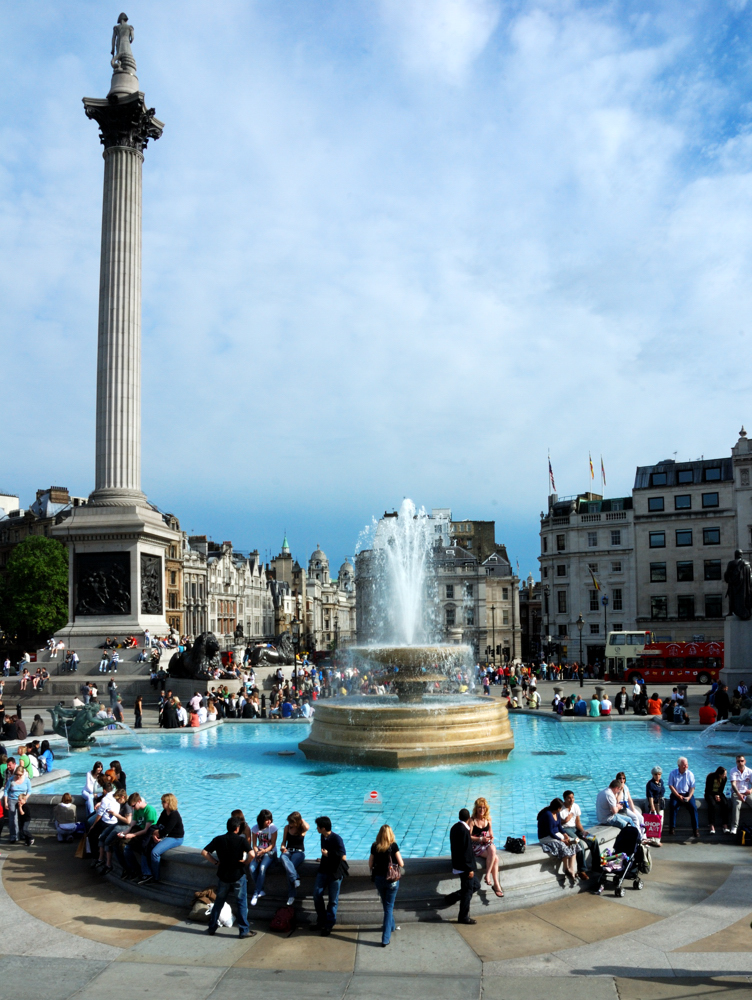
I could devote an entire post to showcasing London’s special places. Here’s Trafalgar Square:

Trafalgar Square – Photo Credit Flickr/steeljam
But these special buildings, structures, spaces, and elements are not what make London a great city. Indeed, because everyplace has these to some extent, they fail to distinguish a place. Go to any small town in America and find its Main Street nicely bricked, with old time gas lamp replicas, flower boxes, a statue or memorial, major civic buildings, etc. There’s nothing special in the special.
But leave the tourist district behind and check out the average street, the average building, the average design. Too often you will find that those are of another order altogether. It’s as if there are two separate cities. One place is the city of special events and tourists, existing inside a cordon sanitaire (whose boundaries are marked with gateways perhaps?) indicating its unique status. The other place is the city as it is actually lived in and experienced in everyday life. This latter city, that is to say, the vast majority of the city, is too often neglected. The gulf between the special and the ordinary proclaims the hollowness of these places.
The true mark of a great city is in how it treats its ordinary places and things, not its special ones. Does it invest as much care, or any care for that matter, into the ordinary, workaday aspects of the city?
Let’s again look at London, and we’ll see that what perhaps more than anything shapes our unique impression of London as a city are not those special landmarks at all, but rather the design of what in too many places are purely prosaic and utilitarian objects. It is the pervasiveness of these objects throughout the city, not just some special zones, that is one of the things that distinguishes London from the pack.
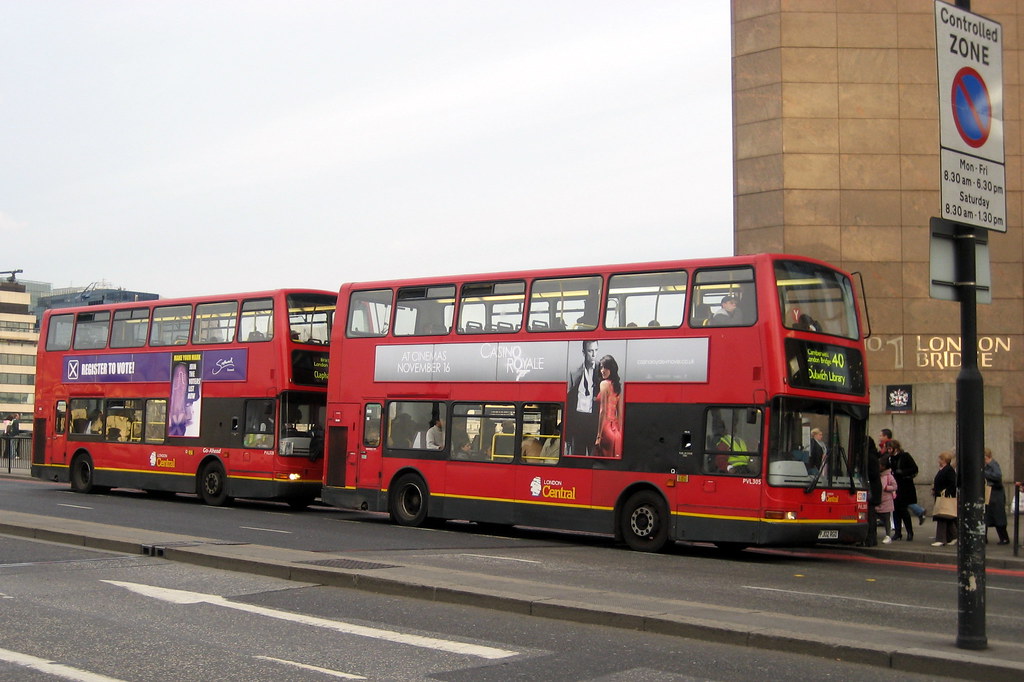
Double-Decker Buses – Photo Credit Flickr/wallgy
There is perhaps no more iconic image of London than its red double-decker buses. Even the single-floor buses are painted in the same red scheme, making them fit right in. I can’t even name one other bus livery in the world that stands out in any particular way (please send examples my way).
Something about these buses and other iconic designs of London is that they aren’t new. They go back a long way. One reason they are classics is that they’ve stood the test of time. While so many places discard the old in order to showcase some “new, improved” brand or design, London shows the value of continuity over time.
Here’s a 1928 photo of a London bus. Look familiar?

1928 Autochrome by Clifford A. Adams for National Geographic via How to Be a Retronaut
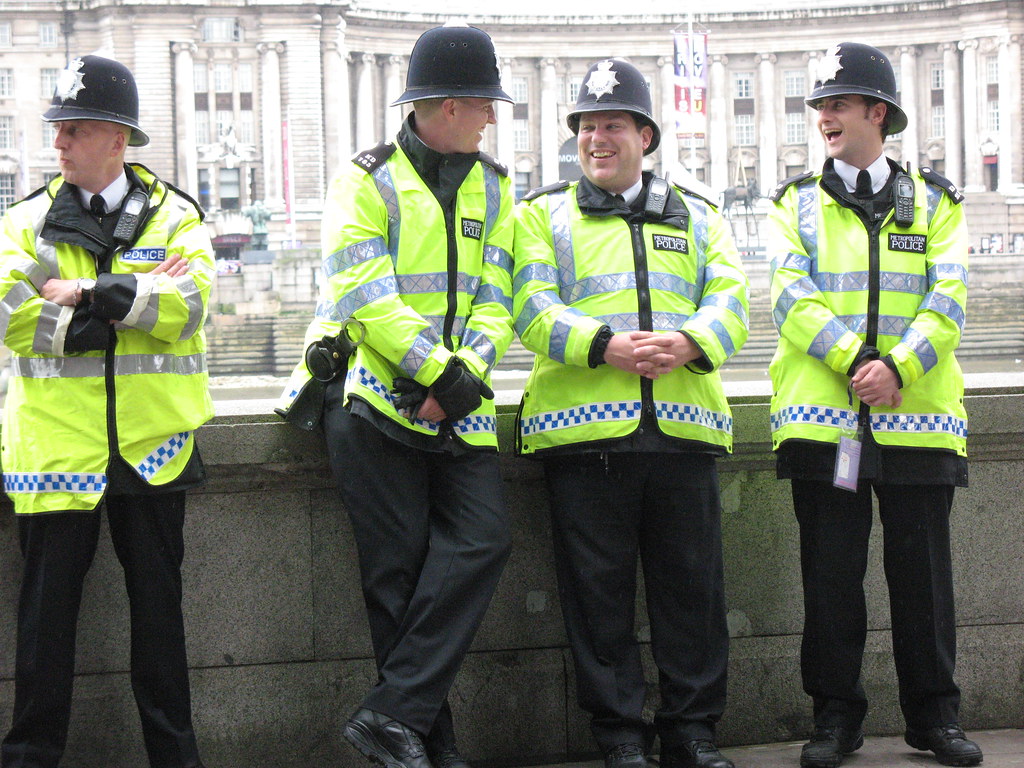
And what about these fellows?

Officers of London’s Metropolitan Police – Photo Credit Flickr/Risager
Note the nice mix of old (the classic hat) with the new (a modern reflective jacket also executed in a style recognizably London).

London Taxi Cabs – Photo Credit Flickr/StormCab
The black cabs of London are right up there with the buses. Of course, London’s cab drivers are also widely regarded as among the world’s best if not the world’s best, thanks to the requirement that they past an exhaustive test of geographic information called “the Knowledge.” London is unique in not using a medallion system regulate the quantity of cabs, rather relying on its rigorous standards of driver competency and professionalism, as well as very tough oversight of rolling stock.

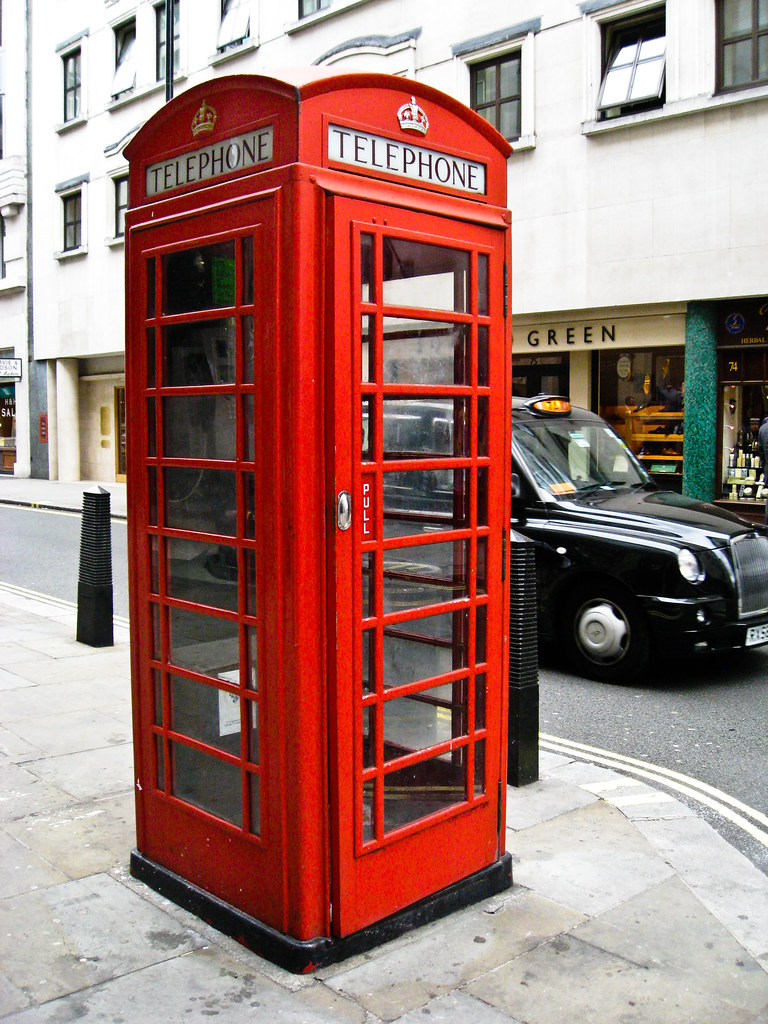
London Phone Booth – Photo Credit Flickr/Shark Attacks
This is one that I believe is pretty much limited to tourist zones these days. In an era of mobile phones, who uses a phone booth anymore anyway? But the city does recognize the branding value in these.
Here again I’ll show a historic 1928 photo to compare:

1928 Autochrome by Clifford A. Adams for National Geographic via How to Be a Retronaut
Been around awhile, haven’t they?
Here might be the most famous London image of all:

Sign for the London Underground – Photo Credit Flickr/DanieVDM
And did I mention the famous map of the underground system? I’ll let you look that one up for yourself. And this one I found interesting:

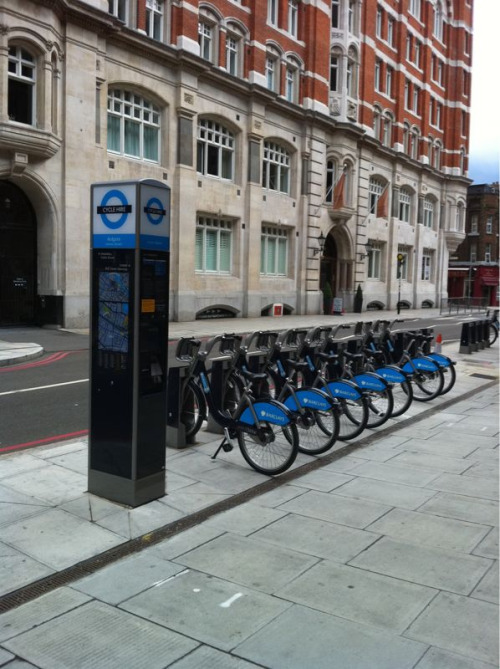
London Bike Share Station – Photo via This Big City
I love how the new London bike share program, which I believe falls under the Transport for London umbrella, uses the same signage. This both adds a dash of prestige, but also signals the intent that bicycling be part of an integrated ground transport system.
Most of these items are what I’d describe as branding related. Of course there’s also functionality and many other matters of importance. It’s not all about branding and looking pretty. There are many areas where London does not live up to the high standards set by these branding items. I mercifully won’t be showing you any pictures of the queues at Heathrow T3 today, for example. London, like everywhere, has its share of problems. In some respects more than its share. And the underlying greatness of London is not to be found in material things at all, but, as with all great cities, in its people and culture. But that greatness does manifest itself into the physical world, and these are some of the ways. When you walk around London, which is not beautiful in the way of Paris or Amsterdam, you nevertheless know you are in a very unique and wonderful place, and these are some of the reasons why.
Given the overwhelming success and brand equity London has created with these items, it is a mystery to me why almost no other city has tried to replicate them. Many places enforce a common cab livery, but it’s very rare to get something beyond a standard issue yellow and black. Dittos for bus liveries, police uniforms, signage, etc. Perhaps it is because people associate these London items with the self-consciously retro traditions of royalty and such – the changing of the guard, etc. There’s no doubt that some of the same forces are at play, and that there’s more than a streak of shtick in the whole thing. But it’s effective shtick. And the principles that underlie it are available to all. It starts with caring about the ordinary elements of our urban existence, and a recognition that there’s no detail too small to be carefully considered in the urban environment.
I’ll leave you with another incredible blast from London’s past: a 1927 color film by Claude Friese-Greene. This 10 minute silent feature is pretty amazing. You can’t help but notice how many touchstones of this era are still alive today in London. While clearly of another time, there’s a certain evergreen nature to this piece that shows why London is one of the world’s greatest cities. This is also via How to Be a Retronaut, a site I highly recommend checking out if you don’t already read it. (Click here if the video does not display for you).
14 Comments
Topics: Architecture and Design, Civic Branding
Cities: London
14 Responses to “The Mark of a Great City Is in How It Treats Its Ordinary Spaces, Not Its Special Ones”
About the Urbanophile
Aaron M. Renn is an opinion-leading urban analyst, consultant, speaker, and writer on a mission to help America’s cities thrive and find sustainable success in the 21st century.
Contact
Please email before connecting with me on LinkedIn if we don't already know each other.
Urbanophile in the News
Bloomberg News: California’s Top Earners Dwindling as Brown Counts on Their Higher Taxes
Bloomberg News: U.S. Population Migrates From Coasts for 'Gigantic' Income Boost - via San Francisco Chronicle
Chicago Public Radio: CHA Plans to Transform Lathrop Homes Raises Community Concerns
The L Magazine: On Urban Ex-Pat Networks in NYC
Monocle: Q&A With Aaron Renn - subscription required
Twitter Feed
@JibreelK Alas, Indy is starting to get with the transit program, but their plans have been shut down by the state legislature
@bruce_katz This is why I repost from the archives. Tons of people miss things the first time around. Great report.
Latest blog post - A Visit to Youngstown - http://t.co/Fa8JuRBK
NYT: In post-earmark era, small cities struggle for federal grants - http://t.co/dPy8sqLL
Latest blog post: Brookings' New Geography of Urban America - http://t.co/DMg0MLAW
National Blogroll
- A Daily Dose of Architecture
- Atlantic Cities
- BLDGBLOG
- CEO's for Cities
- City Ledes
- Cogito Urbanus
- EconoMetro
- Economics of Place
- Everybody Walk
- GOOD
- Human Transit
- Kaid Benfield
- Mammoth
- Market Urbanism
- MetroTrends
- New Geography
- Next American City
- NYU Rudin Center Blog
- Pedestrian Observation
- Places: Design Observer
- Planetizen
- Rebuilding Place in the Urban Space
- Shareable
- Steven Can Plan
- Streetsblog
- The Architect's Newspaper
- The Avenue / Brookings
- The Heidelberger Papers
- The Overhead Wire
- The Transport Politic
- Urban Omnibus
- Where
World Blogroll
Midwest Blogroll
- ArchitectureChicago PLUS
- Bill Testa Midwest Economy
- BlogKC
- Brewed Fresh Daily (Cleveland)
- Broken Sidewalk (Louisville)
- Buffalo Rising
- Burgh Diaspora (Pittsburgh)
- Cityscapes / Blair Kamin
- Columbus Underground
- Detroit Blog
- DiggingPitt
- Global Midwest
- Grid Chicago
- I Will Shout Youngstown
- Milwaukee Talkie
- nextStL
- Property Lines (Indy)
- Rust Wire
- Twin City Sidewalks
- Urban Indy
- Urban Milwaukee
- UrbanCincy
- VanishingSTL

So true Aaron! Imagine spreading some of the money around that gets spent to “beautiful” the downtowns into our neighborhoods where long-lasting improvements can be made.
Yes.
I think in the same vein, you could say that the mark of a great region or nation is how it treats its ordinary cities, not its special ones. Most developed countries have nice-looking capitals, but as Jacobs points out in Cities and the Wealth of Nations, those can mask the decline visible in the other cities. Britain is actually a good example of failure here: cities other than London and its commuter belt are not doing well. In contrast, we have Switzerland and Germany, where development is spread more evenly; the large globalized cities are doing better, but they’re not a world apart from the rest of the country as London is.
Alon, I’d agree with that. But I do think some of the structure of national economies results as much from historical accident as from deliberate policy. The UK is a primate city state, Germany is not. German, Switzerland, Italy, etc. had not histories as fragmented geographies. The UK has its divisions, but is clearly dominated by England and the city of London, which was an imperial capital. But clearly a place like Germany has tried hard to build more even prosperity, including probably over a trillion euro invested in the former East Germany alone. Germany also doesn’t have any mega cities. IIRC Berlin is the largest, with a metro population of around 4 million. By contrast London and Paris are over twice that size. I think that has to play some role.
You’re right, the primate city thing is part of it. But it’s not all. Sometimes, a city is called a primate city precisely when its control of the host country has led the government to neglect all other cities. We call Paris and London primate cities, but not Zurich, even though all three cities’ metro areas have about the same share of the national population.
Going back to cities’ ordinary spaces, we could think of it in terms of having a primate neighborhood or downtown. On the metro area level, the analogy is having a favored quarter sucking investment from all other parts of the region. I’m not as sure about the individual city, though – New York’s dominant central business districts haven’t prevented it from treating its off-CBD neighborhoods relatively well.
Aaron, you can’t name an outstanding bus fleet because they’re usually not meant to stand out.
London has its double-decker buses. They’re widely associated with London, but places that the UK has colonized or influenced has them too. They are prevalent in Hong Kong, for instance.
The one other vehicle that comes close in iconic stature is the Philippines’ jeepney. Filipinos have jury-rigged surplus military vehicles into small buses, and they’ve become the nation’s most essential form of transport. They are known for their informal, super-personalized and often garish ornamentation. See this gallery: http://jeepney.man.freeservers.com/
I would have to agree with MR Levy as far as comment 2 is concerned. I took a [suprisingly affordable $ 600 round trip and $25 a night at hostels] trip to the UK last year. I stayed 6 weeks and spent 3 days in London,4 in Oxford and the rest in the northrn cities[Newcastle,Manchester,Liverpool,Nottingham,ect].
London’s bus service is great!Its also very affordable[i want to say it cost around $7 for an all day pass].
Birmingham’s bus service also wasnt bad. But because of privatisation most British cities have very confusing and very expensive bus service.In Newcastle there seemed to be very few buses.And there were 2-4 bus companies.So an $8 day pass[ a day pass in Baltimore is $3.50] only lets you ride on one or two buses. they arent good for any other company’s buses.
In Liverpool different companies run the same routes.So it can get confusing and expensive.
This is a shame because Newcastle and Liverpool are great cities . I enjoyed them more than London. But while i enjoyed them , they both were evidence that a lot of the wealth that people associate with modern day England is concentrated in London.
I have heard many Americans say that the UK has better public transit than we do.Outside London , that is not the case. Many americans that i know who visited the UK claim that there isnt a lot of poverty there. Well there is in Gateshead, South Sheilds ,Jarrow and Liverpool from what i saw . Those places are all great areas with nice and friendly people. But they do have poverty and unemployment.
This is not to disagree with this post. The post itself is very good . But when comparing ourselves to other countries i think that we Americans too often make the mistake of comparing ourselves to Capitols.
After all , NYC has a great public transit system[at least in my opinion . a resident might disagree].But that is not the reality in much of America. NYC is a world class city and one would expect tham to compare well with places like London. Its a bit unfair to compare Des Moines’s public transit to London’s though
I would aslo say that many cities in America have icions. But they tend to be food. Most American cities are known for certain foods .Philadelphia has the Italian Market and cheesesteaks, for instance.
And while the Inner Harbor is a tourist trap, Baltimore is known for its neighborhoods.Our rowhouses with thier marble steps are our icions[just dont be stupid and try to lift a marble step like i did last week] .
So while i agree with the idea of making a city pleasant in all of the areas and making a city ungeniric , i think that America is better at that then many would think. Its not completly homongenised and generic .
Aaron, if you’ve never been, you’d really enjoy the London Transport Museum. They have a specific part of the exhibit devoted to the graphic design and brand of Transport for London that has been developed and implemented so consistently throughout the years. Was one of my favorite parts of that unspeakably terrific museum.
Police forces around England use the same helmets and similar jackets- to me, they aren’t “London”. Same, even more so, goes for the phoneboxes- in fact, you’re probably more likely to find a “classic” phone box like that in a picturesque village out in the countryside.
To a lesser extent, the black cabs have long ceased to be London only- due to being a pretty good design, they’ve spread far and wide across the country, especially in the cities where the low top speed is not an issue.
These might be symbols of “London” to someone from outside the UK, but to British people, these are symbols of Britain- or England, in the case of the police helmet.
Apart from the bikes, only the red buses and the Underground (now TfL) roundel are truly symbols of London.
One missed of the list:
http://www.marketingmagazine.co.uk/news/1019848/TDK-update-Piccadilly-Circus-display/
A: I concur. Also a lot of the red phone boxes and original Routemasters have been sold off to new places around the world.
Aaron,
What are your thoughts on cities that treat their “ordinary spaces” well but neglect their “special spaces,” i.e.- downtowns, entertainment districts, squares, etc.
I ask this with midwestern cities in mind. My experience has been that many (not all) midwestern cities are great places to live, but no necessarily great places to visit. I think the deliberate special treatment of “ordinary spaces” as opposed to “special spaces” has something to do with that. Sort of a reverse problem you are describing in your post.
I think it is especially important to treat your signature gateway with respect. If your city is a river city then it is imperative that any riverfront roadways have a context sensitive design. Louisville KY, the river city, is about to make the biggest urban planning mistake of the 21st century. The city is planning to toll its residents ($3?) to build a massive quadruple stacked LA style interchange and to become the only city in the history of the world to expand an elevated waterfront expressway. Louisville has multiple options in dealing with mobility on its image defining waterfront but for many residents the current design of the downtown ORBP is a deal breaker. People will move away and even more will stay away. The current design of the downtown ORBP will lead to 100+ years of economic stagnation.
A few random thoughts on your photos:
The Tower Bridge is simply a bascule bridge in a fancy dress. A search on Google Images came up with 32,000 images with, of course, many duplications. My verdict on the Tower Bridge: form follows function. Not!
I’ll bet kids (and their parents) have more fun at the Crown Fountain in Millennium Park than the same do in the cement pond in Trafalgar Square.
Double-deck buses: can’t wait to see what they look like with elevators.
The Metropolitan Police: frankly, Scarlett, their cute helmets do clash with their yellow and black vests… Maybe they should check their mother’s attics for old curtains.
I live around the corner from a Yellow Cab car lot and I’m amazed at the variety of new cabs that I see there. Yeah, yellow and black livery but the new shapes!
A telephone booth that only Superman would love. The best places for them is now indoors (or even outdoors) so cell phone users will spare us from their inane telephone conversations.
I really like consistent signage but the London underground signs are no better than almost every major transport system in the world. Older, yes.
I like London but I love Paris. The latter, of course, was spared the devastation of WWII bombings (not to mention Victorian sensibilities) so I’ll give it a pass but find it hard to praise.
Getting away from America’s great cities, perhaps the best place to look for a bus system that stands out is Boulder, Colorado’s Community Transportation Network with its “Hop,” “Skip” and “Jump”- and so on- services.
It has a definite local brand and names that tie in with the Colorado Buffaloes athletics- i.e. the “Stampede” route.
PDF of system map below.
http://www.bouldercolorado.gov/files/Go%20Boulder/transit_rack_map.pdf
The point is that you don’t need to be London to execute different parts of city infrastructure with care. Boulder is wealthy, and that doesn’t hurt, but there are other cities doing as well as Boulder that let this stuff slide.
Aaron:
I took your blog post to heart and took a look at my own city, San Antonio, Texas, to see how well we accomplish this.
If you’d like to see the post here is the link
http://mindwanderingsinsanantonio.blogspot.com/b/post-preview?token=afEhOioBAAA.ScMsdsZxCPz_4fHtoA2URQ.jIdkm0FhPEFKzzmOjLpquA&postId=1292669842632645660&type=POST
Thanks for the great post!