Search

Thursday, April 5th, 2012

Louisville and Lexington Point the Way to Greater Inter-Regional Cooperation

I’ve written before about how Louisville Mayor Greg Fischer saw cooperation with Lexington as a vehicle for making his smallish region more competitive. This has gone beyond talk. As Louisville and Kentucky fought it out on the basketball court, the New York Times was reporting on how the two cities are planning to become economic teammates. Amy Liu of the Brookings Institution also wrote about this initiative.

The first concrete step in this is something called the Bluegrass Economic Advancement Movement. It’s a partnership around advanced manufacturing between the two cities developed in conjunction with Brookings. Here’s a video about it. It’s a big goofy, and the production values clearly need improvement (such as the two minutes of basically dead air at the end of it), but it should illustrate what they are trying to get at. (If the video doesn’t display for you, click here).

I’ve historically been a bit skeptical of the mega-region concept. I could never figure out exactly what it is mega-regions were supposed to accomplish that would provide step change improvements in metro area performance. It’s not exactly clear here either what is going to ultimately happen. However, if you are going to make mega-region type development happen, Louisville and Lexington are pretty well placed to prove out the concept. They are in the same state, they are both too small to plausibly go it alone in the global marketplace, and they are close – only about 80 miles apart. They are just far apart to be separate media markets and spheres of influence, but close enough to make going back and forth a breeze. They also decided to pick just one area to start with, which I think was smart. I’ll be very interested to see what comes out of this. Anyone interested in cross-regional collaboration should keep an eye on what’s happening here.

Thursday, April 5th, 2012

Hoosiers to Pay 80% of Local Tolls for Ohio River Bridges Project

Update 4/6: The organization behind the polls has put up a web site with raw data and more findings from their scientific survey.

Update 4/6: Later reports with more specific data from this poll show that the actual ratio is 74% of the local traffic is Hoosiers, not 80% – still a stunning ratio. The pollster estimates a slightly lower ratio of toll revenue to Indiana – 70%, though it’s not clear how they did this math. And finally it looks like Southern Indiana officials are waking up to the fact that they are going to get pimped on this deal. Remember folks, you heard it here first.

Indiana and Kentucky transportation officials have tried mightily to avoid talking about the breakdown of cross-river traffic in Louisville, a crucial piece of data to have in determining who will actually pay for $2.6 billion in two new bridges if it is done largely through tolling. But a new scientific, independent poll released today exposes that Hoosiers will pay four times as many tolls as Kentuckians because that’s how many more trips back and forth across the river they make compared to Kentuckians. In Clark and Floyd Counties, residents actually make five times as many trips as Kentuckians. This means that of all the local bridge tolls being collected, Hoosiers are going to pay 80% of them. This explodes the idea that Indiana and Kentucky are splitting the cost 50/50, which is already ridiculous as it stands.

Only about half of area residents supports tolling to pay for the bridges, which is surprising considering that most of the people are in Kentucky and they are paying next to nothing comparatively. Hoosiers seem wise to this game however, as only 36% of residents of Clark and Floyd Counties approve of tolls.

To recap: The two states were able to reduce the cost of the overall project by $1.5 billion, but Indiana gave away $1.7 billion to Kentucky, meaning its share of the costs actually went up by $200 million. Indiana also agreed to built a 1.4 mile approach road and tunnel in Kentucky for $795 million – a staggering $100,000 per foot – that is now the most expensive highway project on Indiana’s books.

I always knew tolling would be bad for Indiana, but now we know how bad. I wouldn’t mind if Hoosiers were paying for the East End bridge that makes sense (minus the gold plated, fraudulent tunnel on the Kentucky side of the river), but to pay for nearly the entire project is ludicrous.

I’m on record as being a Mitch Daniels fan, but he’s clearly screwed up badly on this one. He seems desperate to put another feather in the cap of his legacy by getting yet another highway project that had been stalled for years actually built on his watch. But the cost to Hoosiers here is just too high. He’s throwing his own southern Indiana constituents under the bus with this one by cramming a horrible business deal and tolls they don’t want down their throats. It’s time to change course big time before a terrible mistake gets made.

Indiana’s Bridge Deal Boondoggle
Part 1: A Financial Fiasco
Part 2: Hoosiers to Pay Even More With Tolling
Part 3: Indiana’s Mini-Big Dig
Part 4: A Better Way

Sunday, February 19th, 2012

Replay: Louisville – Vice City

[ This one from the archives is the final installment in my Louisville trilogy this week. It's a concept brand positioning idea for the city. Keep in mind, this is supposed to be a bit tongue-in-cheek, while being realistically rooted in the city and showing how places should be thinking about themselves in a crowded, competitive marketplace - Aaron. ]

I am a believer that in a modern era that has witnessed the fragmentation of the great American common culture, and the relatively small in number but broad in reach institutions that served it, it is important for cities that are not blessed with natural amenities or killer low costs to increase their strategic differentiation. They should try to find market segments they can target more effectively than others. And they should try to build a unique local environment rooted in their history and character, but which is also forward looking, that creates a distinct, unique flavor of urbanity.

I’ve also suggested that Louisville should focus on quality over quantity. It already has fantastic neighborhoods many cities would kill for. Strengthening those, making targeted investments in its downtown, riverfront, and other well-chosen areas, and focusing on strengthening its unique assets are the actions I would take.

I’d like to throw out today a further concept positioning strategy for Louisville that I call “Vice City”. It’s not exactly that, but I couldn’t think of a better name for it. It’s not necessarily a serious proposal, and I strongly doubt there would be any local interest in it, but I do think that by studying the idea, it can hopefully generate some interesting thoughts about the city and what it could be. Please view this as a speculative proposal or thought experiment.

In a nutshell, this idea positions Louisville as “New Orleans North”. I can’t help but noticing a few parallels between the two cities.

  • New Orleans is a river city – Louisville is a river city
  • New Orleans has a French heritage – Louisville is named after a French king at least, and has adopted a lot of French symbology
  • New Orleans has great restaurants – Louisville has great restaurants
  • New Orleans has Southern, historic, genteel neighborhoods and traditions – Louisville also has Southern influenced, historic, genteel neighborhoods and traditions.
  • New Orleans has a huge reputation as a haven of vice and partying – Louisville used to have that reputation.

That last bit is interesting. River towns were always rough places. Louisville’s riverside docks were, like waterfronts the world over, rough and rowdy havens of drunkenness and debauchery. “Lively Shively” was historically home to distilleries and strip clubs. Until quite recently Louisville had any number of blue establishments downtown. Reputedly the reason Green St. was renamed Liberty St. long ago was to help eradicate the reputation Green St. had acquired far and wide as a home of the burlesque. Think about Louisville and Kentucky and what comes to mind? Horse racing (gambling), bourbon (drinking), tobacco (smoking), and coal. We’re talking about a place whose history and brand are already heavily associated with vice.

New Orleans had a similar heritage. The big difference is that New Orleans, probably for cultural reasons, was always proud of its seamy side. Like Las Vegas, it recognized that in a country which is dominated by a strong moral sensitivity, there was an opportunity to carve out a niche – and a highly successful one – catering to, shall we say, a more lax standard. And the party pit in the French Quarter and downtown casinos largely have no ill effect on New Orleans’ neighborhoods, many of which still look like they are fresh from the pages of an Anne Rice novel. Now New Orleans may not be a truly successful metro area for many reasons, but try to imagine it without the tourist industry.

Louisville, by contrast, has long tried to stamp out vice in that city. And today it has largely succeeded. Where long ago you could once have a good time in a burlesque joint on Green St., today your choices in downtown entertainment tend to the extremely generic, such as the heavily subsidized 4th St. Live complex. By stamping out vice, Louisville to a great extent stamped out fun and character from much of its downtown.

One way to envision a successful, unique strategy for Louisville is to do something similar to what New Orleans did, namely creating a great combination out of the best of Mobile and Las Vegas. From Mobile you take the laid back southern charm, aristocratic traditions, gentility, and high culture. From Vegas you take vice, fun, and a certain joie de vivre.

By the way, does this sound familiar? It should, because it is an almost perfect description of the Kentucky Derby. You’ve got the tradition at the pinnacle of horse racing as a sport combined with gambling. You’ve got the fancy dress, fancy hats, and mint juleps of Millionaire’s Row combined with the raucous debauchery of the infield and people sneaking in booze by stuffing vodka down their trousers double-bagged in ziplocks (not that I’ve ever done such a thing…..). A great and winning combination.

Extending this to the city as a whole, we start with the fundamental aristocratic character of the civic culture. I’m not going to say this is unique to Louisville. For some reason, it seems to permeate many of the river cities I’ve studied. Talking to someone about Louisville, he offered this insight, “Louisville is provincial, in all the best and worst ways. Louisville likes itself, is proud of itself, hangs on to its institutions, loves its (private, Catholic) high schools in ways I’ve never seen elsewhere”. This is clearly an example of aristocratic thinking, which is about self-regard, rooted in history and the land. This attitude also shows through in the particular contempt Louisville shows for newer cities, as well as the extreme prickliness of Louisvillians when it comes to outside criticism. In a democratic social state like America, aristocracy has a bit of a bad reputation, and it certainly has its downsides. But it also has its good points. Firstly, it generates a bit of unique local character all its own. Secondly, it gives people the cultural fortitude to say no to trends and hold onto local ways and to embrace an agenda that is different from what other people are doing. (I’m also describing Cincinnati here, you might notice).

From that, we take away the fierce pride in unique neighborhoods and historic traditions. We can also take the embrace of certain aspects of high culture, including fine dining (of which Louisville has a great tradition), mint juleps and the bourbon culture, the arts, etc. I definitely think this should be looked at as rooted in a very Southern approach. Again, this distinguishes Louisville. Most Southern cities seem to want to ape Atlanta as the next mega-growth story. This leaves the field clear to a major city that wants to adopt a Charleston/Savannah/Mobile type point of view.

One piece of this that must be rejected, however, is the racial baggage that comes with it. Also in common with New Orleans, Louiville has a marginalized African American community. Southern aristocratic culture is rooted in plantation culture, which has its Not Good points to say the least. As with other cities, it is a clear imperative for Louisville to improve race relations and to make sure that its minority communities share in its success.

On the other side, how can Louisville recapture the fun outside of Derby? There are some ways we might imagine. Again, instead of creating a “climate action plan” just like every other city, or banning smoking just like every other city, why not roll with the fact that Kentucky is a major tobacco producer and has the highest percentage of people who smoke to be the most smoking friendly city in America? You’ve got gambling at Churchill Downs, and already across the river at Caesars/Horseshoe, so why not put a couple of casinos downtown? I normally think this is a disaster of a downtown development approach, but if you are organizing around forbidden fun, why not? Loosen up on liquor licenses to create party zones, and also do something to make sure that the best transportation options for people who have been drinking are available so people can get home safely. Figure out how to become the micro-distillery capital of the United States. There are already great local breweries like New Albanian and BBC, try to make sure there are many, many more. Do whatever you can to make Louisville party central, and create a fun, unique environment you can’t get elsewhere. By the way, much like Vegas and New Orleans, this is also good for conventions if that is a business you really want to be a player in.

Louisville is surrounded by hundreds of miles of mostly not very exciting places in the lower Midwest and upper South, places that are very conservative in many respects. Why should someone have to fly to New Orleans or Vegas or where ever to have a good time partying when they can just drive or take a short hop to Louisville?

Here’s a short promo video that sums it up beautifully:

Of course, there is a problem with this. No one in Louisville is likely to want to do it. And the negative consequences might outweigh the positives, I’ll admit. Fortunately, as a blogger, I can put crazy ideas on the table to make people think though. And I think Louisville needs to be thinking indeed about what niche it should carve out for itself. Downtown condos, generic bars, a smallish convention center, sports facilities, etc. are not going to distinguish Louisville from peer competitive cities. Particularly when it is facing the headwinds of being regionally smaller and having low educational attainment.

At a minimum, I do think Louisville ought to be thinking about this notion of Southern aristocratic culture and how it can leverage it to best effect locally. That seems to be a no brainer since there are already extensive elements of it present.

This post originally ran on March 15, 2009.

Tuesday, February 14th, 2012

Louisville: A Tale of One City by Rollin Stanley

[ One of the Louisville sites I do still read religiously is Broken Sidewalk. Last month I saw there the article below which originally appeared on the blog of Rollin Stanley, Planning Director of Montgomery County, MD. If you'd like to know more about him, check out his blog, or read this piece from Greater Greater Washington called, The Quotable Rollin Stanley. This Louisville piece is very insightful and I am grateful he gave permission to repost it here - Aaron. ]

Downtown Louisville. (Branden Klayko)

[Note from Branden Klayko, Editor of Broken Sidewalk: Rollin Stanley is the Planning Director at the Montgomery County, Maryland Planning Department. I first met him nearly a decade ago shortly after he was named Executive Director of the St. Louis Planning and Urban Design Agency while I was in college. He understands how cities work implicitly and is an outspoken advocate of good urban design and transit-oriented development. Stanley writes the Director's Blog at Montgomery Planning on which this post was originally published.]

For Thanksgiving in 2011, my wife and I drove 900 miles to visit friends and family in St. Louis, Missouri. We drove an extra 50 miles to go the southern route via I-64 past Charleston, West Virginia and Lexington, Kentucky, before stopping over in Louisville for the evening. Despite the rain, it was a great opportunity to visit the city for the first time.

The cities of the Midwest are poised for resurgence. Filled with creative, energetic people and with a low cost of living, a new generation of artists, entrepreneurs and immigrants are seeking to establish themselves. In fact, recent surveys show cities like St. Louis are experiencing a more than 80 percent increase in young residents.

Initial impressions

First impressions are always important when you are pulling into a strange city after dark and in the rain. Louisville is no exception. The Google directions bringing us along the rain soaked I-64 along the Ohio River to our exit on South 9th Street didn’t show off the city’s best side. To a person unfamiliar with center core cities in the U.S., it could feel a bit like Chevy Chase traveling across America in the “Family Truckster” and reinforce the stereotypes held by many people about inner-city America.


This clip from the movie, Vacation, is funny, yet reflects the image of inner cities that many people have. The entry points to our cities are critical to bringing people to the inner core. If the video doesn’t display, click here.

The great scourge of industrial cities is the race to create as much parking as possible. Some civic leaders see demolition and paving as a sign of progress and Louisville along with Kansas City, is a prime example. William Whyte in his book City: Rediscovering the Center, says “If you tear down enough of your downtown for parking, pretty soon there won’t be any reason to go there and park.”

Fourth Street Live. (Rollin Stanley)

Sure enough, downtown Louisville has plenty of examples intended to prove this proverb. They have the waterfront development and “Fourth Street Live,” the Cordish downtown entertainment district similar to Kansas City. These developments are intended to draw people back downtown, the place they left kind of because, well, lots of stuff was torn down for parking lots.

And guess what? Nobody parks on those surface parking lots because they are too far away from Fourth Street Live for anyone to park there. And if someone did, they would not feel safe walking across all the vacant lots to get to the entertainment center.

Fourth Street Live mirrors similar downtown developments by the Baltimore-based developer Cordish. While it has many of the chains we are familiar with around the country, there are standouts like the Maker’s Mark Bourbon House and places with great names like “Howl at the Moon.” However, this two-block stretch of South 4th Street is disconnected from the river by several government buildings and the too often repeated downtown convention center.

Parking in Downtown Louisville. Red is surface parking, purple is single-use garages. (Erik Weber)
This aerial of the Louisville Central Business District south of the river highlights the vast areas taken up by surface parking (red) and single-use garages (purple). And then there is the big chunk in the middle, taken up by the convention center, another streetscape paralyzer. (Montage by Erik Weber)

The Louisville parking landscaping really hampers the potential to create depth to the downtown. As you move south away from the river along 4th Avenue, going over one or two blocks to the east or west you arrive at a sea of surface parking. Those parking lots spawn the decline of adjacent properties, the very places the surface parking was intended to help. The lots are vacant at night, so the places next to them begin to decline.


This is a great video from Rochester in 1964 touting the virtues of the city based upon the ease of parking. Wow, just makes you want to jump in and drive to Rochester. If the video doesn’t display, click here

Challenges

Louisville is clearly a place of contrast, just like so many other cities in the Midwest. Pockets of success separated by surface parking lots and questionable decisions about frontages, highlight some of the toughest challenges with the core of the city. The challenge of creating “depth” to the success, linking the positive nodes, is so difficult when growth is first limited, then competing with the unlimited sprawl of the burbs.

Neon sign on Chestnut Street.
The neon sign is a historic resource that captures the history of urban decline. While the sign should be in a museum, the use is a sad reminder of how far the resurgence of Louisville has to go. One block away from some great businesses on South 4th Street, the beginning of the “surface parking district” extends many blocks to the east.

Louisville has some tremendous assets. But it has lost tremendous assets as well.

1. Louisville torn down a lot of stuff.

Downtown Louisville is an old architect’s dream, what remains is shaped like a T square. There are lots of buildings that parallel the waterfront, some good and some bad, and then there is the South 4th Street corridor stretching at right angles back from the river, forming the spine of activity, the “straight edge” of the T square. I love South 4th Street, but only the area south of the convention center.

So many cities tried to revitalize their downtowns by bringing in convention centers. While convention centers bring people into hotels and to patronize local business, almost all create sterile street frontages that mimic big box stores.


From any angle the Kentucky International Convention Center is not a friend of the streetscape of the downtown. It forms a physical barrier between the successful nodes of Louisville Live and the riverfront. It is just like a big box store or a mall. People stay inside, the walls are large, blank spaces, and it produces little pedestrian traffic, the key to the success of any inner city.

Government buildings are also a challenge, creating long expanses of inactivity that work against creating a vibrant neighborhood. They are like parks after dark. Nobody wants to walk past them. I learned a great lesson from an urban pioneer by the name of Joe Edwards in St. Louis. He singlehandedly revitalized the “loop” neighborhood, including bringing trolley lines back to the commercial district.

As Joe rehabbed commercial buildings, he would work to lease space to a variety of retailers. Too many restaurants would mean little happening during the day. Too many shops would leave the street vacant past after 9 p.m. So he would mix the uses, creating variety along the street. Both the convention centers and government buildings work against this principle.

Fourth Street.
This shot taken on S. 4th Street moving farther away from the central core, shows how many cities tore down buildings like those on the left, and replaced them with long blank frontages of nothing, like on the right. While retail is struggling on the left, there are small pockets of success which will spread to fill the gaps between them. Who knows, maybe the building on the right will be torn down in a few decades and be replaced with buildings with active frontages like those on the right. That would be irony.

2. Historic assets

Much of downtown Louisville is gone forever. There are pockets of underutilized historic resources where only the ground floor is being used. This is a real shame. These small pockets offer the potential for affordable redevelopment through the use of historic tax credits and other financing tools. With all the creative forces in the city, one has to believe there is a solid constituency for these spaces with rents being offset through the tax credit restoration.

Whiskey Row on Main Street.
While downtown Louisville has lost much of its historic fabric and lacks a cohesive historic commercial core, it has small pockets of great buildings which largely go unused. While the ground floor the buildings are leased, the upper floors go largely unused, missing a real opportunity to attract young urban pioneers.

Louisville Slugger Museum.
The Louisville Slugger Museum is a destination that brings lots of people into an area of the downtown. It could act as a catalyst through restoration and small-scale modern new construction on the parking lots to the south.

The Louisville slugger museum would not be the same if that big bat was leaning against some run-of-the-mill, recently constructed building? Could the small strip of historic buildings nearby has the bones for a terrific neighborhood, where people walk dogs, eat breakfast at the local eatery on Saturday morning, alongside tourists visiting the Slugger Museum or the Muhammad Ali Center just to the north along the river.

Louisville is not alone. In Atlanta, where I did some consulting work about eight years ago, I was shocked that city officials were not using historic tax credits to help revitalize. In St. Louis, we created over 4,000 new units of loft housing in the core of downtown historic tax credits and the like. Building the local capacity in the developer, legal and government sectors to make these things happen is critical.

The old Ohio Theater on Fourth Street.
While it probably would have been great to have the entire historic building left, this is a fun example of how a cool feature has been created on S. 4th Street. And it masks the parking garage located behind, although it is not a bad parking garage.

3. One-Way Streets

Other than saying they serve horse meat, nothing kills a restaurant faster than locating on a one-way street. One-way streets serve one purpose and one purpose only: getting people in and out of the core area as fast as possible. A driver needs to travel 25 mph or less to make eye contact with a pedestrian. So if you are trying to create vibrant pedestrian streets, how does a one way street that pushes cars through as fast as possible work toward that goal?

There are few places on the planet where retail succeeds on a one-way street. And these places have density, something Louisville does not have. Is there really a need for four lane roads running one way in front of the Louisville Slugger Museum?

Show me a city without congestion and I bet it is not a place where people go and members of Gen X and Y live. We want people to slow down, look out the window at the retail environment and have street parking to liven up the sidewalk.

Seelbach Hotel.
A historic postcard of the downtown Seelbach Hotel on S. 4th Street. It does not look too different today. A wonderful adventure into the past and a real asset to the core. If you stay, get a corner room looking up 4th Street.

Bright spots

In Louisville, I saw pockets of amazing creativity and resiliency. Take the grand old hotels. Louisville has some great ones like the Seelbach (we stayed here) and the Brown. I understand the wedding sequence from the Great Gatsby is modeled after the former. It has a great long wood bar with some real tradition.

And to contrast these great old hotels, there is the fabulous Museum Hotel over by the Slugger Museum. The restaurant/hotel is themed as an art museum and is one of the coolest concepts in North America. A terrific example of the creative energy in this city and the Midwest. Fun, unusual and full of energy, these are the spots that are the nucleus for change. This hotel and museum is the focal point to transform this neighborhood.

21c Museum Hotel.
The 21c Museum Hotel on West Main St. is one of the great finds in the city. Apart from the red penguins adorning the exterior, the building appears nondescript, yet step inside to find an amazing experience combining food, lodging, and art. These are the experiences that make a city interesting and attracts the potential to build new opportunities for revitalization.

The scale of the streets is another asset. Most are narrow, and where the buildings remain, framed right up to the sidewalk, giving a real urban feel. There are good examples of architecture from many eras and this is really noticeable when you stand along the waterfront and look back towards the downtown. And where the city has invested in those streets, they have created some great urban furniture and property owners created some great small urban spaces.

Street art.
There are some cool bike racks in the city. Sculpture that really enhances the public spaces. And look behind the lamp pole in the right photo to see one of the entry markers into this part of S. 4th Street. And then there is just some cool sculpture, mixed with the bins on garbage day.

Walking through any city, it is fun to look to discover hidden spaces that really open the potential of a commercial district, creating the intimate spaces that attract people to an area. With sidewalks, these are really the “public spaces” in an urban area that are most frequented.

Public spaces.
Two examples of “public space” in the core of the city. The wide open plaza may cater to office workers on a nice warm lunch break, but remains vacant otherwise. The small intimate restaurant courtyard offers a different experience and probably gets more use. Neither space is public in the true sense of the word, but both function as such.

Downtown Louisville is a case study on urban America. It can become one of the cooler places in the Midwest. It has a lot of assets: the obvious creative spirit of so many residents, the great bourbon selections in so many establishments. But it will require baby steps, moving forward one small area at a time. Ignore the quick fix ideas that require more buildings to come down, closing a street, or sterilizing the street activity through long blank walls. If a bank or pharmacy wants in, make them open up the facades, no walls that don’t have doors every 50 or 60 feet.

Explore the myriad of incentives that make downtown projects economically viable and attractive to everyone. Work with property owners and find new ones who have the energy and vision to make these projects work.

And, please, get rid of the one-way streets.

This post originally appeared in the Montgomery County Planning Director Blog on December 9, 2011.

Sunday, February 12th, 2012

Facing Tough Facts in Louisville

Some of you know that I’m originally from Louisville, Kentucky. I grew up in rural Southern Indiana just across the river (inside the Louisville MSA), but also had family in the South End and spent a lot of time as a kid stomping around the neighborhoods near Iroquois Park. I love Louisville and it will always have a special place in my heart. I don’t write about it much these days because as the blog has progressed, I’ve been forced to trim back my reading of local news sites and Louisville web pages were on the cut list. So I’m not as plugged in to what is going on there these days such that I can competently opine upon them.

But researching my four part series on the bridge deal fiasco (see part one, part two, part three, and part four) turned my attention back to the city. So I wanted to do a three part mini-series on Louisville this week.

Today I want to talk about the unpleasant strategic situation Louisville finds itself in in many areas. These are the basic facts on the ground that need to be addressed. Any credible civic development strategy needs to take these into consideration. It’s never easy for local leaders to admit, even privately, when their community is in a tough spot. But in this case we need to highlight three key areas where the data clearly indicates a challenge for Louisville, namely: it is too small, it is in a poor geo-political location, and it has low educational attainment.

Louisville Is Too Small

The first thing we need to address is that the Louisville region is frankly too small to match its aspirations. I normally focus on metro areas in the greater Midwest with more than a million people. With only 1.3 million people, Louisville is by far the smallest. And it lacks the effective population booster enjoyed by some other cities.

Consider some other metro areas on the smaller end of the scale. Say Milwaukee at 1.56 million, Nashville at 1.59 million, and Indianapolis at 1.76 million. These don’t sound that much bigger than Louisville, but consider: Milwaukee is 21% bigger, Nashville is 24% bigger, and Indianapolis is 37% bigger. This makes a lot of difference in terms of supporting region-wide amenities, infrastructure, and initiatives. For example, it explains why Louisville doesn’t have a major league professional sports team while the other cities do.

What’s more, the effective population of those similar cities is sometimes even higher. For example, Indianapolis is ringed by small industrial cities like Muncie, Lafayette, Kokomo, Columbus, etc. that are independent metro areas, but still contribute to Indy in the form of things like Colts fans, airport customers, TV market size, etc. Milwaukee’s metro area population is artificially low because Racine County, with 200,000 people and which actually borders Milwaukee County, is considered its own metro area. Just upriver from Louisville, Cincinnati benefits from being so close to Dayton that in some cases they function as one large metro. Businesses and such that locate in Warren or Butler County can draw from both markets easily.

Louisville, by contrast, is surrounded by mostly very rural, sparsely populated counties. Thus it gets less boost from an extended trade area in terms of population heft. Though in fairness I suppose there is some labor market benefit from this as well. I have read that Louisville has among the highest percentages of exurban commuting. One reason may be that there are so few job opportunities in outlying areas.

Also, while Louisville has healthy population growth and is growing a bit faster than the US average, other similar regional cities are growing too, sometimes faster on a percentage basis and quantity basis. Louisville added 121,000 people in the last decade, But Indianapolis, Columbus, and Nashville all added more than 210,000 people. This means that not only are those cities bigger, but the gap in population grew by more than 100,000 for all of them. That’s the equivalent of a Clark County, Indiana.

Recognizing that you are smaller doesn’t mean you have to mentally classify yourself as some lower tier city. (Debates over tiers of cities seems to be a perennial favorite on message boards). But it does mean you should be careful about trying to play keeping up with the Joneses, especially when it comes to major regional capital investments. Because Louisville simply has fewer bodies to spread the cost across, it needs to be very careful where it chooses to invest. (More on that later). I might also suggest that while growth is good, strategies that are predicated on changing Louisville primarily through quantitative growth are unlikely to ever close the gap versus regional peers, so I would not even have that as a goal.

Louisville Is in a Poor Geo-Political Location

A maximally geo-politically advantaged city might be one that’s centrally located and a clear primate city for the state it is in. Think Minneapolis-St. Paul. It’s as centrally located as you’d want to be in a state like Minnesota. It is the state capital and home to the state’s flagship university. It contains over 50% of the state’s population and is dominant economically. You might say as downsides that it has a twin-city structure, is near a state border, and doesn’t have the Mayo Clinic, but these are minor in comparison to what it has.

But you don’t have to be this dominant to have advantages. Indianapolis, Columbus, and Nashville are centrally located and are state capitals. Columbus has the state’s flagship university and is in an urban-dominated state. Indianapolis is the only large city in the state and thus in a sense has no “domestic” competition.

Louisville by contrast has many geographic disadvantages. It is on the edge of the state of Kentucky, not in the center. It is on a state boundary that is also a major river crossing barrier in an era where water transport is no longer king. It isn’t the state capital. It doesn’t have the state’s flagship university. Kentucky is a rural dominated state that also has a number of severely depressed areas that require significant state investment. Lexington is clearly much smaller and is in a different size class, yet conceives of itself as an equal in some ways (if not superior, especially with the UK presence) and the state often treats it as such. In fact, Lexington can sometimes been seen as a more authentically Kentucky city with its horse farms and whatnot, while Louisville is seen with suspicion.

This puts Louisville in a very tough spot. All major cities are likely net tax exporters to their state, but Louisville sends a truly staggering amount to Frankfort that it never gets back. I think it’s something like $700 million per year out of Jefferson County. The state’s priorities are generally in the rural areas. While I wouldn’t call the state legislature hostile to Louisville exactly, it isn’t really focused on pro-urban policy. As is often the case in bi-state metros, Indiana and Kentucky love to engage in “economic development” by encouraging companies to move back and forth across the Ohio River. Discussion about building bridges across the river takes up lots of leadership time and attention that could be focused on other things.

To me this makes me think that Louisville ought to plan on having to go it alone with its own resources in a lot of areas and not count on too much help from others (though obviously it should look for it where it can). We are already seeing this in the bridges project, which it appears will be mostly toll financed by local motorists. But Louisville should work hard to try to close some of the gaps that are clearly addressable. For example, better cooperation between Louisville and Southern Indiana is critical. Also,Louisville should be working to build connections and goodwill throughout the rest of Kentucky where ever possible.

Louisville Is Poorly Educated

As I’ve noted many times, college degree attainment is overwhelmingly dominant in explaining urban success. Harvard economist Ed Glaeser crunched the numbers and found that their historic college degree attainment explained nearly everything about why some Frost Belt cities succeeded and others failed. CEOs for Cities has also quantified a lot this in their Talent Dividend research.

Louisville fares very poorly here. Louisville’s college degree attainment is only 25.8%. This puts it 5th lowest among all 51 metro areas in the United States with over one million people. College town Lexington sits at 31.2% Louisville trails the overall US average of 28.2%. To be blunt, that’s not good.

I’ve always said that Louisville is a quality over quantity town. The core of Louisville has great neighborhoods. Louisville clearly punches above its weight in areas like quality restaurants. And it has had a number of notable cultural successes: the important early recordings of the Louisville Orchestra, many important indie rock performers (e.g., Will Oldham, Slint, Rodan), and items like Actor’s Theater’s Festival of New American Plays. This immediately suggests to me going for a more Madison, Wisconsin type of feel than rather than trying to ape Indy or Nashville. Unfortunately, Madison is the state capital and home to a major Big Ten School, and is smaller such that those make a huge impact there. Louisville lacks those drivers and has such low education attainment that a high end strategy would be tough to pull off except in just a small portion of the old city.

This is really going to inhibit Louisville on the economic development and there isn’t a lot you can do other than focus on blue collar industries in the short term (their huge UPS hub being a prime example of this), with a more selective and focused strategy around high end sectors, while working to boost educational attainment over the longer term. There’s some good news here in that Louisville grew its educational attainment rate by nearly five percentage points in the last decade, 16th among large cities.

Good and Bad Applications

I’d like to highlight a couple examples quickly of how Louisville has excellently and poorly handled its strategic situation.

Let’s start with the good. Mayor Greg Fischer decided to make as one of his initiatives seeking to find better ways to collaborate with Lexington, which is only about 75 miles away. As the Courier-Journal noted, “he envisions Kentucky’s two biggest cities adding jobs as a ’super region,’ rather than competing over companies, private investment and state money.” I had a previous post on this very topic that includes a video interview with Fisher called “Super-Regionalism in Kentucky.” This is an example of Louisville recognizing that it is too small to go it alone in the marketplace and it would be better to have a partner, plus trying to build bridges to a historic rival. We’ll see how this turn out.

A not so good example is the Ohio River Bridges Project I mentioned earlier and linked to my series about. Here we have a region taking on a huge $2.5 billion capital project that is going to be paid for mostly with local money through tolls. A smallish region like Louisville that isn’t even growing particularly fast does not need to be building this type of gargantuan and expensive infrastructure. That’s why in my series I suggested significantly scaling back the project even further.

Better Benchmarking

On another but related note, I’d also like to highlight how Louisville benchmarks and measures itself against the wrong cities. In the popular press, Louisville is generally compared against Indianapolis and Nashville, and those other cities are often trotted out as a rationale for pursuing some policy. For example, local leaders said that Indy and Nashville had city-county mergers. Indy and Nashville were growing much faster than Louisville. Ergo, Louisville needed to merge city and county government if it wanted to catch up.

I’m not saying merger was necessarily wrong. The problem is that Indianapolis and Nashville are nothing like Louisville. They are in the same rough size category (though bigger as I noted) and nearby, but that’s about it. I’m not sure there’s a whole lot Louisville can learn from looking to those places.

On the other hand, a city like Cincinnati is much more similar to Louisville. It’s also a historic major river city in a multi-state metro, on the edge of the state, not the state capital, with rival cities inside Ohio, etc. It also shares the same type of insular culture (maybe even moreso). Yes, it’s bigger, more educated, and home to many corporations in a way Louisville isn’t. But it seems like there’s a lot that could be learned from comparisons there. If I were Louisville, I’d be looking to benchmark against other river cities, not places that are so different. When you look at how many of the historic river cities have fared, you see that most of them have struggled demographically and economically. Comparatively, Louisville actually looks quite good.

However, you rarely see Louisville comparing itself or looking to Cincinnati. Perhaps it’s because Cincy was always the “big city” for people in Louisville. It was perhaps always seen as in a different league than Louisville in a way say Indianapolis was not. Whatever the case, I’d suggest starting with Cincy and expanding to other older river cities.

To illustrate what I’m talking about, just check out this article that talks about Indy being the city Louisville should have been through the lens of the Super Bowl. I love this piece because the article itself and the reactions perfectly illustrate Louisville’s bi-polar nature, vacillating between self-flagellation and smug superiority. In any case, while I appreciate that Louisville being on the border between Indiana and Kentucky spawns some understandable rivalries between states, the comparison to Indy is flawed. I don’t believe Louisville could ever have done with sports what Indy did, even if it tried. That’s not a path for Louisville to regret going down. Nor is the type of downtown-centric development approach of Indianapolis a particularly good fit for Louisville IMO. (I’d tell Indy similarly that they aren’t likely to ever be able to replicate Louisville’s best qualities). I see articles like that one periodically, but rarely any similar articles featuring Cincinnati or another similarly situated city. Louisville needs to take stock of its situation and look for comparison places that more match its own situation.

Next up, a guest poster will take a visit to downtown Louisville. And I’ll revisit an old idea I had for the city.

More Louisville
Louisville: An Identity Crisis
The Case for 8664
An Examination of City-County Consolidation

Thursday, January 12th, 2012

Indiana’s Bridge Deal Boondoggle, Part 4 – A Better Plan

In the first three parts of this series, I discussed how Indiana so badly botched its negotiation with Kentucky on the Louisville bridges project that its share of the project went up by $200 million at the same time the total project declined in cost by $1.5 billion, how this will result in $432 million being drained out of regular highway funds to cover a resulting tolling gap, how tolling likely results in Indiana paying even more, and the significant risks Indiana has taken on by agreeing to build a tunnel in Kentucky. Amazing as it sounds, Indiana’s biggest road project is now a $795 million, 1.4 mile highway in the state of Kentucky.

But just because I believe this deal is bad doesn’t mean I think the project itself is all bad. Indeed, I’m a strong supporter of the East End bridge, which is a generational investment for that part of the state. I also think the $1.5 billion in savings identified so far are great and a good start at getting costs under control on this project. But there’s still more we can do. So with that in mind, I’ll outline the changes I’d make to move the project forward:

#1 – Kill the Drumanard Tunnel

The first step is to kill the ludicrous $261 million “tunnel under the trees” in Prospect. I can’t speak to the veracity of this site since I haven’t investigated the matter personally, but a local named Denis Frankenberger recently filed a petition with the federal government to remove the expanded historic designation of the Drumanard estate. He alleges that Kentucky officials acted unethically in undertaking the proposed listing specifically to stop the East End bridge, and that there are numerous factual errors in the original filing that should result in it being withdrawn. He includes a pile of documentary evidence on this.

Delisting the woods and cancelling the tunnel makes a ton of sense, especially since no buildings would be touched in any case. Also, it isn’t necessarily true that a historically significant property can’t be affected by a highway in any case.

Regardless, where there’s a will, there’s a way. Kill the tunnel and save some more bucks. And even beyond that there’s probably still more savings to be had on the Kentucky approach.

#2 – Adopt 8664

I will only briefly cover this here since I’ve written about it extensively before, but 8664 is a plan to build the East End bridge, re-route I-64 through traffic across the resulting beltway, and tear down the I-64 Riverfront Parkway in downtown Louisville, reconnecting downtown to the river in the process. As a side benefit, Spaghetti Junction would be greatly simplified. Riverfront Parkway would be reconstructed as a surface boulevard, and I-64 outside of downtown would be re-signed as I-164, providing continued freeway access from Indiana and the East End to downtown on all existing routes. The proposed new downtown bridge would not be built.

This would save a ton of money – big money – and be much better for downtown Louisville to boot. What’s not to love? Better and cheaper is my ultimate combo.

You can read a much more comprehensive account of my take on 8664 in “The Case for 8664.”

You might also enjoy this recent NYT piece, “Parks Like Madrid Rio Stand Where Freeways Once Did.” (Big differences between Louisville and Madrid though: in Louisville there is no tunneling and the park option actually saves a boatload of money).

#3 – Revisit the Cost and Toll Revenue Allocations

With the above two items implemented, I think there’s a good chance this thing could be completely toll funded. This would be nothing but good news. I think it’s important to go back and re-establish key principles around how the project costs and revenues are divided. This might include something like:

  • Neither state will construct anything in the other state.
  • Reversion to the status quo ante on the cost allocation: Indiana pays 100% for everything on the Indiana side, Kentucky 100% of everything on the Kentucky side, and the two states split the bridge itself 50/50.
  • Allocation of revenue on a similar model: 100% of all Hoosier motorist tolls to Indiana, 100% of all Kentucky motorist tolls to Kentucky, all other tolls split 50/50.

I think this is fair. I think there are potentially other fair ways to do too. The key is to have something that is prima facie fair, and above all is fully vetted with the citizens and leadership of each state in a public way, not done in a backroom deal and announced via a press release.

To show the size of the impact we are talking here, if we just did one thing – revert to the original cost split deal, Indiana’s cost would decline from $1.3B to $839M – a savings of $514M to Indiana alone. This means Indiana wouldn’t have to take $432M away from other projects to cover a funding gap on this one. And guess what? Kentucky still would get the lion’s share of the savings, which is only fair since the big item in the savings was reducing the scope of the Spaghetti Junction interchange on that side of the river. Still, $839M is a huge amount of money, no two ways about it. And getting back down to this would be all for nothing if the toll revenue split ends up sending a bunch of Hoosier money across the river to finance Kentucky’s share.

Conclusion

As a blogger with limited resources, I was only able to do a preliminary investigation here based on publicly available documents. But it seems pretty clear that this deal has a whole lot of bad elements about it. Again, Indiana’s cost went up by $200 million at the same time the total project cost went down by $1.5 billion. This poor renegotiation of the cost split means that Indiana will now have to use $432 million of regular highway funds instead of fully delivering the project via a public-private partnership and tolling. The use of tolls puts Indiana at severe risk of paying still more for the project – and Kentuckians see this as a big advantage. And Indiana has agreed to built a grossly overpriced $795 million 1.4 approach highway in Kentucky with a risky $261 million tunnel under some trees.

I’d certainly encourage the traditional media to step up and do a more thorough investigation than I’m able to on my own, though I realize they are also under tremendous pressure, financial and otherwise. There is a huge amount of money at stake and a whole boatload of critical unanswered questions.

Indiana’s Bridge Deal Boondoggle
Part One: A Financial Fiasco
Part Two: Hoosiers to Pay Even More With Tolling
Part Three: INDOT’s Mini-Big Dig
Part Four: A Better Way (this article)

Wednesday, January 11th, 2012

Indiana’s Bridge Deal Boondoggle, Part 3 – INDOT’s Mini-Big Dig
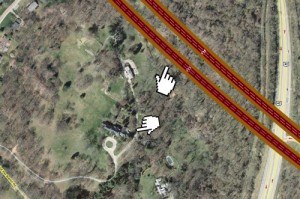
In previous installments in this series I highlighted how Indiana managed to increase its share of the Louisville bridges project by $200 million even as it bragged that the total price tag had gone down by $1.5 billion, how this led directly to Indiana having to allocate $432 million in regular highway funds to the project, and how tolling puts Indiana at significant risk of paying an even greater share of the project.

Today I’ll highlight how Indiana is stepping into a potential quagmire by agreeing to take responsibility for building a high-risk mini-Big Dig tunnel under a portion of Louisville’s most affluent community.

The Background Story

Plans for an East End bridge date back to at least 1969. Part of the problem with building it has long been that the Kentucky approach to this bridge would pass through the town Prospect, arguably the Louisville area’s most affluent and influential suburb. (For readers in Central Indiana, think “Zionsville” or Southwest Clay Township in Carmel and you’ll have the picture). The wealthy and influential residents there were long able to stymie progress on the East End bridge. They also had an ally in Louisville major Jerry Abramson, who greatly feared a beltway connection that would allow traffic to bypass downtown Louisville. He promoted a new downtown bridge instead.

In the grand tradition of political compromise, Indiana and Kentucky agreed to build both bridges. This was in part possible because of a city-county merger in Louisville, which reduced the fear of downtown lobby because they would still control revenues from any East End growth the bridge might spawn. Hence was born the fiction of “two bridges, one project” even though there is no real transportation necessity to link the two and either one has independent utility.

But the Prospect residents were never going to give up. As part of their plan to kill the East End bridge, they managed to get the Dumanard Estate put onto the National Register of Historic Places to make it much more difficult to route a roadway through it. After the original listing that included the home and gardens, the listing was later expanded to include the entire 55-acre grounds.

If you are wondering how building two bridges got to be $4.1 billion in the first place, this is an example of how. To avoid impacting this single historic property, Kentucky agreed to build a $261 million tunnel underneath the estate. (LEO Weekly discussed this in an article called “The $260 Million Home.”)

The stunning thing about this tunnel is that the path of the road doesn’t actually affect any buildings, as this graphic from Broken Sidewalk illustrates:

If spending $260 million on this sounds ludicrous to you, then you are getting a sense of why Indiana shouldn’t be touching it with a ten foot pole.

The Financial Quagmire

The cost of the tunnel is pretty ludicrous by itself. But the entire Kentucky approach is grossly overpriced. According to the Supplemental Environmental Impact Statement, the cost of the Kentucky approach to the East End bridge is $795 million. As advocacy web site No 2 Bridge Tolls put noted, this is a staggering $100,000 per foot. The approach on the Indiana side of the bridge plus the entire bridge itself is only $558 million combined.

This chart easily explains why the facile logic of the 50/50 cost split is crazy. Even if the cost split were reversed, it’s still ridiculous. Influential Kentuckians, attempting to insert a poison pill into the East End bridge (by killing the entire project if necessary), managed to grossly inflate the cost of construction on their side of the river with things like the ludicrous Drumanard tunnel that have no relevance or benefit to Indiana (or arguably even Kentucky). If Kentuckians want a $261 million tunnel under some trees, they ought to pay for it.

Call me crazy, but at $795 million for 1.4 miles of road, I think there just might be a little gold plating in this segment. That’s more money than it cost Indiana to build a brand new 10 mile freeway bypass around Kokomo. Heck, it’s more than Indiana is spending to convert 12 miles of US 31 to a freeway through Carmel and Westfield, right in the middle of some of the state’s most expensive real estate. Indiana would never build a road this crazy expensive for actual Hoosiers. I can only imagine the look on Mitch Daniels’ face if a Hoosier town asked him for something like this.

In any event, Indiana has agreed to pay for and construct this tunnel and very overpriced piece of Kentucky roadway. Which raises additional questions about the project. For example, does INDOT have the expertise to build a such a tunnel? I am not aware of a single genuine highway tunnel anywhere in the state of Indiana. I don’t believe INDOT has ever built one before, much less a complicated tunnel adjacent to a river with obvious potential for ground water problems. Kentucky may not be expert at tunneling either, but they’ve built at least two, including one in Louisville itself on I-64.

As anyone who’s read anything about the Big Dig should know, tunneling is frequently plagued with construction problems and cost overruns. After construction the tunnels leaked, and part of one tunnel collapsed on top of a car, killing someone. While this isn’t the Big Dig exactly, similar risks apply. Gov. Daniels can ask Mitt Romney for some tips on the risks associated with tunneling.

Indeed, we already know that the Drumanard tunnel itself has been plagued with problems. The price has already nearly tripled since its original estimate of $96.5 million, which augurs further cost escalations. The Kentucky Transportation Cabinet originally estimated a test tunnel, needed to determine soil and rock conditions so that the actual roadway tunnels could be designed, to cost $14 million. Actual bids came in between $19.1 million and $28.5 million, causing the KYTC to rebid the contract. (“Kentucky must get new bids on test tunnel”, C-J, Jan. 1, 2008 – not available free online). I’m not sure that they were ever able to get that test tunnel actually built. But problems just bidding that small test bore suggest further problems are likely. In fact, the Federal Highway Administration suggested Kentucky consider scrapping the tunnel, with the C-J noting, “High costs of sampling the geology along the proposed tunnel path and contractors’ concerns about the data’s reliability prompted talks of possibly building the approach on the surface rather than under a 50-acre estate listed on the National Register of Historic Places.” (“Bridge tunnel reconsidered”, C-J, August 23, 2008 – not available free online).

Given the risks here, it’s worth asking another question I didn’t see answered in any of the documents: who is responsible for any cost overruns on the project? If Indiana and Kentucky are each responsible for any overruns on their own sections of the project, Indiana would be stepping into a potential huge financial quagmire by taking on construction of a high risk tunnel without any experience in tunnel building.

Political Risk

Another key risk is political risk. One clear benefit of the current arrangement to the states from a purely tactical perspective is that Kentucky is outsourcing the construction of the most controversial segment to Indiana. While Prospect residents have huge influence in Kentucky, I think it’s safe to say that they have zero in Indiana. Their screams aren’t likely to impress anyone at the Indiana State House or at INDOT HQ. Also, this puts the segment Indiana most cares about entirely under Indiana’s control.

If I were one of those Prospect NIMBY’s, I’d be none too pleased with this arrangement, in which Indiana builds a road through their town. There’s actually a point to be made there, as people should operate under the auspices of a government which at least nominally accountable to them at the ballot box.

The bridge moves forward and controversy erupts. There’s an eminent domain dispute (highly likely – and who is doing the land acquisition anyway? I didn’t read anything about that). Or there are complaints about contractors. Again, Indiana readers can imagine what might happen if INDOT sub-contracted a freeway through Zionsville to the Ohio Department of Transportation. It would be Armageddon.

When the inevitable disputes arise, who has the final say, Indiana or Kentucky? And who bears the cost?

Again, we don’t know the answers to all these questions. But it’s easy to see how they could be bad.

Litigation Risk

Litigation risk is another major concern. An East End group called River Fields is already suing over the project. That lawsuit, which hinges on historic preservation issues, is still pending.

Don’t expect the East End crew to go quietly into the night on this thing. I’d certainly anticipate additional litigation from them over any and every aspect of the project. Indiana should clearly understand the risks here, since it has already lived them. It had to scrap one EIS for the I-69 project after its deficiencies were exposed, crafting a second lawsuit-proof one with the help of a high priced DC law firm. This cost a lot of money and resulted in significant project delay. The bridges project is very similar to I-69 in that the preferred outcome of locals was already known prior to the EIS. This can lead to the temptation to do sloppy work in the EIS, treating it as a mere hoop to jump through rather than dotting all the i’s and crossing all the t’s. This renders the EIS vulnerable to lawsuits from project opponents who scan the document looking for any weakness to glom onto. (This is one reason it’s so ridiculously hard to get anything built in America these days).

Beyond EIS litigation, you can expect further lawsuits over Indiana building a road in Kentucky. I noted the political risk, but why wouldn’t wealthy project opponents in prospect sue claiming that their rights are being violated because another state is constructing a road in their neighborhood?

Also, Southern Indiana resident Denis Frankenberger retained attorneys in Indianapolis who advised him that the Indiana constitution prohibits Indiana from building a road in another state. So this is another potential source of project litigation.

Now the entire project is subject to lawsuit risk, but the Kentucky approach segment that goes through Prospect is the part that has the most local opponents, and ones with money to indulge themselves in lawsuits. Thus I’d categorize as by far the highest risk segment. Again, legal fees and delays could add to Indiana’s cost here, even if any potential claims were judged to be without merit. This is America, and people will sue over anything and everything.

Update: Just today (1/11/12), Kentucky state senate president David Williams criticized the division of the bridges projects, saying that having each state takes one bridge opens the door to lawsuits over whether or not there is really one project or two.

At the end of the day, I’m not sure that INDOT really knows what it’s getting into with this tunnel and this project segment.

Next up, a better approach.

Indiana’s Bridge Deal Boondoggle
Part One: A Financial Fiasco
Part Two: Hoosiers to Pay Even More With Tolling
Part Three: INDOT’s Mini-Big Dig (this article)
Part Four: A Better Way

Tuesday, January 10th, 2012

Indiana’s Bridge Deal Boondoggle, Part 2: Hoosiers to Pay Even More With Tolling

In part one of this series I examined how Indiana managed to give away $1.7 billion to the state of Kentucky in renegotiating the project cost split for the Ohio River Bridges Project at Louisville. Despite a series of scope changes that reduced total cost by $1.5 billion, Indiana’s share of the cost actually went up by nearly $200 million.

Some might object that the project cost split is essentially meaningless because the project will be funded via tolling in a public-private partnership like the Toll Road deal. Unfortunately, this is not correct.

In part one we dealt in the realm of concrete black and white numbers from the two states’ own documents. Because there are so many open questions about tolling (itself a major concern given the headlong rush to make things happen), it can be difficult to definitively draw conclusions here. But the implications are certainly troubling and definitely the questions need to be answered so the public can properly assess this project.

Tolling Won’t Pay for the Whole Project

The first thing to note is that tolling will not pay for the project. According to the News-Tribune, no decisions have been made on toll locations or prices. However, Indiana is already projecting that it will have to spend $432 million out of its regular highway funds to complete the project.

If this number is correct, this would put the project among the most expensive in the state. With Major Moves already significantly over budget such that projects have been kicked out of it to balance the books, and a projected significant decline in available highway funds after Major Moves expires in 2015, this project will clearly impact other projects throughout the state. This is money that can’t be spent on any other projects – in effect it is a diversion of funds from other projects to cover a gap in this one.

That’s not to say it wouldn’t be a worthwhile investment. I’m a Southern Indiana native who strongly supports the construction of the East End bridge. But there are two points on which to be clear as things stand today:

  • This is not going to be an “other people’s money” deal like Major Moves. Regular highway funds will be dedicated to the project by both Indiana and Kentucky – lots of them.
  • Given the $1.7 billion gift to Kentucky I outlined in part one, it’s pretty obvious that with better negotiation Indiana could have easily financed the $432 million it is now paying out of its regular highway funds out of savings from the scope reductions. With even a reasonable deal on the cost split, Indiana would need to spend $0 out of its regular highway funds and could have 100% toll financed its share instead of having to rob Peter (other projects around the state) to pay Paul (this bridge).

Tolling Means Indiana Pays – Again

Paying for the bridges project via tolls doesn’t necessarily mean that Indiana and Kentucky won’t be paying a huge amount of the cost since a large number of the cars driving back and forth will be local residents.

Given that, one would think that a few questions would be of paramount importance to answer. First, what is the breakdown of projected cross-river traffic on the bridges in terms of Hoosiers vs. Kentuckians vs. those from neither state?

I have spent a lot of time searching the internet for the answer of that question, including looking at the documents on the web site of the Kentucky-Indiana Bridges Authority (a bi-state commission looking at financing) and asking various people I know in the Louisville area. I was unable to find any answer to this question.

I find it very surprising that this isn’t front and center. Because if tolling is supposed to fund the bridge, then who is paying those tolls is really the primary determinant of which state is paying the for the bridge.

Perhaps there’s a reason for that. As I Southern Indiana resident, I can tell you anecdotally that far more Hoosiers drive back and forth across the bridges than Kentuckians. The lion’s share of the regional jobs are in Kentucky. The key regional attractions are almost all on the Kentucky side of the river (the key exception being the Horseshoe Casino, generally accessed via the Sherman-Minton Bridge, which is currently not supposed to be tolled), as are things such as the regional airport, etc. In the absence of data to the contrary (and I’d appreciate a pointer to anything should somebody have one), I would hypothesize that there are indeed more Hoosiers driving across the bridges, which means toll financing is just another term for “Hoosiers pay.” (There may be many more Kentuckians driving through a redesigned and reconstructed Spaghetti Junction, but this interchange itself won’t be tolled).

As a commenter noted, Kentuckians seem already convinced that Hoosiers will have to pay most of the tolls. One Kentucky state senator, Dan Seum, is so enamored of the prospect of grabbing Hoosier money that he wants to toll the Sherman Minton Bridge as well. He’s apparently so convinced that Hoosiers are chumps that he didn’t mind bragging about this to the News and Tribune:

Seum admitted that Indiana residents will be among those bearing the majority of the costs. “Being from Jefferson County, remember that I think that most of the tolls would get paid by folks over in Indiana and our tourism and our big trucks,” he said in the report. “So it won’t be as onerous I guess to the average person out there but that’s the reality of it.”

Now, one could argue that if more Hoosiers are driving across the bridges, they are getting more benefits and thus should pay more. From a user benefit perspective, I actually agree. But user benefits are only one impact of the bridge. For example, those Hoosiers who drive to work in Kentucky pay occupational taxes, which are basically a local income tax, to Louisville already. And the regional economy is heavily skewed towards the Kentucky side of the river, so to the extent that the regional economy grows as bridge boosters claim, this will likely accrue principally to Kentucky.

Which brings us to the second question we need answered: what is the breakdown of economic benefits of the bridges project by state? It’s another question I’ve never seen the answer to. (Again, if someone has this, let me know).

Also, the fact that Hoosiers would pay more under a toll scenario wouldn’t necessarily be unfair if that money went to Indiana to offset its share of the bridge costs. However, according to the Courier-Journal, no decision has been made on how to divide the toll money.

A funding split where Indiana received the money from Hoosier motorists, Kentucky received the money from Kentucky motorists, and the two states split 50/50 revenue from motorists of other states might potentially alleviate the subsidy issue. However, given how the crack negotiators at INDOT gave away $1.7B to Kentucky and actually increased Indiana’s share of the cost of the project while the total cost went down by $1.5B, I’m not optimistic they’d do any better job negotiating this. Indeed, it’s easy to see how they might give even more away, such as by apportioning the toll revenue the same way that bridge responsibilities were allocated, having Kentucky keep all the downtown toll money and Indiana all the East End toll money. Since the downtown bridge is projected to generate twice the toll revenue of the East End bridge, this would be yet another gigantic financial giveaway to Kentucky.

It’s worth noting that the Bridges Authority, which is exploring toll financing, doesn’t even include a fair and equitable distribution of toll revenues as one of its strategic objectives. (All they talk about is a fair and equitable distribution of the costs, not the revenues. And in any case, we’ve already established that the cost distribution is suspect).

In short, we don’t know exactly how tolling would affect who pays for the bridge, but it’s easy to see scenarios of how Indiana could end up paying for way more than half of the bridges. As one Louisvillian close to the projects told me, “It’s pretty clear that Indiana is going to end up paying the bill. Tolls or otherwise.”

To assess the fairness of any toll solution, we need the answer to three key questions:

  • What the breakdown by state of people driving across the bridges?
  • What is the breakdown by state of the total economic benefits of the bridges?
  • How is the toll money going to be divided between the states?

It’s very important that these be answered honestly and clearly vetted with the public and political leaders in both states prior to making any financial decisions. Right now I’m not seeing that. As Tyler Allen of 8664 noted in the CJ piece linked above:

I don’t seem to hear that they know yet where the money is going to come from. There is still a question over how much tolling, what’s going to get tolled and, as a citizen I’m very concerned if they don’t lay that out on the table for us to respond to, then it could just happen to us — and that would be very bad public policy.

Tomorrow I’ll provide a look at how Indiana is taking on a potentially huge risk by agreeing to build a “mini-Big Dig” in Kentucky.

Indiana’s Bridge Deal Boondoggle
Part One: A Financial Fiasco
Part Two: Hoosiers to Pay Even More With Tolling (this article)
Part Three: INDOT’s Mini-Big Dig
Part Four: A Better Way

Monday, January 9th, 2012

Indiana’s Bridge Deal Boondoggle, Part 1: A Financial Fiasco

- Indiana gives away $1.7 billion to Kentucky -
- Indiana’s costs up by $200 million while total project costs decline by $1.5 billion -
- $432 million diverted from other projects to close funding gap recreated by Indiana’s botched negotiators -
- Tolling likely to mean Indiana pays well over half the project –
- Indiana potentially exposed to major risk by agreeing to build a tunnel in Kentucky through Louisville’s most affluent suburb that the state has no expertise to construct -

I’ve noted before how the Indiana Toll Road lease was a stroke of genius (see “Foreign Investors Hurting, Hoosier Taxpayers Smiling” and “Major Moves Is Majorly Great“) I attribute a lot of it to Gov. Mitch Daniels shrewd assessment of the competitive landscape (see “The Shrewdness of Mitch Daniels.”) As Daniels is fond of saying, “It was the best deal since Manhattan was sold for beads – only this time the natives won.”

Unfortunately, in the case of Indiana’s recent agreement with Kentucky on a pair of new bridges across the Ohio River at Louisville, this time it’s Indiana taxpayers and motorists who are back in the role of the Indians. I’m a big fan of Indiana Gov. Mitch Daniels, but this is a very bad deal for the state. In a four part series that starts today, I’ll document the reasons why, explaining how:

  • Indiana has trumpeted that the cost of the project has declined by $1.5 billion. But in fact Indiana’s share of the cost has actually gone up by nearly $200 million. Kentucky has pocketed more than 100% of the savings – a massive $1.7 billion giveaway by Indiana. (today)
  • Indiana’s botched negotiating means $432 million in state highway funds will have to be diverted from other projects around the state in order to cover a funding gap in the project. (Tuesday)
  • Tolling won’t pay for the bridges, and in any case tolling is likely just another word for “Hoosiers pay.” (Tuesday)
  • Indiana is potentially exposed to huge financial and political risk because it is agreeing to take on a $261 million “mini-Big Dig” tunnel in Louisville’s most affluent community. From an Indiana perspective this is like having the state outsource a freeway through Zionsville to Ohio. (Wednesday)
  • The are superior alternatives to the project as a whole that are cheaper too and promise major additional savings on top of the $1.5 billion Indiana and Kentucky have already found. (Thursday)

Today I’ll examine what’s clearly the most incredible piece of the puzzle – how Indiana gave so much money away to Kentucky.

As recently as one year ago in December 2010, the Ohio River Bridges Project – which consists of a new East End Bridge, a new downtown bridge, and a reconfiguration or new construction of the approaches and connecting interchanges – was projected to cost $4.1 billion according to the project financial plan. Given the high cost of the bridge, the two states started looking for ways to save money. In November 2011, INDOT announced a series of design changes that reduced the total project cost by $1.2 billion. In late December 2011, INDOT announced that further changes had raised the total savings to $1.5 billion and also announced that Indiana and Kentucky had reached a new deal on how to split the cost. This reduced the total project cost to a “mere” $2.6 billion.

But while the total project cost declined by $1.5 billion because of these changes, Indiana’s cost actually went up by almost $200 million. That’s right, while taking $1.5 billion in total cost out of the project, Indiana managed to make its share of the project actually go up in cost. Kentucky’s cost, by contrast, declined by almost $1.7 billion. Indiana gave away more than 100% of the cost savings achieved by the project design changes.

This is truly stunning. We’re talking huge money here – more than INDOT is spending on I-69 under Major Moves, the state’s flagship project.

How is this possible? It’s pretty simple. In addition to changing the project to reduce the cost, Indiana also agreed to change the way the two states split the cost of the project. Previously, it was a pretty simple cost exercise: Indiana paid 100% of everything on its side of the border, Kentucky paid for 100% of everything on its side of the border, and the two states would split 50/50 the cost of the bridges themselves. I might quibble with this. For one thing, as Kentucky is always fond of pointing out, it owns the Ohio River. I would have thought that would be a negotiating point. There are also other approaches I might prefer on efficiency grounds, but at least this makes sense and is intuitively fair. Because there were two major pieces of construction exclusively in Kentucky – the reconstruction of Spaghetti Junction and a dubious $261 million tunnel on the East End approach (more on that later) – Kentucky’s share of the cost, as it should have been under any reasonable scenario, was higher than Indiana’s – 73% vs. 27%.

In the new agreement, Indiana and Kentucky agreed to split the cost 50/50. Indiana would be responsible for the East End bridge and the approach work in both states, while Kentucky would be responsible for the downtown bridge and the approach work in both states.

Why would Indiana agree to this? I’m not sure, but I can’t think of anything it actually got in return for it. 50/50 has some intuitive appeal, but as I said before, there’s a lot of work on the Kentucky side of the river that benefits exclusively Kentucky (such as the aforementioned tunnel). It’s not clear why Indiana should pay for that. The original deal concept was basically fair. The lion’s share of the regional population, and likely of the economic benefits of the bridge, is in Kentucky. It’s hard to think of anything where the numbers suggest anything close to an equal split of the cost, except perhaps the makeup of traffic on the bridge. And when it comes to that, Indiana is already going to more than pay thanks to the toll financing (see part two).

At the end of the day, INDOT cut a simply horrible deal, giving away $1.7 billion to Kentucky (or at a minimum its $850M share) in return for nothing. If you are Evansville and wondering how the state will ever finish I-69, or Northwest Indiana wondering why the state doesn’t have the cash to replace the Cline Ave bridge, or Indianapolis wondering why the state booted an upgrade of the state’s most congested corridor out of Major Moves, or Fort Wayne wondering why so many of your important projects have gotten pushed out, I suggest looking no further than this lousy deal for answers.

I’m sure Gov. Daniels is very eager to get this project started as yet another building block in his strong legacy around transport infrastructure. But he shouldn’t be this eager. I can’t help but wonder who he had doing the negotiation on Indiana’s behalf, because he’s way too smart to have cut a deal this bad himself.

The revised cost split is the worst, though hardly the only, problem with this agreement. Tomorrow in part two I’ll examine how toll funding shifts even further financing to the Hoosier State.

Indiana’s Bridge Deal Boondoggle
Part One: A Financial Fiasco (this article)
Part Two: Hoosiers to Pay Even More With Tolling
Part Three: INDOT’s Mini-Big Dig
Part Four: A Better Way

Sunday, February 13th, 2011

Super-Regionalism in Kentucky

Joe Nannery sent me a link to an interesting Courier-Journal article where Louisville Mayor Greg Fischer talks about super-regional collaboration with Lexington on economic development and other matters. There’s a great video interview with him that accompanied the story that you can watch below. (The video won’t display in Google Reader or platforms like that, so to watch it please visit my main web page by clicking here). I think he and his economic development director do a great job of laying out the case for a greater regional vision in an accessible way.

It seems pretty clear that Fischer understands one of the key challenges facing Louisville, namely that it is just a bit too small to really have the heft it needs to go to market in the new economy. He sees collaboration with Lexington as one way to help both cities punch above their weight, particularly in attracting international attention. He believes this is essential to the long term relevance of the cities.

He is weaker on what exactly this collaboration would consist of as the reporter tried to pin him down on specifics. As he put it, “We’re in the early stages of dating.” I wouldn’t feel bad about this if I were him since the mega-regionalism concept is pretty nebulous. Lots of people are saying it’s the next big thing and that cities and states should be thinking this way, but as I myself noted in a previous blog post, nobody tells us exactly what is we’re supposed to actually do to make this a reality. It’s not just about Louisville and Lexington. The reality is that mega-regionalism as an operational program not just a concept is in its early stages. This is part of the process of figuring out what it really means. I do think if we’re ever going to have true mega-regions though, they are going to emerge from bottom-up collaboration between cities like Louisville and Lexington, not from top-down visions and programs.

Fischer also understands that Louisville and Lexington are non-overlapping in their industries in many regards. That’s actually a good thing in my book. This allows them to specialize and gain the advantages of that on some things. My analogy is to a football team. Not everybody is a quarterback. Not everybody is a linebacker. Not everybody is the kicker. Everybody has to know and excel at their own role on the team.

He’s talking about partnering with Brookings to help draw up the plan, and also on a new strategic plan for Louisville itself. I generally like Brookings, but as a former Southern Indiana resident, I can tell you that I did not care for the previous Louisville plan, which suggested any growth outside of Jefferson County was actively bad. I’m all in favor of a strong core, but that plan went too far in its core-centric and almost anti-collar county tone. I can’t imagine it played well anywhere outside Jefferson County because the key goal of the plan was to keep as much regional growth as possible inside the boundaries of that county (notwithstanding that much of Jefferson County itself is suburban or rural in character).

Hopefully this next version is much more actively embracing of the region. I was glad to see Fischer include Southern Indiana explicitly in his regional concept. For too long Kentucky and Indiana have been acting crazy just paying businesses to move back and forth across the Ohio River as if that is some sort of net regional economic add. It would be much better if they could both focus their energy on bringing net new growth to the area instead.

We’ll see where this goes, if indeed it goes anywhere. But it’s certainly interesting indeed to see Mayor Fischer talking about mega-regionalism, and definitely a change from the more Louisville-centric Abramson administration approach.

Telestrian Data Terminal

about

A production of the Urbanophile, Telestrian is the fastest, easiest, and best way to access public data about cities and regions, with totally unique features like the ability to create thematic maps with no technical knowledge and easy to use place to place migration data. It's a great way to support the Urbanophile, but more importantly it can save you tons of time and deliver huge value and capabilities to you and your organization.

Try It For 30 Days Free!

About the Urbanophile

about

Aaron M. Renn is an opinion-leading urban analyst, consultant, speaker, and writer on a mission to help America’s cities thrive and find sustainable success in the 21st century.

Full Bio

Contact

Please email before connecting with me on LinkedIn if we don't already know each other.


Copyright © 2006-2011 Urbanophile, LLC, All Rights Reserved - Copyright Information